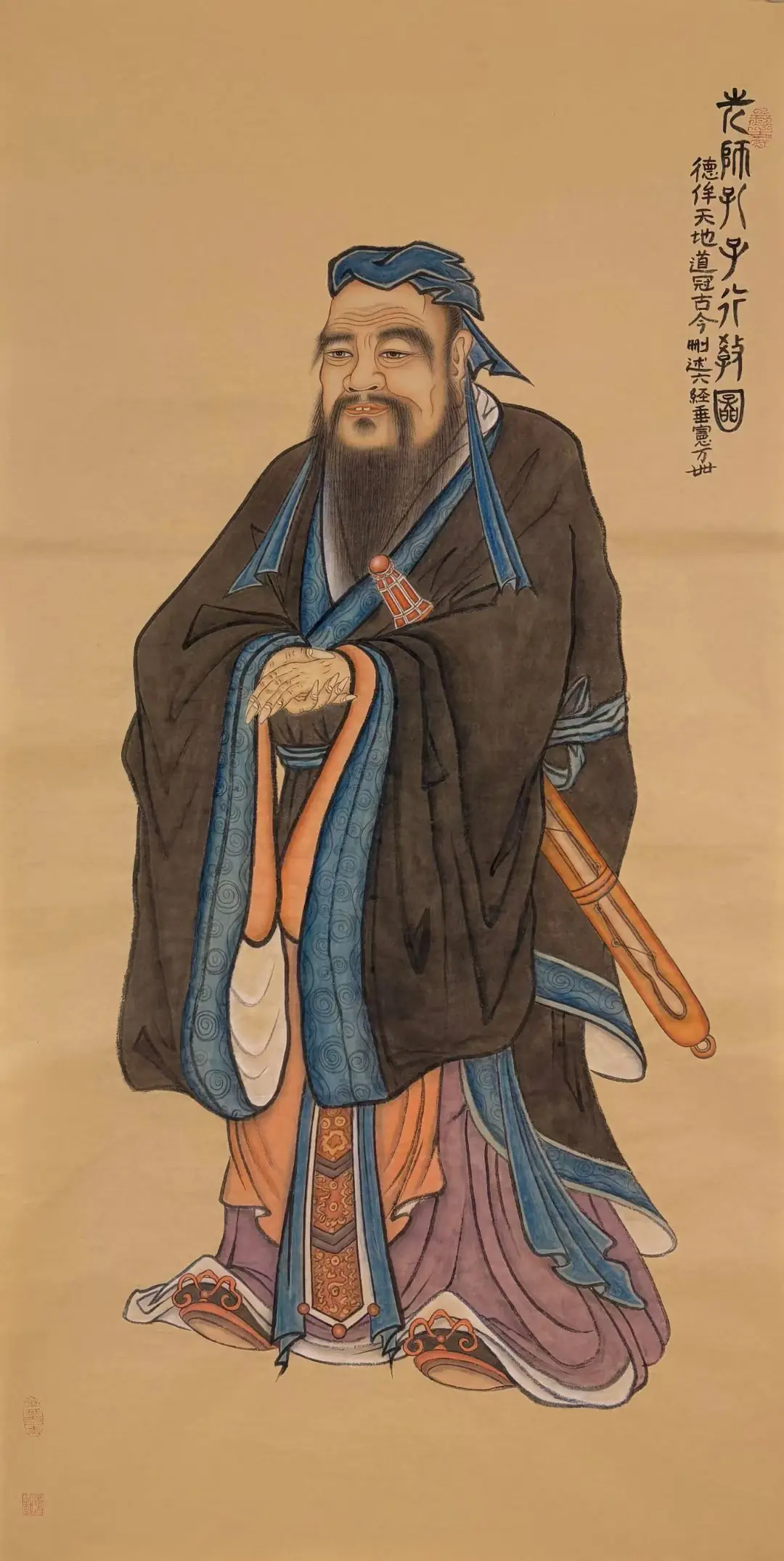
The Original Quote:
齐景公待孔子曰:“若季氏,则吾不能。”以季、孟之间待之,曰:“吾老矣,不能用也。”孔子行。
Qí Jǐnggōng dài Kǒngzǐ yuē: “Ruò Jìshì, zé wú bùnéng.” Yǐ Jì, Mèng zhījiān dài zhī, yuē: “Wú lǎo yǐ, bùnéng yòng yě.” Kǒngzǐ xíng.
English Translation:
Duke Jing of Qi, speaking of how to treat Confucius, said: “To treat him as the Lord of Lu treated the Ji family—this I cannot do.” So he proposed to receive him on a rank between that of the Ji and the Meng. Yet later he added: “I am old now, and cannot employ him.” Hearing this, Confucius departed from Qi without delay.
Key Concepts Explained:
- Timely Departure (行, xíng): In Confucian thought, this is not mere physical leaving but a principled withdrawal when the moral environment (道, dào) cannot be realized. It reflects the wisdom of knowing when to persist and when to retreat.
- Virtuous Employment (用, yòng): The proper use of talent by a ruler who upholds ritual propriety (礼, lǐ) and benevolence (仁, rén). Without such alignment, service becomes futile or corrupting.
- Moral Environment (势, shì): The external circumstances—political, social, and interpersonal—that either enable or obstruct the practice of virtue. Confucius teaches that one must discern and adapt to such conditions.
Cultural Context:
This passage from The Analects (Book 18, Chapter 3) captures a pivotal moment in Confucius’s life. During the Spring and Autumn period (771–476 BCE), the Zhou dynasty’s authority had fragmented, and powerful ministerial families like the Ji, Meng, and often overshadowed legitimate rulers. Duke Jing of Qi initially showed interest in Confucius’s reformist ideals—which sought to restore proper hierarchical order (礼, lǐ)—but ultimately yielded to the entrenched power of his own ministers. Confucius’s immediate departure exemplifies his core teaching: a noble person (君子, jūnzǐ) does not cling to office at the cost of integrity. Instead, he seeks a “field for brave deeds” (用武之地) where virtue can flourish, even if that means wandering from state to state. This narrative underscores the Confucian emphasis on environmental wisdom—recognizing when external conditions are irredeemably hostile to moral action, and choosing principled exile over futile compromise.