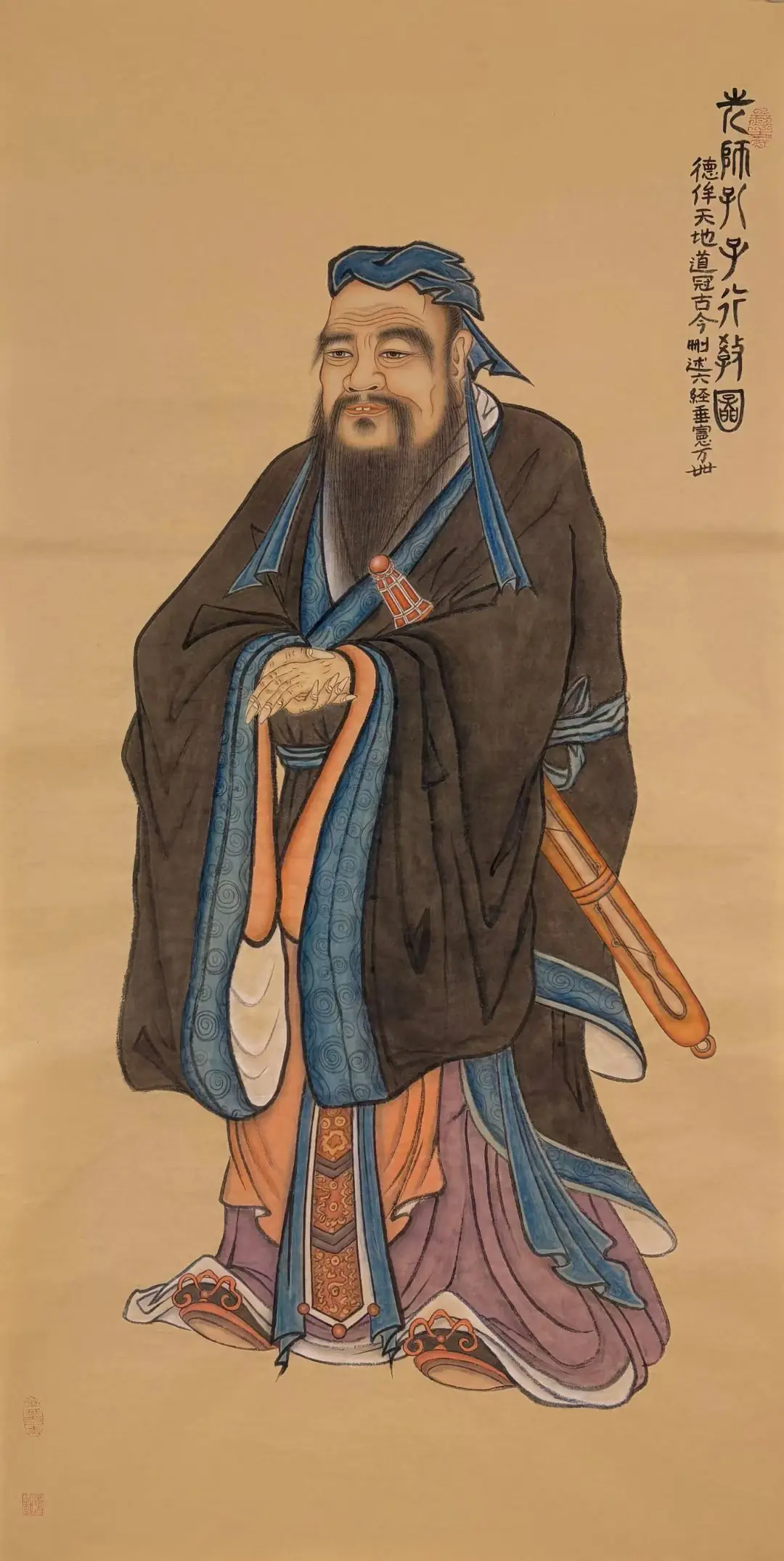
The Original Quote:
子张问于孔子曰:“何如斯可以从政矣?”子曰:“尊五美,屏四恶,斯可以从政矣。”子张曰:“何谓五美?”子曰:“君子惠而不费,劳而不怨,欲而不贪,泰而不骄,威而不猛。”子张曰:“何谓惠而不费?”子曰:“因民之所利而利之,斯不亦惠而不费乎?择可劳而劳之,又谁怨?欲仁而得仁,又焉贪?君子无众寡,无小大,无敢慢,斯不亦泰而不骄乎?君子正其衣冠,尊其瞻视,俨然人望而畏之,斯不亦威而不猛乎?”子张曰:“何谓四恶?”子曰:“不教而杀谓之虐;不戒视成谓之暴;慢令致期谓之贼;犹之与人也,出纳之吝谓之有司。”
Zǐzhāng wèn yú Kǒngzǐ yuē: “Hé rú sī kěyǐ cóngzhèng yǐ?” Zǐ yuē: “Zūn wǔ měi, bǐng sì è, sī kěyǐ cóngzhèng yǐ.” Zǐzhāng yuē: “Hè wèi wǔ měi?” Zǐ yuē: “Jūnzǐ huì ér bù fèi, láo ér bù yuàn, yù ér bù tān, tài ér bù jiāo, wēi ér bù měng.” Zǐzhāng yuē: “Hè wèi huì ér bù fèi?” Zǐ yuē: “Yīn mín zhī suǒ lì ér lì zhī, sī bù yì huì ér bù fèi hū? Zé kě láo ér láo zhī, yòu shuí yuàn? Yù rén ér dé rén, yòu yān tān? Jūnzǐ wú zhòng guǎ, wú xiǎo dà, wú gǎn màn, sī bù yì tài ér bù jiāo hū? Jūnzǐ zhèng qí yīguān, zūn qí zhānshì, yǎnrán rén wàng ér wèi zhī, sī bù yì wēi ér bù měng hū?” Zǐzhāng yuē: “Hè wèi sì è?” Zǐ yuē: “Bù jiào ér shā wèi zhī nüè; bù jiè shì chéng wèi zhī bào; màn lìng zhì qī wèi zhī zéi; yóu zhī yǔ rén yě, chū nà zhī lìn wèi zhī yǒusī.”
English Translation:
Zizhang asked Confucius, "How may one govern effectively?" The Master replied, "By honoring the Five Virtues and rejecting the Four Evils, one can govern well." Zizhang inquired, "What are the Five Virtues?" Confucius said, "A noble person (jūnzǐ) benefits others without expense, labors without causing resentment, desires without greed, is dignified without arrogance, and commands awe without fierceness." When asked about the first virtue, he explained, "By guiding the people toward their own interests, you benefit them without cost. By choosing appropriate labors for them, no one resents. By seeking benevolence (rén) and attaining it, what greed remains? The noble person treats all equally, regardless of numbers or status, and thus is dignified without arrogance. By rectifying his appearance and gaze, he inspires reverence without fierceness." Regarding the Four Evils, Confucius said, "Punishing without teaching is cruelty; demanding results without warning is tyranny; issuing orders late with sudden deadlines is treachery; and being stingy when giving rewards is petty officiousness."
Key Concepts Explained:
- 仁 (Rén): Benevolence or humaneness—the core Confucian virtue of compassionate, ethical conduct toward others, rooted in innate moral goodness.
- 君子 (Jūnzǐ): The "noble person" or exemplary individual—an ideal of moral cultivation and leadership, contrasted with the petty person (xiǎorén).
- 礼 (Lǐ): Ritual propriety—the system of norms and ceremonies that structure harmonious social relations, here reflected in "rectifying one's appearance."
- 命 (Mìng): The Mandate of Heaven or fate—the cosmic order that legitimizes virtuous rulers, implied in the moral responsibility of governance.
Cultural Context:
This dialogue from the Analects (Lúnyǔ, ca. 5th century BCE) reflects Confucius's vision of ethical governance during the chaotic Spring and Autumn period. The "Five Virtues" (wǔ měi) balance ruler–subject relations through mutual benefit and moral example, while the "Four Evils" (sì è) warn against authoritarian abuses. This framework profoundly influenced Chinese political philosophy, emphasizing rule by virtue (dézhì) over legalism. The concept of "benefiting without cost" resonates with modern sustainable development, while "labor without resentment" anticipates participatory governance. Confucius's advice remains relevant for leaders seeking legitimacy through moral integrity rather than coercion.