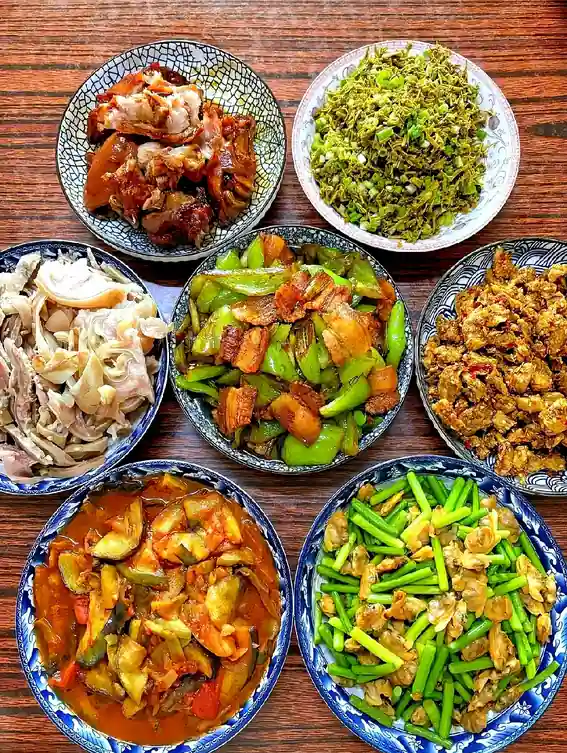
The aromatic spiciness of Sichuan peppercorns and chilies mingles with the fresh fragrance of scallions and garlic—tender meat, even more delicate tofu, and crispy soybeans.

Sichuan cuisine offers endless flavor variations and ever-evolving cooking techniques. By adding a creative twist to the classic water-boiled beef, you can create an impressive dish. This tofu pudding water-boiled beef retains the signature numbing, spicy, and aromatic flavors with tender meat slices, but introduces the crunchy texture of fried soybeans and the silky smoothness of soft tofu at the bottom, resulting in a completely different depth of flavor. With two to three ingredients harmonizing in one dish without overpowering each other, it’s a truly delightful and seamless culinary experience!
Ingredients
Main Ingredients
800 g (about 1 3/4 lb) pork shoulder
This dish is all about silky tenderness, so use tender lean meat. Pork shoulder or tenderloin both work, but pork shoulder with its slight marbling is the best choice for superior texture.
Additional Ingredients
Silken tofu (made with gypsum) to taste
Dried soybeans, to taste
Gypsum tofu, also known as southern-style tofu, has a high water content and no brine flavor. If available, tofu pudding is even better.
Marinade
5 g (about 1 teaspoon) Shaoxing rice wine
1 g salt
egg white, as needed
to taste cornstarch
Other Seasonings
Sichuan Pixian broad bean paste 30 g (about 2 tablespoons)
10 g (about 2 teaspoons) Shaoxing wine
Soy sauce 10 g
3 g salt
3 g (about 1 teaspoon) white sugar
Dried chili peppers and Sichuan peppercorns, each to taste
Scallion, ginger, and garlic - to taste
For the best aroma and color, use Erjingtiao or Chaotian dried chilies.

Instructions
Instructions
Preparation
① Step 1: Slice pork shoulder against the grain into 2 mm thick pieces (Image 2). Marinate by adding ingredients in this order: rice wine, salt, egg white, and cornstarch, mixing well with your hands until sticky. Let it marinate for 10 minutes.
Step 2: Finely chop the broad bean paste, and mince the scallions, ginger, and garlic; set aside.
③ Soak dried soybeans in cold water for half an hour until the skins wrinkle, then fry over medium-low heat in warm oil (about 275°F/140°C) until crispy and fragrant (Image 3).
*If using dried soybeans, soak them first before frying, as they will burn easily on the surface if fried directly; fry slowly over medium-low heat until crispy, which takes a bit longer, so be patient.
Dry-fry the Sichuan peppercorns and dried chilies until fragrant.
In a wok, add a small amount of oil and the Sichuan peppercorns, then stir-fry over medium heat. Add the dried chilies and continue stir-frying with the peppercorns until the surface turns reddish-brown and fragrant, then turn off the heat (Image 4). Remove and let cool, then crush or grind into a coarse powder and set aside.
*Sichuan peppercorns take longer to toast, so add them to the pan first and stir-fry for a moment before adding the dried chilies; this ensures both reach their optimal deep reddish-brown color at the same time.
*The Sichuan peppercorns and dried chilies must be stir-fried until they turn a reddish-brown color to fully release their aroma; otherwise, they will only add heat without fragrance. If they are stir-fried until black, they will taste only burnt.
Stir-fry the soup base ingredients.
⑤ First, cut the tofu into large slices about 0.5 cm thick, place them at the bottom of a bowl, pour in boiling water to heat them through, then drain off the water.
*Because tofu is very delicate and can easily break apart, it should not be cooked together with the meat. Instead, blanch it first to heat it through, which also warms the serving bowl, helping the final dish retain heat longer. Be sure to drain the water thoroughly to prevent it from diluting the meat broth and weakening the flavor.
⑥ Pour an appropriate amount of oil into the wok and stir-fry the broad bean paste over medium-low heat until the oil turns red and fragrant, then add the minced scallion and ginger and stir-fry until aromatic. Turn the heat to high, add soy sauce and Shaoxing wine, and stir-fry until the fragrance is released (Image 5).
*The broad bean paste must be stir-fried slowly over low heat in warm oil to release its fragrance, and seasonings should be added in the correct order.
⑦ Next, pour an appropriate amount of hot water into the pot, add salt and sugar, bring to a boil, then simmer over low heat for 2 minutes to allow the broth to develop a richer flavor (Image 6).
*The amount of water used to cook the meat should be adjusted based on the actual situation; if the broth is bland, you've added too much water, but if the meat isn't fully cooked and the broth becomes paste-like, you've added too little.
Bring a pot of water to a boil, add the marinated meat slices one by one, and cook until they just turn white, then remove and drain.
Step 8: Turn the heat to high, then scatter the marinated meat slices into the broth to cook through (Image 7). Immediately pour both the meat and broth into the large bowl containing the tofu.
*When adding the sliced meat, never put it all in at once, as the pieces will stick together and the broth will cool too quickly. Instead, use your fingers to scatter the slices in a circular motion, distributing them evenly into the pot, but work quickly to ensure even cooking.
Step 9: Place the crushed Sichuan peppercorns and dried chili peppers on top, add minced garlic, then pour oil heated to about 80% hot (just beginning to smoke) over them to release the aroma, and finish by sprinkling fried soybeans on top.
*Use a generous amount of hot oil and be sure to pour it directly over the Sichuan peppercorns, dried chilies, and minced scallions and garlic to fully release their aroma.
Flexible application
This method of stir-frying the seasonings first and then simmering the meat works well with many ingredients, including various meats such as sliced chicken breast, lamb slices, or fish fillets. Besides vegetables and tofu, you can also use wood ear mushrooms, button mushrooms, or other fungi as the base layer in the bowl. If deep-frying soybeans is too much trouble, you can substitute crushed peanuts or sprinkle on some toasted sesame seeds instead. Once you master the technique, you can get creative and make your own signature dish to your heart's content.