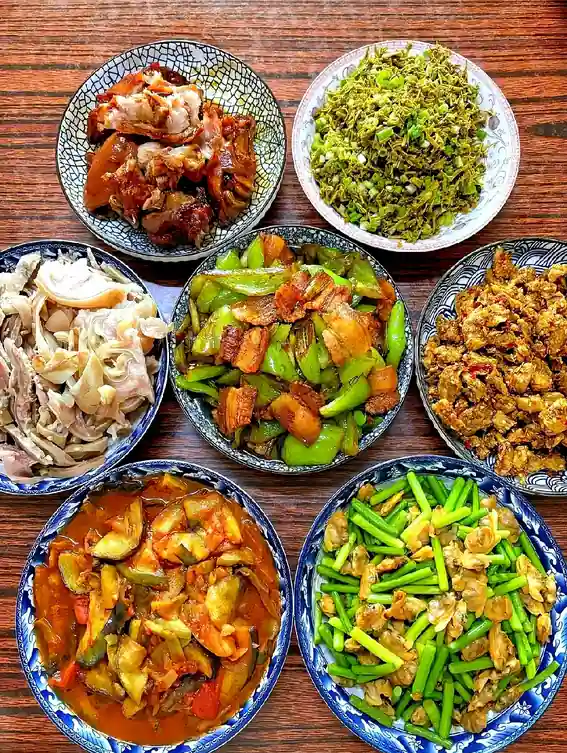
Rich and savory with a deep soy aroma, the more you nibble on the bones, the more flavorful they become.

In northern China, lamb spine is practically synonymous with winter warmth, second only to hot pot lamb. It's essentially a type of hot pot, just with a different eating style: first, you eat the meat off the bones, then use the rich broth to cook vegetables and noodles—it's incredibly satisfying.
Ingredients
Main Ingredients
1200 g (about 2.6 lbs) lamb spine (lamb backbone)
Lamb spine, also known as lamb backbone, is best when freshly butchered the same day—ask the butcher to chop it into pieces for you.
Other Seasonings
50 g (about 1/4 cup) dried yellow soybean paste
30 g soy sauce
8 g salt
50 g (about 1/4 cup) yellow rice wine
15 g rock sugar (about 1 tablespoon)
Scallions, ginger, and garlic - to taste
If you don't have dry soybean paste, regular soybean paste can be used as a substitute.
Spices (Image 2)
5 star anise
6 bay leaves
30 Sichuan peppercorns
Cinnamon stick 1 piece
1 whole grass cardamom pod
Cumin seeds - a pinch
a pinch of cumin
Instructions
Instructions
Preparation
Step 1: Soak the lamb spine in clean water for 2 hours, then discard the blood-soaked water (Image 3). Cut scallions into sections and slice ginger into thick pieces. Dilute the fermented soybean paste with a little water (Image 4). Wrap the spices in a cheesecloth bundle (Image 5).
*Bone-in ingredients must be soaked in clean water for several hours before cooking to remove blood and impurities.
Step 2: Place the lamb spine in a pot of cold water and bring to a boil, skimming off any foam that rises to the surface (Image 6). After about 5 minutes of boiling, remove the lamb and set aside, reserving the cooking liquid.
*While the water is not yet fully boiling, blood foam will appear in the pot; quickly and continuously skim it off, otherwise the foam will mix into the broth and be absorbed by the bones, ruining the flavor. Continue skimming until there is little to no foam or only a small amount of white foam remains—at this point, the lamb spine soup will have no unpleasant odors.

Stir-fry the seasonings in hot oil until fragrant.
Step 3: Heat a small amount of oil in a wok over medium-high heat until it begins to shimmer, then add ginger and garlic and stir-fry vigorously until fragrant (Image 7).
*First, use hot oil to dry-fry the ginger and garlic until they release a fragrant, slightly charred aroma, which will enhance the overall flavor, but be careful to keep the time short and not overdo it.
Step 4: Next, turn the heat to medium, add the diluted yellow soybean paste, and stir-fry until the paste turns glossy and fragrant (Image 8).
Stir-fry the yellow bean paste over medium heat for a short time, just until the aroma is released, which will make the seasoned broth more fragrant. If using soybean paste instead, there is no need to dilute it with water—stir-fry it directly. Also, it is best to wait a moment after reducing the heat to medium before adding the yellow bean paste, as the oil will still be slightly too hot right after turning down the heat. The garlic can be left unpeeled.
Simmer the lamb spine in the seasoned broth over low heat until the meat is tender and infused with flavor.
⑤ Next, add soy sauce and Shaoxing wine, stir-fry over high heat, then immediately pour in the broth from cooking the lamb spine. Once it comes to a boil, add scallion sections, salt, and rock sugar (Image 9). Then pour this mixture into the pot with the lamb spine, bring to a boil, cover, and simmer over low heat for 1 to 1.5 hours (Image 10).
*If you want to make a lamb spine hot pot, add more water; if you're just eating the lamb spine without cooking other ingredients in the broth, add just enough water to cover the lamb spine.
*During this step, a small amount of foam may appear when you first start simmering the lamb spine; this does not affect the flavor, so there is no need to skim it off.
*Be sure to use the lowest heat to simmer, keeping the surface of the broth barely bubbling. If the liquid boils too vigorously after covering, leave the lid slightly ajar.
*If there is any leftover soup, you can save it for next time—this is the "master stock" (lao tang). Be sure to freeze it to prevent spoilage. If the soup is from a hot pot meal, do not save it.
Flexible application: This cooking method can be adapted for other cuts of lamb or beef, adjusting the braising time as needed for tenderness.
This method can also be used to braise lamb shanks or pork shanks. However, since pork has a milder gamey flavor, reduce the spices by half and use only star anise, cinnamon stick, bay leaves, and Sichuan peppercorns—too many spices will overpower the meat's natural taste. Beef shanks, on the other hand, are rarely cooked and eaten in the same way as other animal bones because of their large size.
Cooking Notes
Lamb spine comes in several varieties: the meatiest is called "meat spine," perfect for meat lovers; there's also "clean spine," where the meat is trimmed very clean from the bones, ideal for making broth; and another called "premium spine," which has just the right amount of meat—not too much, not too little—perfect for slow-braising and nibbling on. I personally prefer the last type—meat spine has too much meat, taking away the fun of gnawing on the bones, and you're full after just two pieces. There's something much more satisfying about slowly working your way around small, meaty bones, don't you think?