Discover Confucius's teaching philosophy and curriculum, focusing on moral education, Junzi cultivation, and the Six Classics.
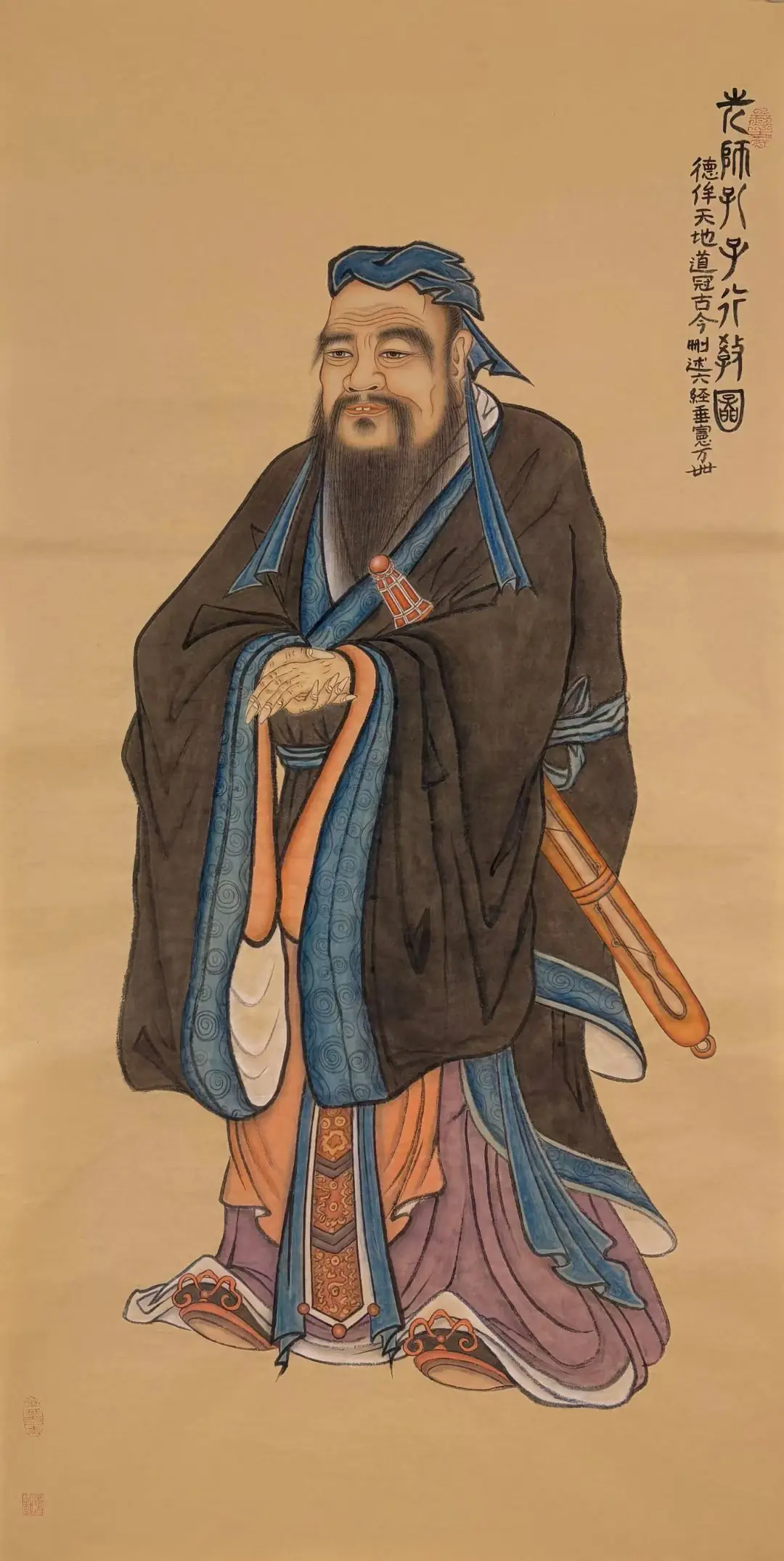
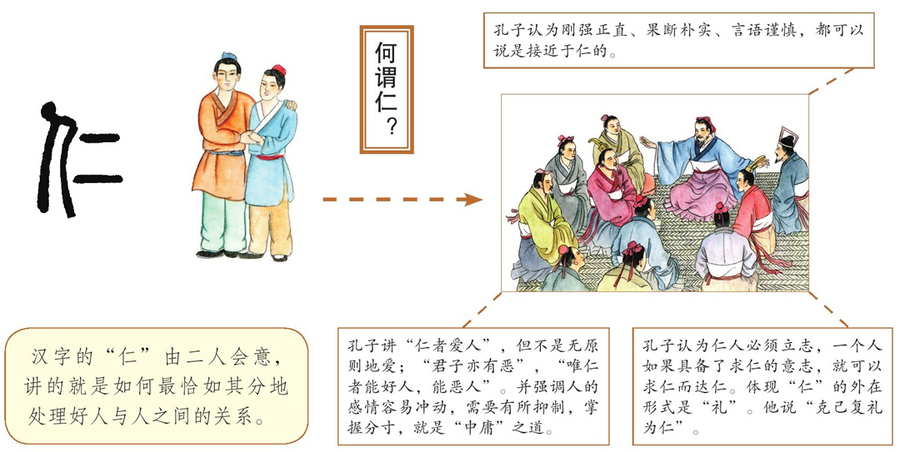
Confucius was dedicated to cultivating scholars (shi) and Junzi (Exemplary Persons)—that is, training talents to realize benevolent governance and rule by virtue. He placed great emphasis on both inner qualities and outward conduct, and his educational policy valued both virtue and ability, equally stressing moral education and knowledge education. The most fundamental content of Confucius's teaching was moral education, which meant strengthening disciples' ethical cultivation. Taking Ren (Benevolence) as the highest goal, Confucius repeatedly and thoroughly answered questions from his disciples to help them accurately grasp and understand Ren.
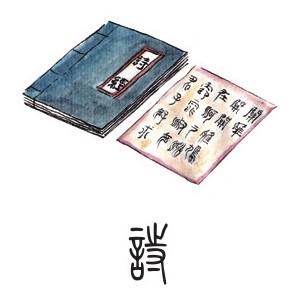
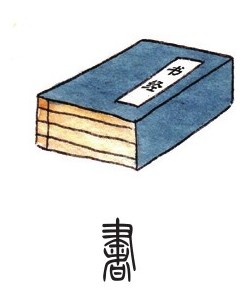
In his specific teaching, Confucius used the Classic of Poetry (Shijing), Book of Documents (Shangshu), Book of Rites (Liji), Book of Music (Yuejing), I Ching (Book of Changes), and Spring and Autumn Annals (Chunqiu) as instructional materials.During that time, the *Classic of Poetry (Shijing)* was primarily used in ceremonies, remonstrations, diplomatic discourse, and expressing aspirations through recitation. Confucius taught the *Classic of Poetry* with an emphasis on the poetic education of being "gentle and sincere" (wenrou dunhou).The *Shu* refers to the *Book of Documents* (*Shangshu*), a collection of historical records regarding major political events and speeches from antiquity. Confucius used it as a textbook for politics and history, requiring his disciples to treat it as a canonical basis for governance, practicing the Dao (The Way), and establishing themselves in life. In *The Analects*, Confucius is recorded citing the *Book of Documents* three times, each time using ancient examples to illuminate the present, explaining how to govern and practice the Way.The "Li" refers to the Yili (Book of Rites and Ceremonies), a text specifically devoted to explaining various ceremonial protocols and behavioral norms. The "Shi Li" (rites for the scholar class) constitutes a large portion of it, serving as the concrete standards for conduct and self-cultivation for the scholar-official class of that time. Confucius not only used the Li as a textual teaching material but also as an important textbook for learning the ritual skills and procedures. His education in Li (Propriety/Ritual) emphasized practical application. Because Li is the guiding principle for establishing oneself and interacting with the world, he admonished his son, Kong Li, saying: "If you do not learn Li, you have no way to establish yourself."The "Book of Music" (Yue) was also an important teaching material in Confucius's education, but it has since been lost. Music education not only referred to learning the fundamentals of music but also included studying music theory and aesthetics. Confucius advocated governing the state through Li (Propriety) and music, using Li to regulate and restrain, and music to cultivate and influence. He integrated the "Book of Poetry" (Shi), "Book of Rites" (Li), and "Book of Music" (Yue) as one: "It is by the Poetry that the mind is aroused; it is by the Rites that the character is established; it is from Music that the refinement is completed." In Confucius's view, one must first set aspirations, then study poetry; after studying poetry, one understands Li; and only after understanding Li can one cultivate one's character through the inspiration of music.The _I Ching_ (Book of Changes) is divided into two parts: the _Jing_ (Classic) and the _Zhuan_ (Commentaries). The content of the _Jing_ existed before Confucius, while the _Zhuan_ was completed by later Confucian scholars. In Confucius’s time, the _I Ching_ was a divination text concerning Yin-Yang and the Eight Trigrams, with mysterious and complex content, preserved relatively intact in the State of Lu. According to the “Records of the Grand Historian: Hereditary House of Confucius,” “Confucius in his later years delighted in the _I Ching_” and “read the _I Ching_ so much that the leather bindings of the bamboo slips wore out three times.” Confucius conducted in-depth study of the _I Ching_ and drew upon its simple dialectical ideas to educate his disciples.The Spring and Autumn Annals (Chunqiu) was completed two years before Confucius's death and was personally compiled by him. Using the contemporary "Hundred States Spring and Autumn Annals" as a blueprint, Confucius integrated the major events from various states' historical records into a unified work. It was first used as teaching material and later organized into the version passed down to the present day. The Spring and Autumn Annals contains Confucius's social and political theories, establishing proper status distinctions, embedding praise and blame, and conveying profound meanings in subtle language. It served as an important textbook for Confucius's political and historical education of his students.Confucius also cultivated his disciples' talents through the Six Arts (Liu Yi: rites, music, archery, charioteering, calligraphy, and mathematics).