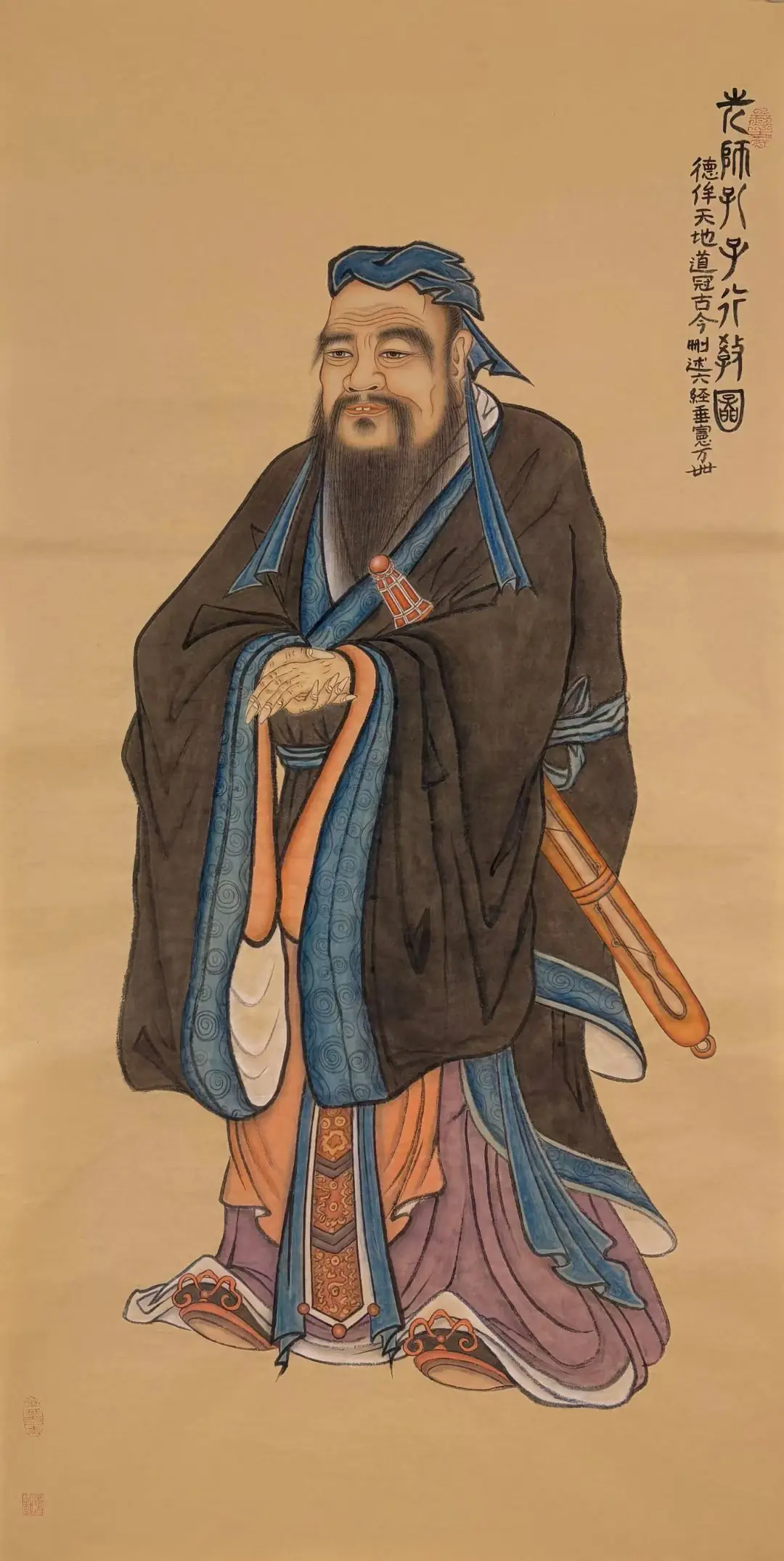
Confucius's policy for running his school was "teaching without discrimination" (youjiao wulei), which was vastly different from the Yin and Zhou ruling classes who primarily ran schools for the aristocracy. Among Confucius's known disciples, aside from Meng Yizi and Nangong Jingshu (both from noble families), the vast majority came from poor and lowly families or a few so-called "free men." Among his favorite students, Yan Yuan (Confucius's most beloved disciple) was a poor youth living in a humble alley; Zeng Shen (a disciple known for filial piety) had a mother who supported the family by weaving, and he himself once farmed and weeded fields; Zi Lu (a brave and impulsive disciple) was so poor he ate grass seeds as his staple food and once carried rice for his parents on his back; Zi Zhang (a disciple from a humble background) was originally "a vulgar person from Lu"; Min Ziqian (a disciple known for filial devotion) had to pull a cart for his father when his father went out; Yuan Xian (a disciple who valued poverty) lived in a poor alley and wore tattered clothes; Gongye Chang (a disciple who was wrongfully imprisoned) was a young man once suspected of theft, imprisoned, and unjustly punished; as for the relatively wealthier Zi Gong (a wealthy merchant and eloquent disciple), he was merely a merchant belonging to the "free men" class. The procedure for Confucius to accept students was simple: as long as they brought ten strips of dried meat (shuxiu) as a symbolic gesture of respect to the teacher, they could be admitted. Confucius is said to have had three thousand disciples, which refers to the total number of students he taught throughout his life, most of whom came from humble backgrounds. The purpose of teaching these poor and lowly people's children, as his disciple Zi Xia (a disciple known for literary learning) put it, was that "those who excel in learning should become officials" (xue er you ze shi), allowing these poor working people's children to learn cultural knowledge and the Six Arts (rites, music, archery, charioteering, calligraphy, and mathematics) so that in the future they could serve as officials and implement his political doctrine of Ren (Benevolence).
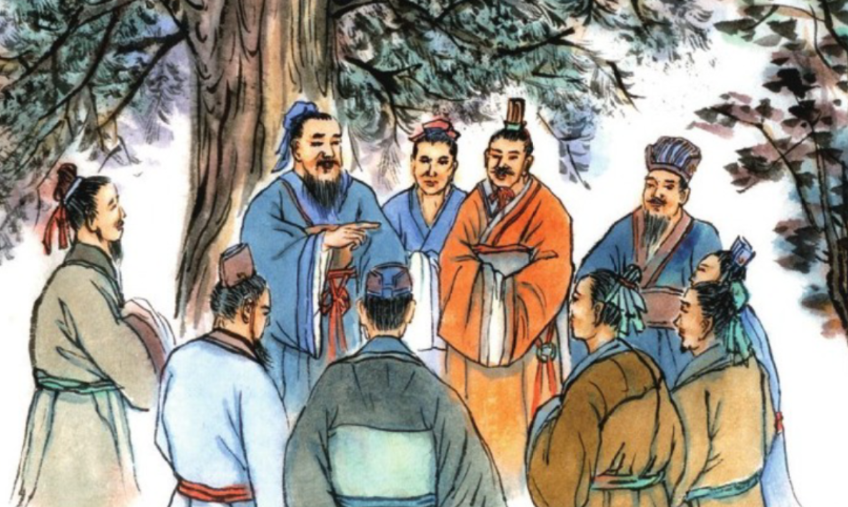
Confucius divided teaching into four categories: "Culture" (Wen), "Conduct" (Xing), "Loyalty" (Zhong), and "Trustworthiness" (Xin). "Culture" refers to literary learning, "Conduct" to moral cultivation, "Loyalty" to doing one's utmost for others, and "Trustworthiness" to matching words with deeds and keeping one's word. These four aspects were all appreciated by common people, thus attracting many young men from ordinary families. In this way, the "arts of the Ru" (ritual specialists), which had been exclusively for the nobility since the Yin and Zhou dynasties, were transformed into "Ru learning" (Confucian scholarship) for governing the world and benefiting the people. Confucius himself thus became the "founding patriarch" of the Chinese Confucian school.