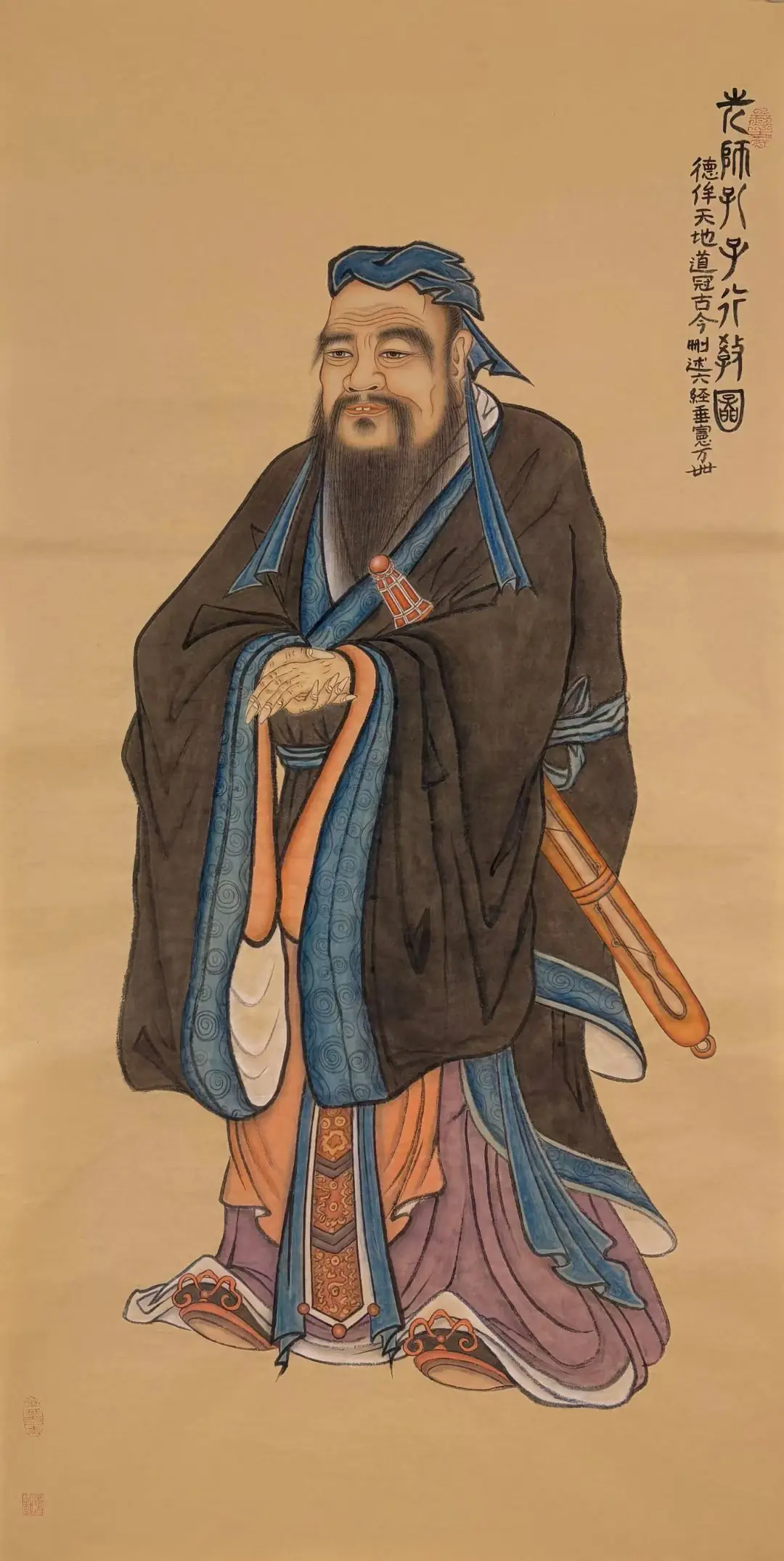
The Original Quote:
叔孙武叔毁仲尼,子贡曰:“无以为也,仲尼不可毁也。他人之贤者,丘陵也,犹可逾也;仲尼,日月也,无得而逾焉。人虽欲自绝,其何伤于日月乎?多见其不知量也。”
Shūsūn Wǔshū huǐ Zhòngní, Zǐgòng yuē: “Wú yǐ wéi yě, Zhòngní bùkě huǐ yě. Tārén zhī xián zhě, qiūlíng yě, yóu kě yú yě; Zhòngní, rìyuè yě, wú dé ér yú yān. Rén suī yù zì jué, qí hé shāng yú rìyuè hū? Duō jiàn qí bù zhī liàng yě.”
English Translation:
Shusun Wushu slandered Confucius. Zigong said: "Do not do this, for Confucius cannot be slandered. The worthiness of others is like hills and mounds, which can be climbed over; but Confucius is like the sun and moon, which none can surmount. Though a man may wish to cut himself off from them, what harm does that do to the sun and moon? It only reveals his own lack of measure."
Key Concepts Explained:
- Ren (仁): The core Confucian virtue of benevolence and humaneness, embodied by Confucius as an unassailable moral standard.
- Li (礼): Ritual propriety and social order, which Confucius upheld as the foundation of harmony, likened to the natural order of the sun and moon.
- Junzi (君子): The ideal moral person, whose virtue is so profound that it transcends petty criticism, as shown by Zigong's defense.
Cultural Context:
This passage from the Analects (19.24) reflects the deep reverence disciples held for Confucius during the Spring and Autumn period (770–476 BCE), a time of political turmoil. Zigong's metaphor of Confucius as the sun and moon elevates his moral authority above worldly attacks, emphasizing that true virtue is impervious to slander. This defense not only solidified Confucius's legacy but also established a model for later scholars to protect philosophical traditions, highlighting the role of discipleship in transmitting classical Chinese thought.