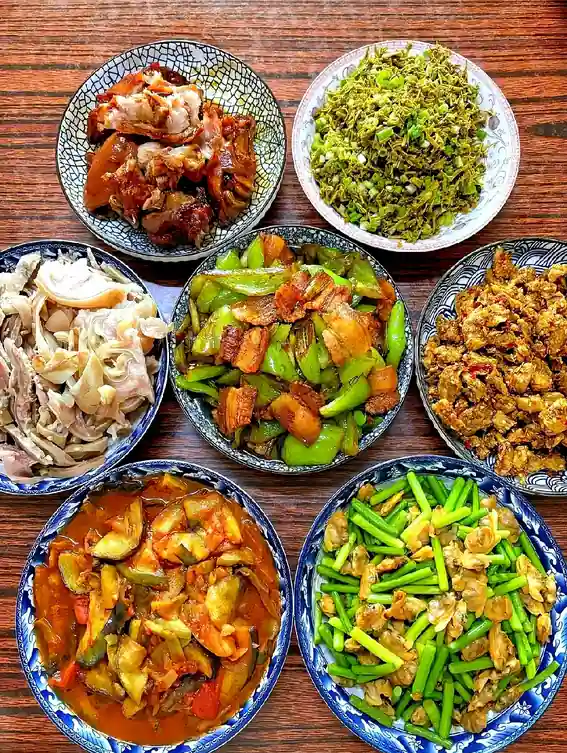
Savory and aromatic, with the rich meat flavor perfectly complemented by a blend of spices, resulting in tender, fall-apart meat.

Many parts of the pig are suitable for braising in soy sauce, and this recipe uses pork hock, pig ears, pig tongue, pig heart, and pig tail. The pork hock is satisfyingly rich, the ears are crunchy, the tongue is tender and soft, the heart is chewy, and the tail is perfect with a drink—even those who don't usually enjoy offal should give this dish a try. Nowadays, few home cooks bother with such variety, usually just making a braised pork hock at most, but when you do go all out, it's incredibly rewarding.
Ingredients
Main Ingredients
Pork front hock 1000 g (about 2.2 lbs)
Pig tongue 1
1 pig ear
1 pork heart
2 pig tails
Be sure to choose smaller cuts of meat so they fit in the pot.
Seasonings for the master stock (Image 2)
Star anise 4 pieces
Cinnamon stick 1 piece
bay leaves 3
2 slices of Chinese angelica root (baizhi)
8 cloves
6 slices of licorice root
1 dried chili pepper
a small pinch of cumin seeds
2 star anise
Tie the braising spices in a cheesecloth bag.
Other Seasonings
100 g (about 1/2 cup) yellow rice wine
100 g (about 1/2 cup) soy sauce
25 g salt
30 g rock sugar (about 2 tablespoons)
Scallions and ginger, to taste
Er Guo Tou (Chinese sorghum liquor) - a small amount

Instructions
Instructions
Preparation
① Scrape off any remaining hairs from all the pork skin; use a knife to cut open the ear canal of the pig ears and clean them thoroughly; firmly squeeze out any clotted blood from the pig heart; debone the pork hock (Image 3).
*To remove the pig hair, a simple disposable razor works very conveniently; you can ask the butcher to debone the pork hock for you.
*Squeeze out as much of the clotted blood remaining inside the pig's heart as possible.
Blanch in boiling water
Step 2: Add cold water to a pot, blanch all ingredients, add some scallions, ginger, and Erguotou liquor, and cook for about 5 minutes (Image 4). Remove, roll up the pork hock and tie it with hemp rope, scrape off the coating from the pork tongue, squeeze out the water from inside the pork heart, and chop the pork tail into several pieces. Set aside (Image 5).
Simmer and cook.
Step 3: Pour water into the pot and heat until hot, then add all the prepared ingredients, making sure the water covers everything, and bring to a boil over high heat (Image 6).
*If you rinse blanched meat in cold water, it will become tough, so be sure to heat the water first before adding the meat.
Add the caramelized sugar color and seasonings.
④ In a separate pot, add rock sugar and a little water, then cook over low heat to caramelize the sugar until it turns a deep reddish-purple color, at which point ladle in some broth from the meat pot to dissolve the caramel (Figure 7).
*When rinsing the caramel color with hot water, it may splatter a bit, so be careful not to get burned.
⑤ Pour the caramel color into the pot with the meat, then add rice wine, soy sauce, scallion segments, ginger slices, the spice pouch for braising, and salt. Bring to a boil over high heat, cover with a lid, then reduce to low heat and let it simmer slowly (Figure 8).
*During the braising process, try to keep the ingredients fully submerged in the marinade at all times; you can lightly press them down with a plate, but do not apply too much force to avoid scorching the bottom of the pot.
Step 6: Different ingredients require different braising times, so remove them in order: pig heart cooks for 40 minutes, pig ear for 1 hour, pig tongue for 1.5 to 2 hours, and pork hock and pig tail for about 2.5 hours.
After braising the pork hocks and pig tails, you can return the previously removed ingredients to the braising liquid and let them soak together for a few hours, allowing the flavors to penetrate more deeply.
Flexible application
The master stock for braised pork can be reused multiple times, and you can also braise other ingredients like eggs or fried tofu along with the meat, but don't add too much or the flavors will muddle together. Also, avoid braising pork offal—especially liver, tripe, and large intestines, which have strong odors—as this will not only ruin the stock's aroma but also cause it to spoil easily.