
In 221 AD, after Cao Pi established the Wei state, Liu Bei raised the banner of restoring the Han dynasty, proclaimed himself emperor in Chengdu, historically known as Emperor Zhaolie of Han, also called the First Lord of Shu Han.
After ascending the throne, Liu Bei's first decision was to launch a campaign against Eastern Wu, because Guan Yu had been killed by Wu forces at Maicheng. Liu Bei could not swallow this humiliation and swore to avenge Guan Yu, raising an army to attack Sun Quan.
Zhuge Liang repeatedly tried to dissuade him, but Liu Bei was already determined to avenge Guan Yu and refused to listen to anyone's advice. He personally selected a group of elite troops and ordered Zhang Fei to move all his forces stationed in Langzhong to Jiangzhou (present-day Chongqing) for a rendezvous. However, before the army could set out, news of Zhang Fei's murder reached Chengdu. It turned out that Zhang Fei's subordinates, Fan Jiang and Zhang Da, had been flogged by Zhang Fei for violating military discipline. Bearing a grudge, they took advantage of Zhang Fei's drunkenness to kill him, cut off his head, and presented it to Sun Quan.
Liu Bei wept so bitterly that he nearly fainted, and Zhang Fei's death only hardened his resolve to campaign against Eastern Wu. When Sun Quan learned that Liu Bei intended to avenge Guan Yu, he grew somewhat fearful and sent an envoy to Chengdu to sue for peace, but Liu Bei refused without hesitation. Sun Quan then wrote to Emperor Wen of Wei, Cao Pi, seeking help; Cao Pi verbally agreed to Sun Quan's request and even granted him the title King of Wu, but in truth had no intention of sending troops. After waiting in vain for reinforcements from the Wei emperor, Sun Quan had no choice but to gather his ministers to discuss a plan. The minister Kan Ze advocated for battle, and Sun Quan, after some thought, agreed.
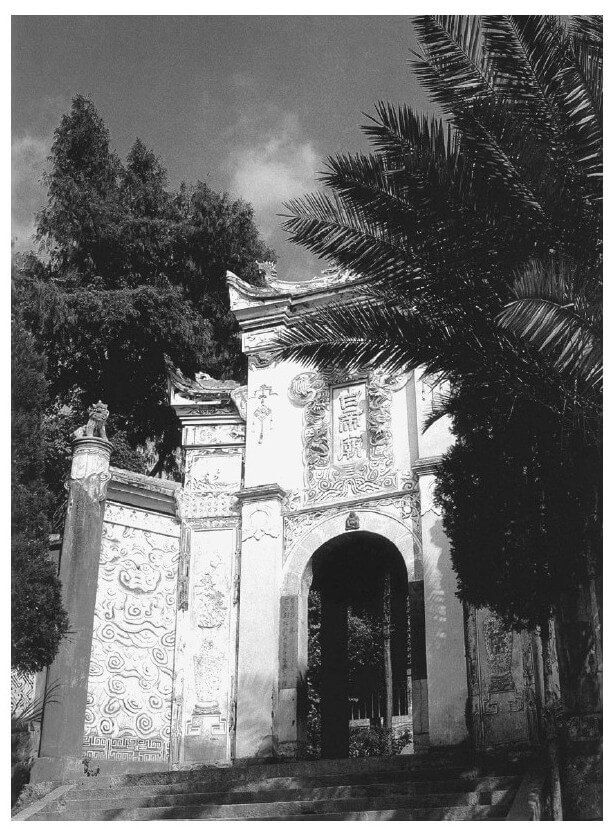
Sun Quan appointed Lu Xun as Grand Commander to lead troops against Liu Bei. Lu Xun looked like a scholar, and the veteran generals were unconvinced, but in reality, he was a highly talented man. When Sun Quan was recruiting renowned talents from across the land, someone recommended Lu Xun to him. After meeting Lu Xun, Sun Quan greatly admired him and appointed him as Left Bureau Chief Clerk, later as Right Bureau Chief Clerk, and subsequently as Colonel of Agricultural Colonies and Magistrate of Haichang (present-day Haining, Zhejiang), gaining extensive administrative experience.
At this time, the Shu army had already reached Zigui (in present-day western Hubei Province) and captured Wu County (north of present-day Wushan, Chongqing), then advanced with unstoppable momentum, so that by the time Lu Xun led his troops out, the Eastern Wu had lost five to six hundred li of territory to the Shu forces. Lu Xun set out with fifty thousand elite troops, and also sent Pingrong General Bu Zhi with ten thousand men to station at Yiyang (in present-day Yiyang, Hunan), to prevent the ethnic minorities in Wuling (present-day western Hunan, eastern Guizhou, and southwestern Hubei) from rising in support of Liu Bei.
The Shu army won consecutive victories, boosting their morale greatly, so Lu Xun simply pretended to be afraid, refusing to let his troops engage in battle and even retreating several times. Seeing this, Liu Bei was delighted, thinking the Wu forces were intimidated by his power, and he ordered his troops to press forward fiercely, aiming to wipe out Eastern Wu in one decisive blow. General Huang Quan advised Liu Bei not to underestimate the enemy, but Liu Bei ignored the warning and continued advancing along the southern bank of the Yangtze River, instead ordering Huang Quan to station his forces on the southern bank to guard against a potential attack from Wei forces.
Seeing that Liu Bei had already attacked Yiting (located north of present-day Yidu, Hubei, on the eastern bank of the Yangtze River), many Wu generals urged Lu Xun to immediately send troops to counter the Shu army, but Lu Xun refused. The generals accused Lu Xun of being cowardly and incapable of leading troops in battle. Unfazed, Lu Xun patiently explained his reasoning. He recognized that Liu Bei's forces were formidable and, having won several consecutive battles, their morale was high. Launching a hasty attack at this point would offer little chance of victory. By waiting until the Shu army grew weary over time, the odds of success would greatly increase.
The generals had no choice but to suppress their desire to advance, obeying Lu Xun's command to continue retreating and halt near Yidao (present-day Yidu, Hubei) and Guiting, where they faced Liu Bei's army from a distance. The Shu army's camps stretched over 700 li, from Wu County all the way to Yiling (east of present-day Yichang, Hubei), with dozens of camps connected by wooden palisades. Liu Bei was quite pleased, and after completing his troop deployment, he waited for Wu forces to attack.
However, half a year passed with no movement from the Wu army. Liu Bei grew anxious and sent a thousand men to provoke the Wu camp by shouting insults, hoping to stir their anger and force an early attack. But Lu Xun remained unmoved. Several Wu generals wanted to engage, but Lu Xun stopped them. The Wu commanders' anger flared again, yet Lu Xun calmly said, "Though there are only a thousand men outside the camp, Liu Bei has surely hidden ambushes in the valleys, waiting for us to come out. We must stay patient." Lu Xun's guess was correct—Liu Bei had indeed set an ambush, but seeing the Wu army completely still, he couldn't help feeling disappointed.
It was the height of summer, and the Shu army soldiers were suffering unbearably from the heat; coupled with the overly extended camp lines, supplies and food could not be rotated in time, causing great difficulties for the Shu army and also providing an opportunity for the Wu army. To prevent the soldiers from suffering heatstroke, Liu Bei moved all the military camps to clearings in the woods, planning to launch an attack after the cool of early autumn.
Lu Xun was overjoyed when he saw that the Shu army had set up their camps in the woods, and he said to his subordinates, "The time to attack has come." He then sent a small force to scout ahead, but they were soundly defeated by the Shu army. His generals were furious, believing that Lu Xun's move was completely pointless. However, Lu Xun cheerfully declared that he had found a way to break through the Shu army's formation.
Lu Xun ordered his soldiers to gather large quantities of reeds, with each man holding a bundle. Since it was summer, the weather was hot and dry, and a strong southeast wind was blowing, while the Shu army's camps were situated among the trees, using fire as an attack was the best strategy. At night, Wu soldiers stealthily approached the Shu camps carrying reeds and kindling, then tossed the burning reeds beside the tents and wooden palisades. The southeast wind quickly set each major camp ablaze, and the raging flames consumed everything. Shu soldiers fled their camps in panic, scattering in all directions with no chance to fight back. Seizing the opportunity, Lu Xun led his troops in a charge, cutting down countless enemy soldiers.
The Shu army's camp, stretching over 700 li, was consumed by flames, and vast amounts of military supplies and grain were seized by the Wu forces. As Liu Bei fled, he ordered his men to discard armor and other equipment along the path, slowing the Wu army's advance, and he barely managed to escape with his life to Baidi City (present-day Fengjie, Chongqing).
After the great defeat of the Shu army, the generals regarded Lu Xun with newfound respect, and Sun Quan also appreciated him more, appointing him as General Who Assists the State, concurrently Governor of Jingzhou, and enfeoffing him as Marquis of Jiangling.
After Liu Bei fled to Baidi City, the Wu army commanders originally planned to pursue their victory, but Lu Xun stopped them, fearing that Wei forces might cut off their retreat, so he led the troops back to Eastern Wu. Sure enough, not long after, the Wei army marched south to attack Eastern Wu, but fortunately Lu Xun had already made defensive preparations in advance, preventing the Wei forces from succeeding in their surprise attack.