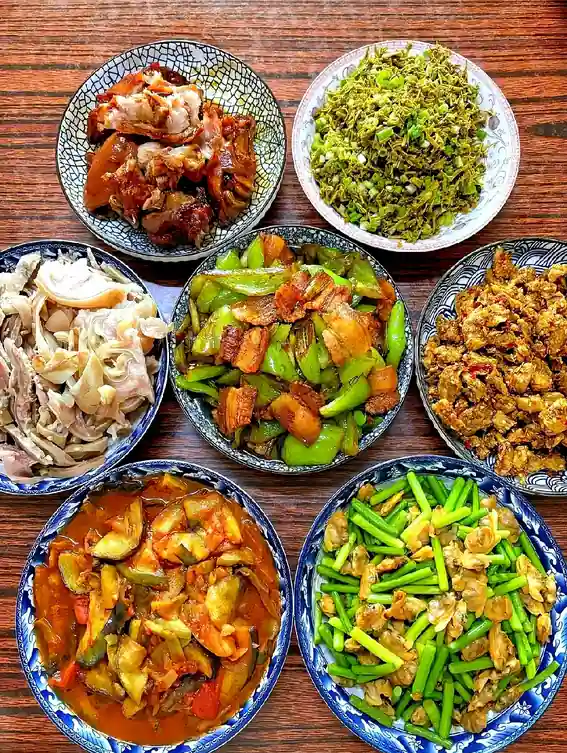

Stir-frying is the most common and important cooking method in Chinese cuisine.

Key Tips
Why do restaurant dishes always taste better than home-cooked ones? It's not because the restaurant kitchen is bigger than yours, but because their flame is much stronger. To make up for this difference at home, be sure to follow these three key tips.
① Since home stovetops have lower heat output, you should generally turn the heat to the highest setting. ② The pan must have strong heat retention, so a thick-bottomed wok or skillet is recommended.
The amount of ingredients for stir-frying should not be too large.
I see.
A well-stir-fried dish has "wok hei" — a subtle, elusive quality that can only be sensed through smell and taste, not seen or touched. Take a simple plate of stir-fried shredded potatoes: with wok hei, it smells fragrant and tastes delicious; without it, the aroma is harsh and the flavor flat. In my view, wok hei is essentially a charred fragrance — even though the food isn't burnt, the intense heat of a blazing wok creates microscopic charred particles on the surface, releasing that irresistible smoky aroma that makes the dish so flavorful. The formation of wok hei depends most critically on the heat level.
Key Tips
When stir-frying, we often add seasonings like soy sauce and vinegar. To achieve the best flavor, it's important to know when and how to add these seasonings.
Step 1: Add the seasonings while the heat is still high.
Step 2: Pour the seasonings around the edges of the wok.
When stir-frying some vegetable dishes, first bloom the aromatics in hot oil before adding the vegetables.
I see.
The aroma of soy sauce and other seasonings needs high heat to be released.
Why should seasonings be poured along the edges of the wok? First, we need to understand which part of the wok is hottest after ingredients are added. When the wok is dry-heated without any food, the bottom is definitely the hottest spot, but once ingredients go in, the bottom cools down quickly upon contact, making the sides the hottest area instead. So when adding seasonings like soy sauce or vinegar, slowly drizzle them along the edges of the wok, letting them flow down naturally. This releases their aroma, which then blends with the ingredients, creating a noticeably better flavor. Stir-fried vegetables often have simple seasonings but rely heavily on fragrance; if a dish calls for soy sauce or vinegar, it's best to first sizzle them in hot oil until the aroma emerges before adding the vegetables, ensuring the seasonings' full flavor is unleashed.
Example: Stir-frying (Quick-Fry Over High Heat)
Sautéed Fresh Mushrooms in Savory Sauce

Key Tips
Stir-frying is the most basic yet most important cooking method for vegetables, as most greens are tender and crisp, and only stir-frying can preserve their original flavor and texture. However, most people prefer meat, and if the vegetables on the table aren't cooked well, no one will touch them. So how do you stir-fry vegetables so they look beautiful and taste delicious?
Step 1: First blanch in boiling water, then stir-fry. Make sure to drain the water thoroughly. For root vegetables, a quick drain is sufficient; for leafy greens, gently squeeze out the excess moisture.
Step 2: Heat the wok, add a little oil, then add the vegetables and stir-fry quickly for a few seconds.
③ Use a small amount of salt, sugar, cold water, and a little starch to make a slurry; you can also add some minced garlic to the slurry.
Pour in the prepared sauce mixture and stir-fry quickly over high heat until the vegetables become glossy and bright, then remove from the wok and serve immediately.
I see.
If vegetables are stir-fried without any preparation, they will lose a lot of moisture, resulting in a tougher texture and, more importantly, a poor appearance. Thickening the sauce with a slurry coats the ingredients, locking in flavor and giving the vegetables a bright, crisp look and a tender, refreshing bite. Since vegetables don’t need to absorb flavor deeply like meat—just a light coating on the surface is enough—only a small amount of slurry is needed.
The entire stir-frying process should not exceed half a minute, using the heat of the wok to cook the ingredients as much as possible. Aim to pour in the thickening sauce while simultaneously stir-frying, because the sauce is minimal—if you delay even a moment after adding it, the sauce will immediately congeal and won't distribute evenly. In restaurants, when stir-frying vegetables, chefs often toss the wok with one hand while pouring in the sauce with the other; only this technique ensures the vegetables emerge bright and glossy on the surface, with a uniform flavor throughout.
Example: Stir-frying (Quick-Fry Over High Heat)
Stir-Fried Snow Peas

What is the difference between dry-frying and stir-frying?
The purpose of dry-frying is to dehydrate the ingredients, making them dry and aromatic. Unlike quick stir-frying over high heat, dry-frying requires slow heating over low heat. Not only is dry-frying used for dishes like Dry-Fried Beef Shreds, but sauces are also often prepared this way. For example, when cooking Fish with Chili Bean Sauce, you first dry-fry the broad bean paste until fragrant.