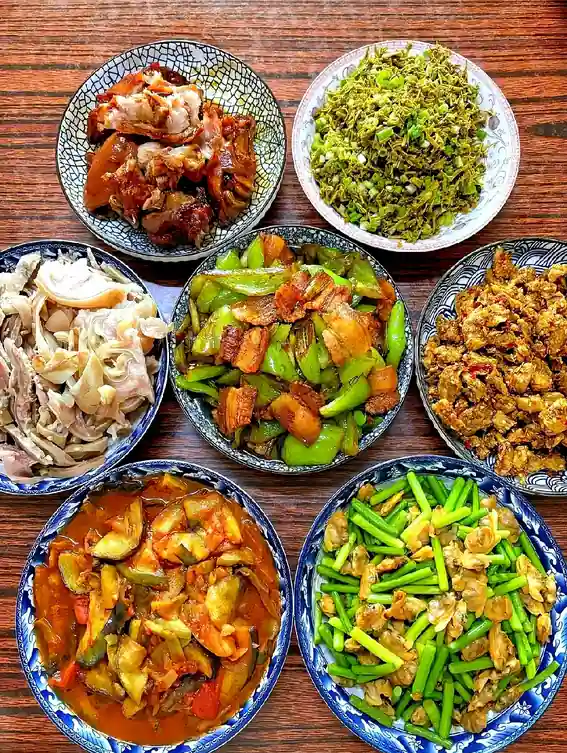
A starch slurry is an indispensable component in stir-fries and flash-fried dishes, truly representing the subtlety of Chinese cuisine. While the ideal thickness and amount of slurry cannot be precisely quantified, the process is not without its rules. By understanding the principles and patterns behind thickening with starch, along with a few handy tips, achieving the perfect slurry is well within reach.
Q: What is "thickening with slurry" and what is it used for?
A: The so-called "slurry" is simply a mixture of starch and water. The purpose of thickening with slurry is to make the cooking liquid viscous so it coats the ingredients.
Q: Should you use cold water or hot water to make a slurry for thickening?
If you want to make dough figurines, use hot water to prepare the slurry; if you're thickening a stir-fry, use cold water.
Q: What is the ratio of cornstarch to water?
First, let's understand the role of starch and water. Thickening the sauce relies on the gelatinization of starch, but if you sprinkle dry starch directly into the pan, it will form small lumps, making the sauce uneven and unappealing. So, you must first mix the dry starch with water to create a smooth slurry. There's no need to be strict about the ratio—just add enough water to fully dissolve the dry starch.
Q: How can you tell if the starch slurry has the right consistency?
If small lumps of starch appear, it means there wasn't enough water to properly dilute the starch; if after plating you find a lot of liquid left in the pan, the slurry was too thin and the starch didn't fully coat the ingredients, so next time you make the same dish, reduce the amount of water accordingly.
Q: Can the starch slurry be added in multiple batches?
When braising (see page 7 for a detailed explanation of "braising"), the slurry can be added in stages, such as when making Mapo Tofu, but this method does not work for stir-fries that require quick cooking over high heat.
Q: I understand the theory, but how can I master it quickly?
A: There's no shortcut—you just have to figure it out through practice. For stir-fried dishes like simple snow pea shoots, the low ingredient cost makes them perfect for honing your skills. If there's any trick to it, it's this: don't switch pans, keep the amount of vegetables roughly the same, and use the same brand of starch. After two or three tries, you'll start to get a feel for it.
Q: What kind of starch should I use for making a slurry?
A: High-quality starch not only delivers better results but is actually more cost-effective. Go ahead and splurge on the most expensive starch!