Pinyin: Dongchongxiacao
Aliases
Xiacao Dongchong, Chongcao, Dongchongcao
Source
Clavicipitaceae family fungus Cordyceps sinensisCordyceps sinensisDried composite of the stroma of (Berk.) Sacc. parasitizing the larvae of Hepialidae insects and the dead larvae bodies.
Habitat and Distribution
Commonly found on high mountains above 4,000 m elevation, especially in alpine meadows with snow cover and good drainage. Distributed in Gansu, Qinghai, Hubei, Sichuan, Yunnan, and Xizang (Tibet).
Harvesting and Processing
Harvest when the stroma emerges from the soil and before spores disperse in early summer, dry to 60-70% dryness, remove fibrous attachments and impurities, then sun-dry or dry at low temperature.
Medicinal Properties
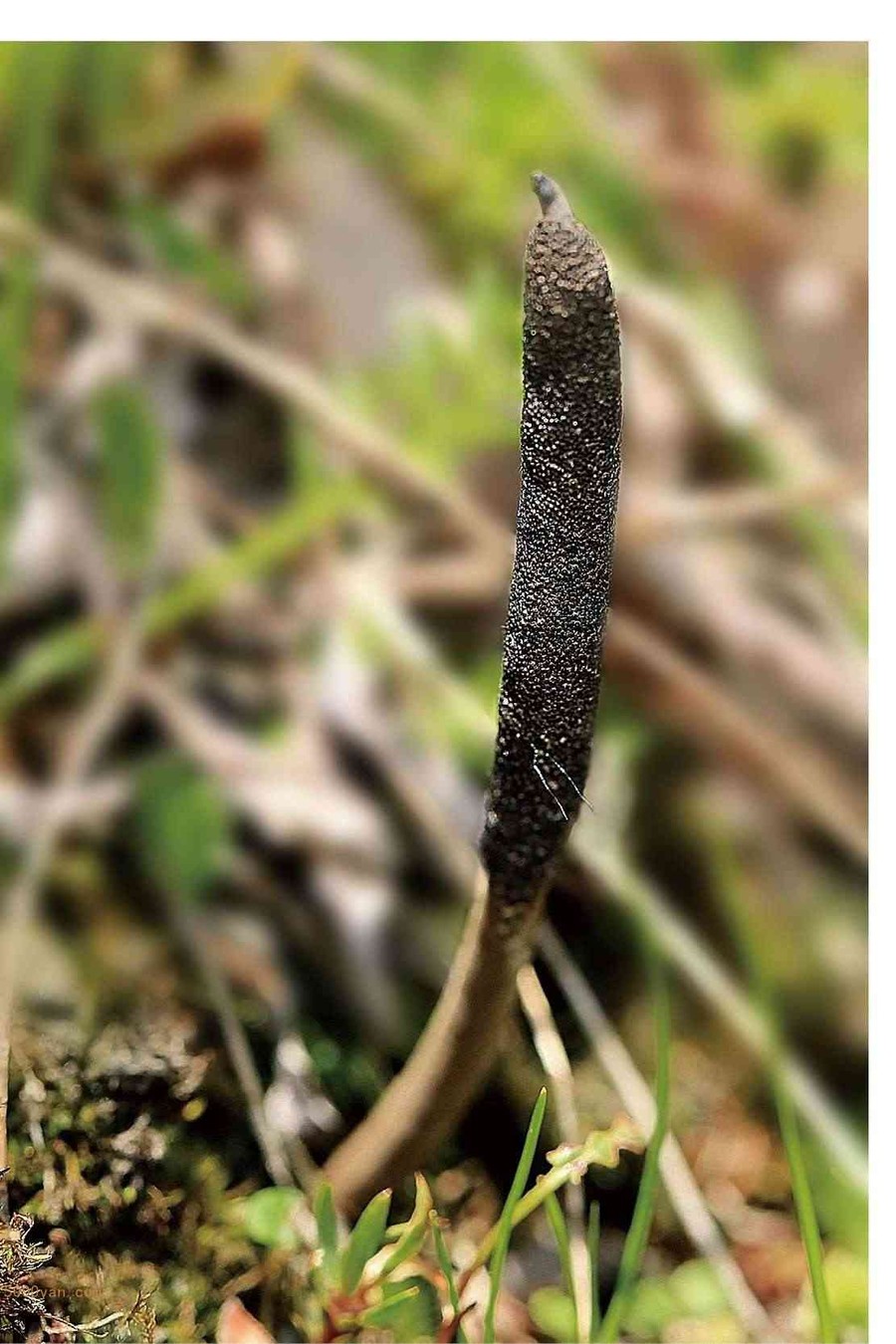
This product consists of the insect body connected to the fungal stroma growing from the insect's head. The insect body resembles a silkworm, 3-5 cm long, 0.3-0.8 cm in diameter; the surface is deep yellow to yellowish-brown, with 20-30 annulations, finer near the head; the head is reddish-brown; there are 8 pairs of legs, with the middle 4 pairs being more distinct; the texture is brittle, easily broken, with a relatively flat, pale yellowish-white cross-section. The stroma is slender and cylindrical, 4-7 cm long, approximately 0.3 cm in diameter; the surface is deep brown to brownish-brown, with fine longitudinal wrinkles, slightly enlarged at the upper part; the texture is flexible, with a whitish cross-section. The odor is slightly fishy, and the taste is slightly bitter.
Chemical Constituents
This product primarily contains cholesterol, adenosine, ergosterol, adenine, cordyceps cyclopeptide A, galactomannan, cordycepin, and other components.
Pharmacology
Regulates immune function, exhibiting a biphasic regulatory effect that can either enhance or weaken immune activity; possesses a relatively strong anticancer effect; slows heart rate while significantly increasing cardiac output; has a marked dilating effect on bronchial smooth muscle, providing antiasthmatic and expectorant actions; can elevate fasting blood glucose levels; influences the endocrine system, and also exhibits anti-inflammatory, sedative, and anticonvulsant effects; possesses a certain antibacterial action, can protect renal function, and also has anti-radiation and anti-mutagenic effects.
Properties and Channel Entry
Sweet, neutral. Enters the Lung and Kidney channels.
Functions and Indications
Tonifies the Kidney and benefits the Lung, stops bleeding and transforms Phlegm
Dosage and Administration
Oral: decoct in water, 5-10 g; or made into pills or powder; or stewed with chicken or duck.
Precautions and Contraindications
Use with caution in patients with exterior pathogenic factors.
Prescriptions
1. For pulmonary tuberculosis with cough, hemoptysis, and senile deficiency-induced dyspnea: Dongchongxiacao (Cordyceps) 30 g, Beimu (Fritillaria) 15 g, Baihe (Lily Bulb) 12 g. Decoct in water and take orally. ("Hebei Zhongcaoyao") 2. For kidney deficiency-induced lower back pain: Dongchongxiacao (Cordyceps) 30 g, Gouqizi (Goji Berry) 30 g. Soak in 1 kg of yellow rice wine for 1 week. Take 1 small cup each time, twice daily. ("Hebei Zhongcaoyao") 3. For anemia, post-illness weakness, impotence, and nocturnal emission: Huangqi (Astragalus) 30 g, Dongchongxiacao (Cordyceps) 15 g. Decoct in water and take orally. ("Hebei Zhongcaoyao") 4. For post-illness debility: Dongchongxiacao (Cordyceps) 3-5 pieces, one old male duck, remove the internal organs, split open the duck's head, insert the medicine inside, tie it up with thread, and steam with soy sauce and wine until thoroughly cooked. ("Gangmu Shiyi")