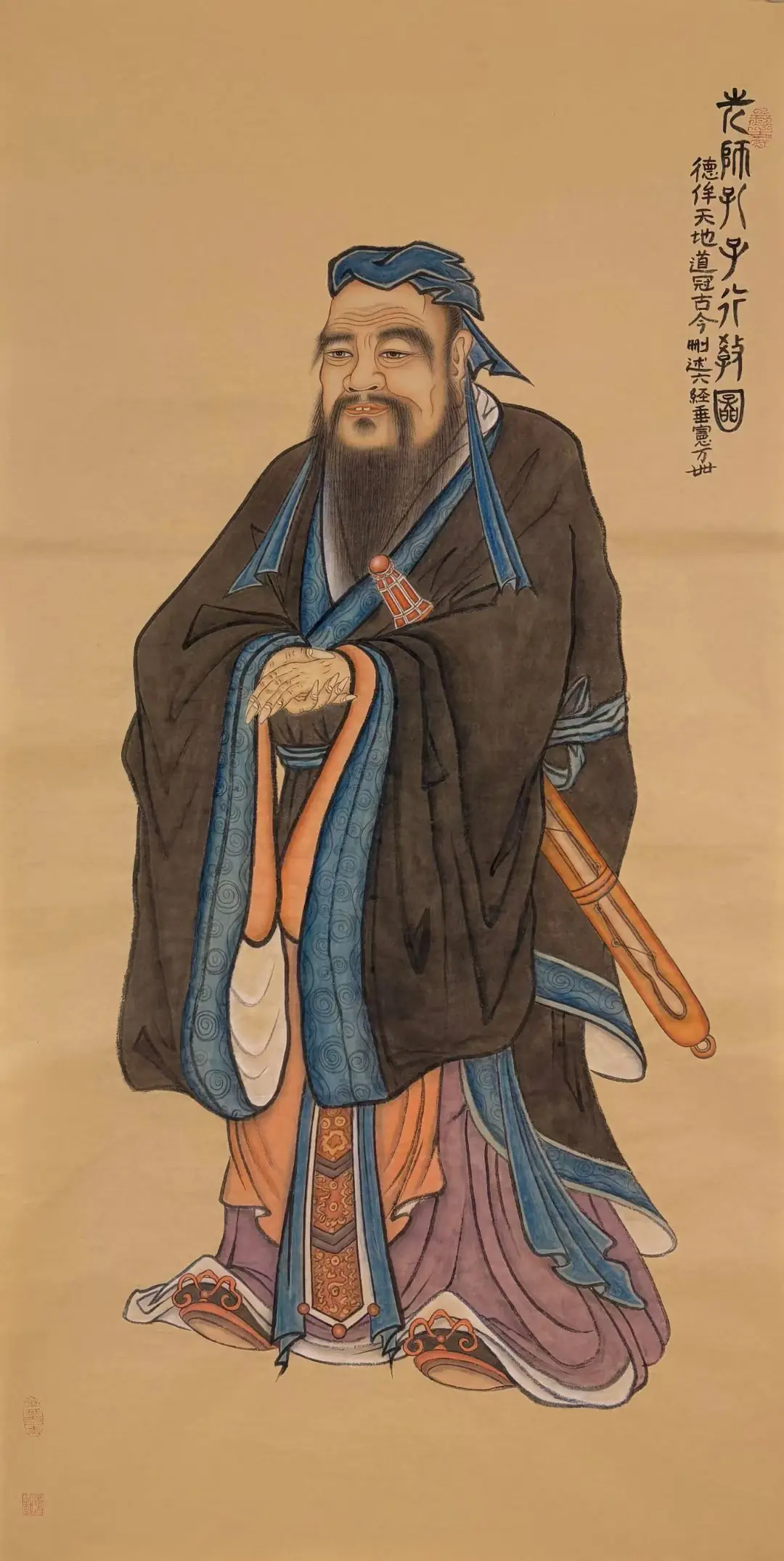
The Original Quote:
陈亢问于伯鱼曰:“子亦有异闻乎?”对曰:“未也。尝独立,鲤趋而过庭,曰:‘学《诗》乎?’对曰:‘未也。’‘不学《诗》,无以言。’鲤退而学《诗》。他日,又独立,鲤趋而过庭,曰:‘学《礼》乎?’对曰:‘未也。’‘不学《礼》,无以立。’鲤退而学《礼》。闻斯二者。”陈亢退而喜曰:“问一得三,闻《诗》,闻《礼》,又闻君子之远其子也。”
Chén Kàng wèn yú Bóyú yuē: “Zǐ yì yǒu yì wén hū?” Duì yuē: “Wèi yě. Cháng dú lì, Lǐ qū ér guò tíng, yuē: ‘Xué Shī hū?’ Duì yuē: ‘Wèi yě.’ ‘Bù xué Shī, wú yǐ yán.’ Lǐ tuì ér xué Shī. Tā rì, yòu dú lì, Lǐ qū ér guò tíng, yuē: ‘Xué Lǐ hū?’ Duì yuē: ‘Wèi yě.’ ‘Bù xué Lǐ, wú yǐ lì.’ Lǐ tuì ér xué Lǐ. Wén sī èr zhě.” Chén Kàng tuì ér xǐ yuē: “Wèn yī dé sān, wén Shī, wén Lǐ, yòu wén jūnzǐ zhī yuǎn qí zǐ yě.”
English Translation:
Chen Kang inquired of Boyu, saying, “Hast thou received any special instruction from the Master?” Boyu replied, “Not yet. Once, as he stood alone, and I hastened across the courtyard, he asked, ‘Hast thou studied the Odes?’ I answered, ‘Not yet.’ He said, ‘Without the Odes, one cannot speak.’ I withdrew and studied the Odes. Another day, as he stood alone, and I hastened across the courtyard, he asked, ‘Hast thou studied the Rites?’ I answered, ‘Not yet.’ He said, ‘Without the Rites, one cannot stand firm.’ I withdrew and studied the Rites. Thus have I heard but these two things.” Chen Kang withdrew and rejoiced, saying, “I asked one thing, and gained three: I have heard of the Odes, I have heard of the Rites, and I have learned that the noble man (jūnzǐ) shows no partiality even to his own son.”
Key Concepts Explained:
- Lǐ (礼/禮): Ritual propriety, the code of conduct and social norms that cultivate inner virtue and outer harmony, enabling one to “stand” (lì) in society with moral integrity.
- Shī (诗/詩): The Odes, a classical collection of poetry that refines emotional expression and fosters eloquence, essential for cultured discourse (yán) and moral awakening.
- Jūnzǐ (君子): The noble person or exemplary individual, who embodies moral cultivation and impartiality—here, Confucius treats his son with the same standards as any student, avoiding favoritism.
- Yuǎn (远/遠): Literally “to keep at a distance,” implying impartiality and non-preference, a mark of the jūnzǐ’s selfless dedication to universal ethical education.
Cultural Context:
This passage from the Analects (Lúnyǔ, 论语) exemplifies Confucius’s educational philosophy, where the Odes (Shī) and Rites (Lǐ) form the twin pillars of self-cultivation. Historically, the Odes were studied to refine speech and inspire moral sentiment, while the Rites provided a framework for social harmony and personal discipline. The dialogue reveals Confucius’s impartiality: even his own son, Boyu (孔鲤), received no privileged instruction, underscoring the egalitarian ideal of learning as a universal path. This episode has been celebrated in Chinese culture as the origin of “shīlǐ chuán jiā” (诗礼传家, “transmitting the Odes and Rites through the family”), a legacy emphasizing that moral education transcends kinship, fostering a society rooted in virtue and mutual respect.