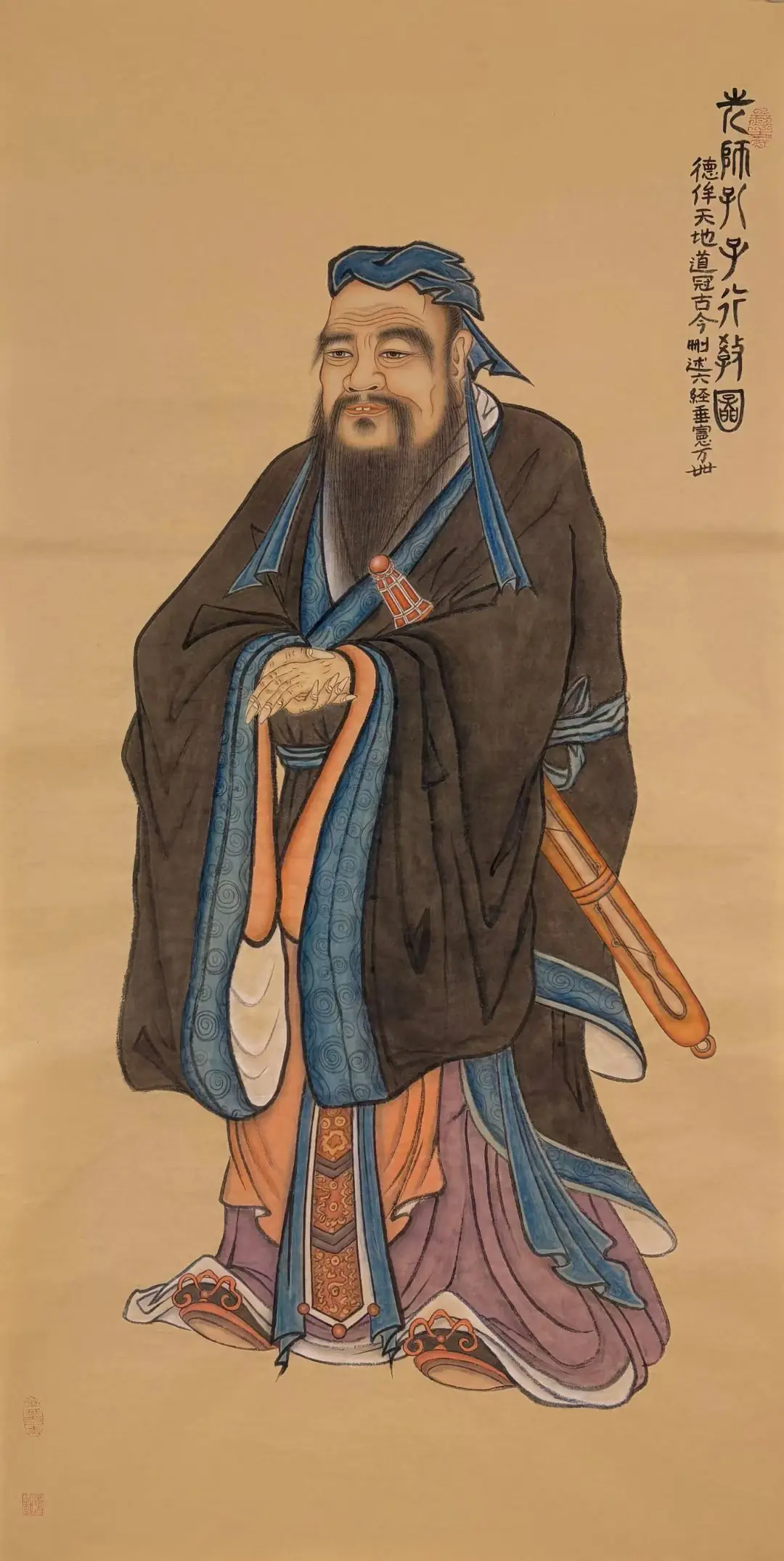
The Original Quote:
子曰:“生而知之者上也,学而知之者次也;困而学之又其次也。困而不学,民斯为下矣。”
Zǐ yuē: “Shēng ér zhī zhī zhě shàng yě, xué ér zhī zhī zhě cì yě; kùn ér xué zhī yòu qí cì yě. Kùn ér bù xué, mín sī wéi xià yǐ.”
English Translation:
“Those born with innate knowledge belong to the highest order; those who gain knowledge through study belong to the next; those who learn only when beset by difficulties belong to a lower order still. But those who, when beset by difficulties, still do not learn—such common folk are of the lowest order indeed.”
Key Concepts Explained:
- 命 (Mìng): Mandate or destiny, here reflecting the idea that innate talent is a gift of fate, not a universal standard.
- 礼 (Lǐ): Ritual propriety or social order, which Confucius believed could be internalized through learning, even by those without innate wisdom.
- 仁 (Rén): Benevolence or humaneness, the ultimate virtue that learning aims to cultivate, transcending mere knowledge acquisition.
- 学 (Xué): Study or learning, emphasizing active effort as the core pathway to self-cultivation in Confucian thought.
Cultural Context:
This passage from The Analects (Book 16, Chapter 9) reflects Confucius’s pragmatic view of human potential in ancient China’s hierarchical society. While acknowledging rare innate genius (生而知之), he prioritizes effortful learning (学而知之) as the accessible path for most, countering fatalism. The text also subtly critiques social stratification: “common folk” (民) who refuse to learn despite hardship are seen as morally deficient, not inherently inferior. This aligns with Confucius’s belief in education as a transformative force, challenging rigid class structures. Historically, this teaching shaped China’s civil service exam system, where merit through study—not birth—determined advancement.