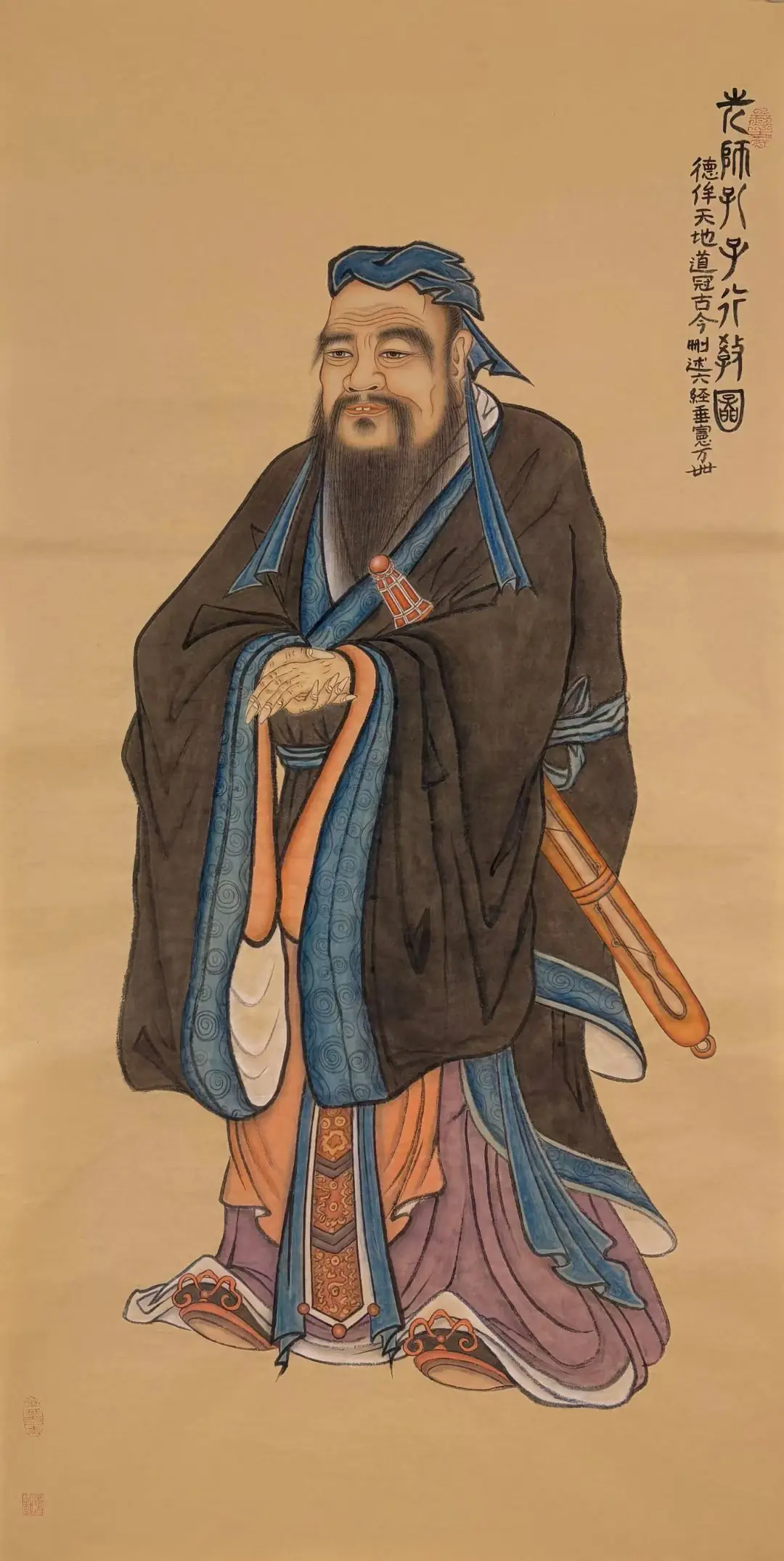
The Original Quote:
孔子曰:“禄之去公室五世矣,政逮于大夫四世矣,故夫三桓之子孙微矣。”
Kǒngzǐ yuē: “Lù zhī qù gōngshì wǔ shì yǐ, zhèng dài yú dàfū sì shì yǐ, gù fú Sānhuán zhī zǐsūn wēi yǐ.”
English Translation:
Confucius said: “The emoluments have departed from the ducal house for five generations; governance has fallen into the hands of the great officers for four generations. Thus, the descendants of the Three Huan are now in decline.”
Key Concepts Explained:
- 禄 (Lù): Emoluments or stipends, symbolizing legitimate authority and the rightful distribution of power within a hierarchical system.
- 政 (Zhèng): Governance or political power, reflecting the exercise of authority that should align with ritual propriety and moral order.
- 礼 (Lǐ): Ritual propriety, the foundational principle of social harmony and institutional integrity, which, when broken, leads to chaos.
- 命 (Mìng): Mandate or destiny, often tied to the moral legitimacy of rule, as seen in the concept of the Mandate of Heaven.
Cultural Context:
This passage from the Analects (Book XVI, Chapter 3) captures Confucius’s observation of the political decline in the state of Lu during the Spring and Autumn period. The “Three Huan” (三桓, Sānhuán) were the three powerful families—Meng, Shusun, and Ji—descended from Duke Huan of Lu, who usurped authority from the ducal house. Confucius here laments the erosion of proper governance: when power shifts from the rightful ruler to ministers, and then to their retainers, the entire social order collapses. This reflects his core belief that adherence to ritual (礼, Lǐ) and institutional norms is essential for stability. Historically, this prophecy proved accurate, as the Ji family later faced rebellion from their own stewards, illustrating how broken systems breed further decay—a timeless lesson for any organization.