The Original Quote:
季氏将伐颛臾,冉有、季路见于孔子,曰:“季氏将有事于颛臾。”孔子曰:“求,无乃尔是过与?夫颛臾,昔者先王以为东蒙主,且在邦域之中矣,是社稷之臣也。何以伐为?”冉有曰:“夫子欲之,吾二臣者皆不欲也。”孔子曰:“求,周任有言曰:‘陈力就列,不能者止。’危而不持,颠而不扶,则将焉用彼相矣?且尔言过矣,虎兕出于柙,龟玉毁于椟中,是谁之过与?”冉有曰:“今夫颛臾固而近于费,今不取,后世必为子孙忧。”孔子曰:“求,君子疾夫舍曰欲之而必为之辞。丘也闻,有国有家者,不患寡而患不均,不患贫而患不安。盖均无贫,和无寡,安无倾。夫如是,故远人不服则修文德以来之,既来之,则安之。今由与求也相夫子,远人不服而不能来也,邦分崩离析而不能守也,而谋动干戈于邦内。吾恐季孙之忧不在颛臾,而在萧墙之内也。”
Jì shì jiāng fá Zhuānyú, Rǎn Yǒu, Jì Lù jiàn yú Kǒngzǐ, yuē: “Jì shì jiāng yǒu shì yú Zhuānyú.” Kǒngzǐ yuē: “Qiú, wú nǎi ěr shì guò yǔ? Fú Zhuānyú, xī zhě xiān wáng yǐ wéi Dōngméng zhǔ, qiě zài bāng yù zhī zhōng yǐ, shì shèjì zhī chén yě. Hé yǐ fá wéi?” Rǎn Yǒu yuē: “Fūzǐ yù zhī, wú èr chén zhě jiē bù yù yě.” Kǒngzǐ yuē: “Qiú, Zhōu Rèn yǒu yán yuē: ‘Chén lì jiù liè, bù néng zhě zhǐ.’ Wēi ér bù chí, diān ér bù fú, zé jiāng yān yòng bǐ xiāng yǐ? Qiě ěr yán guò yǐ, hǔ sì chū yú xiá, guī yù huǐ yú dú zhōng, shì shuí zhī guò yǔ?” Rǎn Yǒu yuē: “Jīn fú Zhuānyú gù ér jìn yú Fèi, jīn bù qǔ, hòu shì bì wèi zǐsūn yōu.” Kǒngzǐ yuē: “Qiú, jūnzǐ jí fū shě yuē yù zhī ér bì wèi zhī cí. Qiū yě wén, yǒu guó yǒu jiā zhě, bù huàn guǎ ér huàn bù jūn, bù huàn pín ér huàn bù ān. Gài jūn wú pín, hé wú guǎ, ān wú qīng. Fū rú shì, gù yuǎn rén bù fú zé xiū wén dé yǐ lái zhī, jì lái zhī, zé ān zhī. Jīn Yóu yǔ Qiú yě xiàng fūzǐ, yuǎn rén bù fú ér bù néng lái yě, bāng fēn bēng lí xī ér bù néng shǒu yě, ér móu dòng gān gē yú bāng nèi. Wú kǒng Jì sūn zhī yōu bù zài Zhuānyú, ér zài xiāo qiáng zhī nèi yě.”
English Translation:
When the Ji family prepared to attack Zhuanyu, Ran You and Ji Lu came to see Confucius, saying: “The Ji family is about to engage in military action against Zhuanyu.” Confucius replied: “Qiu, is this not your fault? Zhuanyu was formerly appointed by the ancient kings to preside over the sacrifices at Mount Dongmeng; moreover, it lies within the borders of our state and is a loyal vassal. Why should it be attacked?” Ran You said: “Our master desires it; we two ministers do not wish it.” Confucius said: “Qiu, Zhou Ren once said: ‘Display your abilities and take your place; if you cannot, desist.’ If a blind man is in danger and you do not support him, if he falls and you do not lift him, then what use is your guidance? Moreover, your words are mistaken. When a tiger or rhinoceros escapes from its cage, or a tortoise shell or jade is damaged in its casket, whose fault is it?” Ran You said: “Now Zhuanyu is fortified and near to Fei; if we do not take it now, it will surely become a worry for future generations.” Confucius said: “Qiu, the gentleman detests those who, instead of saying ‘I desire it,’ fabricate excuses. I have heard that for rulers of states or families, they do not worry about scarcity but about inequality; they do not worry about poverty but about instability. For where there is equity, there is no poverty; where there is harmony, there is no scarcity; where there is stability, there is no downfall. Thus, if distant people are not submissive, cultivate culture and virtue to attract them; once they come, make them content. Now you two, You and Qiu, assist your master. Distant people are not submissive and you cannot attract them; the state is crumbling and you cannot preserve it; yet you plot to use arms within the domain. I fear that Ji Sun’s worry lies not in Zhuanyu, but within his own palace walls.”
Key Concepts Explained:
- Ren (仁): Benevolence or humaneness—the core Confucian virtue of compassion and ethical conduct toward others, especially in governance.
- Li (礼): Ritual propriety—the set of social norms and rites that maintain harmony and order, here implied in the call for proper conduct.
- De (德): Virtue or moral power—the inner quality that attracts others through example, as in “xiu wen de” (cultivating culture and virtue).
- Jun (均): Equity—not equal distribution but fair allocation that prevents social resentment and conflict.
- He (和): Harmony—social cohesion achieved through mutual respect and unity, overcoming demographic weakness.
- An (安): Stability—a secure social order that ensures peace and prevents rebellion, as in “an wu qing” (stability prevents downfall).
Cultural Context:
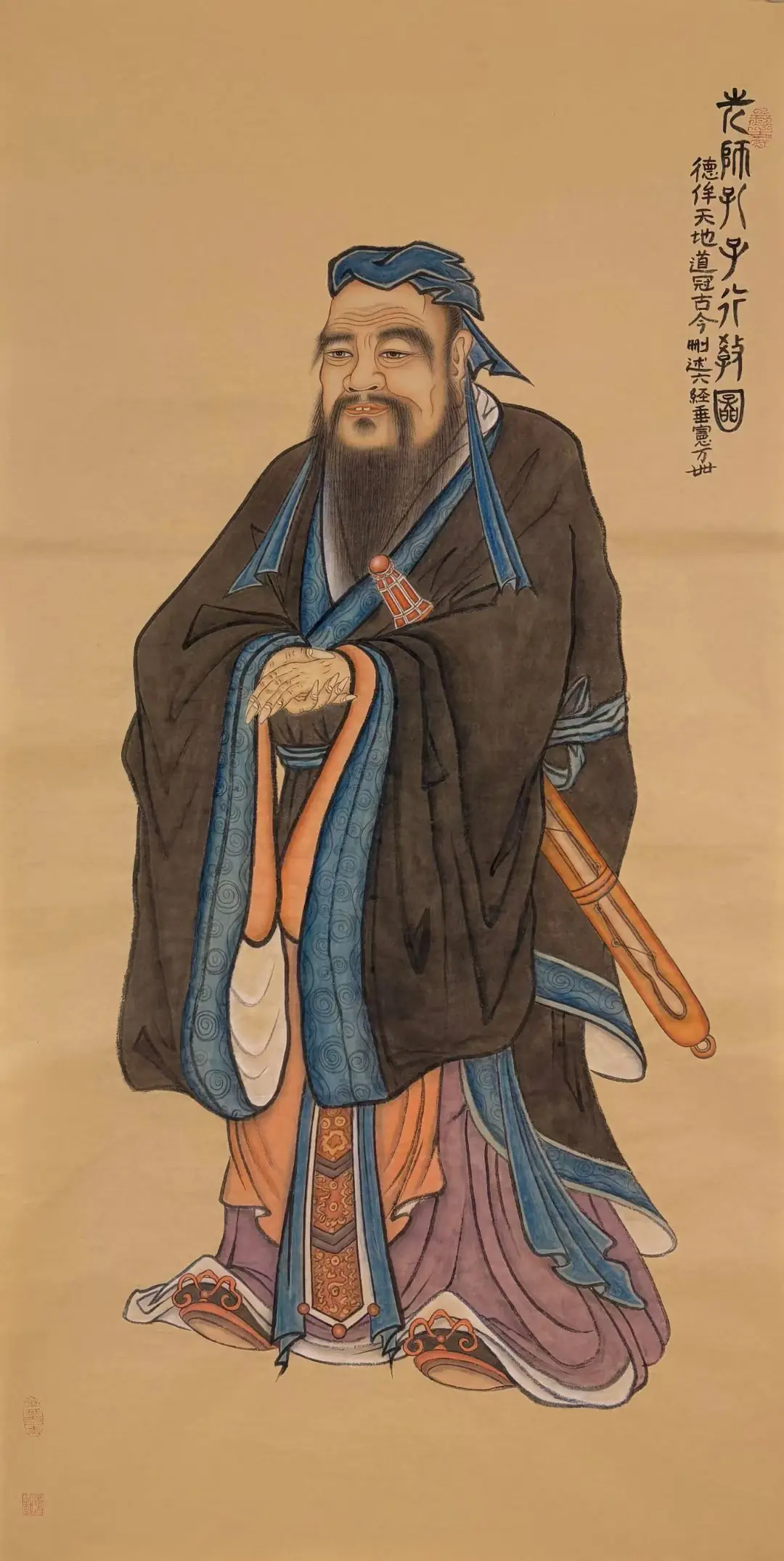
This passage from the Analects (Lunyu 16.1) captures a pivotal moment in the Spring and Autumn period (c. 770–476 BCE), when the Zhou dynasty’s feudal order was crumbling. The Ji family, a powerful noble clan in the state of Lu, sought to annex the small state of Zhuanyu for strategic gain. Confucius (551–479 BCE) rebukes his disciples Ran You and Ji Lu—who served as Ji’s ministers—for failing to uphold ethical leadership. His critique introduces three pillars of governance: equity (jun), harmony (he), and stability (an), which he argues are more vital than wealth or population. The phrase “the worry lies within the palace walls” (xiao qiang zhi nei) has become a Chinese idiom warning that internal discord is often the greatest threat. Historically, this text reflects Confucius’s advocacy for rule by virtue (de zhi) over force, emphasizing moral cultivation as the foundation of statecraft—a principle that influenced Chinese governance for millennia.