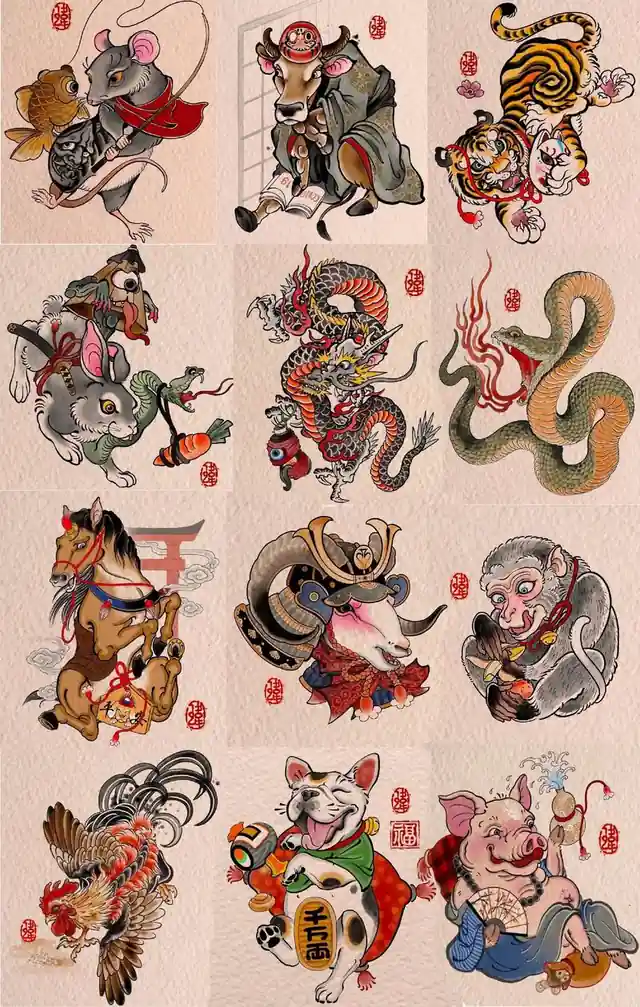
In people's minds, the snake seems to be the most mysterious animal in the world, and almost no other creature has brought humans so much confusion. The reason why the snake has become a collection of contradictions in people's perception lies in its own strange and unpredictable nature.
When mentioning snakes, people naturally think of giant pythons in deep mountain forests, venomous snakes on wild paths, and their brilliant colors, peculiar patterns, even the rustling sound of their crawling and the hissing of their tongues, all of which evoke an indescribable sense of coldness and fear. However, these are merely some of the snake's instinctive behaviors and are precisely what make snakes so fascinating.
The snake becomes gentle and the snake hibernates.
Snakes are "ectothermic animals," also known as "poikilotherms," as they generate only a small amount of heat internally. Due to their lack of well-developed insulation and temperature regulation mechanisms, they easily lose heat and must obtain sufficient warmth from the environment to maintain their body temperature. A snake's body temperature is directly related to the temperature of the medium it inhabits, such as soil, rocks, or tree trunks. For example, snakes can raise their body temperature by basking in the sun or resting on warm stones, and they can lower it by hiding in shade or even in water. Because of their limited temperature adaptability, snakes have developed the habit of hibernation. They typically engage in feeding, mating, and reproduction from early summer to early winter, and during winter, they choose very dry caves, burrows, or rock crevices for hibernation.
During hibernation, snakes neither eat, drink, nor move, with their metabolism dropping to its lowest level, relying solely on stored body fat to sustain minimal life needs. According to relevant data, snakes consume most of their body fat during hibernation, losing nearly 50% of their body weight, with a mortality rate as high as one-third. When hibernating, dozens or even hundreds of snakes often gather together, which helps raise the temperature, reduce water loss, and also facilitates mating and reproduction in the following year. In some tropical regions, where the summer climate is hot and dry, snakes also enter a dormant state, which is referred to as "aestivation."
Snake shedding and snake dancing.
Molting is an important physiological process for snakes. The outermost layer of a snake's skin is a keratinous membrane called the keratinized scale, which differs from fish scales in that it is more flexible, waterproof, and cannot grow along with the snake's body, so snakes need to shed their skin every two to three months. When molting, snakes often choose rough ground or hard branches, first rubbing the skin around their mouths against these surfaces to break it, then slowly crawling out of the entire body through the opening, and gradually growing larger while the new skin is still soft and tender.
Snakes can also dance. When two snakes fight over territory or a mate, they do not engage in a violent struggle but instead determine the outcome through a combative dance. They alternately separate and entwine, rise and fall, sometimes raising their heads with angry glares and other times twisting together. When one finally falls to the ground, the snake on top is the victor. Additionally, snakes can sway their bodies to the rhythm of music, flicking their long tongues as they dance gracefully. It may be precisely because of snakes' sensitivity to music that people developed the tradition of using snake skin to make instruments like the erhu (a two-stringed Chinese fiddle).
Snakes eat rats, frogs, and toads.
The snake is a natural predator of the rat. Although rats are cunning and quick-witted, they can hardly escape the snake's attack range. When a snake attacks a rat, it often remains motionless with its mouth wide open, relying on its powerful suction force to immobilize prey within a certain distance. After being sucked in, the mucus inside the snake's body slowly suffocates the rat to death, and then the snake gradually digests it.
It has long been common knowledge that snakes are natural predators of animals such as frogs and toads. To avoid being preyed upon, some frogs have developed protective coloration, and some are even poisonous, all as a means of self-preservation. While frogs have ways to hide, snakes also have their own methods: after spotting a frog, a snake will slowly approach and then suddenly strike, catching the frog before it can escape.
The inherent habits of the Snake often appear baffling to humans, which unconsciously imbues it with a mysterious aura, along with possessing extraordinary wisdom and abilities, making it an object of both worship and reverence for people.
Further Reading
The Four Ways Snakes Move
First, the Serpentine Method. The snake bends its body into horizontal wave-like curves, generating thrust through friction with the rough ground to propel itself forward. This serpentine method of movement is also known as the "wave-like method." Second, the Lateral Method. The snake lifts the front half of its body off the ground, using the rear half as support, and makes a sudden lateral lunge. The trail left by this lateral movement is a straight line. This lateral movement style is suitable for moving across loose, sandy terrain. Third, the Linear Method.
Large snakes of the snake family often raise their broad abdominal scales upright, supporting them on the ground to move their bodies forward in a straight line. Fourth, the accordion-style movement. Sometimes a snake will keep its rear end still while lifting the front part of its body, stretching it as far forward as possible until it reaches a target, then it will draw the rear end forward in a contracting motion. This alternating stretch-and-contract method of movement is a primary crawling style used inside caves.