
After the establishment of the Eastern Han Dynasty, Emperor Guangwu Liu Xiu, in order to maintain national stability, adopted a moderate policy to manage the aristocratic scholar-official class, for which he made every effort to arrange marriages between the imperial family and the families of meritorious officials, hoping that such political marriages would ensure the stability of the state. Dou Rong, Deng Yu, Ma Yuan, Liang Tong, and others were all key contributors to the Eastern Han, and successive empresses of the dynasty were selected from the families of these men. Indeed, Emperor Guangwu's intentions were good, but he did not understand the severe consequences of this approach: limiting the pool of empress candidates would create a force of relatives by marriage around the emperor, which would have a detrimental impact on the court. Over time, imperial power would fall firmly into the hands of these relatives, leaving the emperor's position precarious. From the reign of Emperor He onward, the influence of these relatives grew increasingly severe, even interfering with the appointment and deposition of emperors. Because from Emperor He onward, many emperors were young children who needed support, and in most cases, the empress dowager managed state affairs, often entrusting power to her own family, leading to unchecked dominance by these relatives. For their own benefit, these relatives would arbitrarily choose a child from the imperial clan to ascend the throne after an emperor's death, all to keep power firmly in their own hands.
Liang Ji's great-grandfather was the meritorious official Liang Tong, who was enfeoffed as the Marquis of Chengyi for his contributions in helping Liu Xiu establish the Eastern Han Dynasty. Emperor Guangwu also married his own daughter to Liang Tong's son, and from then on, the women of the Liang clan became eligible to compete for the position of empress. In 125 AD, when Emperor Shun of Han ascended the throne, the Liang family, after experiencing several ups and downs, finally secured a firm foothold in the Eastern Han regime.
Emperor Shun of the Han Dynasty had Empress Liang, who was the sister of Liang Ji, then serving as Grand General with immense power. In 141 AD, Emperor Shun was already in his twenties and could have personally governed, but unfortunately he died of illness in 144 AD, leaving the court completely under Liang Ji's control. To retain power, Liang Ji first installed a two-year-old child, Liu Bing, as Emperor Chong of Han. Empress Liang became Empress Dowager, gaining even more authority, while Grand General Liang Ji's cruel and extravagant nature increasingly surfaced. Just half a year later, Emperor Chong died, and Liang Ji placed another eight-year-old child, Liu Zuan, on the throne as Emperor Zhi of Han. Despite his young age, Emperor Zhi was remarkably intelligent and perceptive, deeply resenting Liang Ji's arrogant and domineering behavior. Once, in front of all court officials, Emperor Zhi pointed at Liang Ji and scolded him for being too overbearing. Furious and humiliated, Liang Ji ordered a chef to prepare poisoned cakes and presented them to the emperor. After just a few bites, the poor emperor turned pale, broke out in cold sweat, clutched his stomach in agony, and within moments collapsed and died.
After Emperor Zhi's death, Liang Ji placed the fifteen-year-old Liu Zhi on the throne, who became Emperor Huan of Han. Emperor Huan had no real power whatsoever, as Liang Ji continued to hold control over the government and began to ruthlessly plunder the people's wealth across the entire realm, arbitrarily seizing others' property. He took over all the farmland outside Luoyang as his own, ordered craftsmen to build numerous pavilions and towers for his own amusement, and also constructed a vast breeding ground where all kinds of rabbits were raised, collected from across the country by Liang Ji's subordinates. Liang Ji had these rabbits branded with a special mark, and if anyone killed one of them, he would have them executed without mercy.
Liang Ji also ordered commoners to send their children to his mansion as servants, calling them "self-sellers," implying that the people willingly sold their children into slavery in the Liang household. To amass as much wealth as possible, Liang Ji sent men to arrest every wealthy person in the Eastern Han dynasty, forcing them to hand over their money, and if anyone refused, he would fabricate a crime and execute them. There was once a rich man named Sun Fen; Liang Ji demanded fifty million strings of cash from him, and when Sun Fen refused, Liang Ji immediately flew into a rage, first arresting Sun Fen's mother, then falsely accusing the Sun family of stealing a large amount of money and jewels from the Liang household, and subsequently arresting Sun Fen as well, throwing him into prison and torturing him severely. Sun Fen could not endure it for long and died unjustly, with all his property falling into Liang Ji's hands.
Liang Ji tyrannized the realm for over twenty years, not only harming countless common people but also executing many loyal court officials, which incited righteous individuals across the nation to rise up against him. Emperor Huan of Han, left with no choice, had to obey Liang Ji's commands and even appointed Liang Ji's youngest sister as empress. However, within a few years, the young Empress Liang died, and the emperor planned to elevate his beloved Consort Deng to the position of empress. Liang Ji opposed the emperor's decision and secretly sent assassins to kill Consort Deng's mother, but unexpectedly, the assassins were captured. When Emperor Huan interrogated them and learned that Liang Ji was behind the plot, he was furious. This time, Emperor Huan had finally reached his limit. He summoned five eunuchs in the palace, all of whom harbored deep hatred for Liang Ji, and then mobilized troops to surround Liang Ji's residence, cutting off all escape routes.
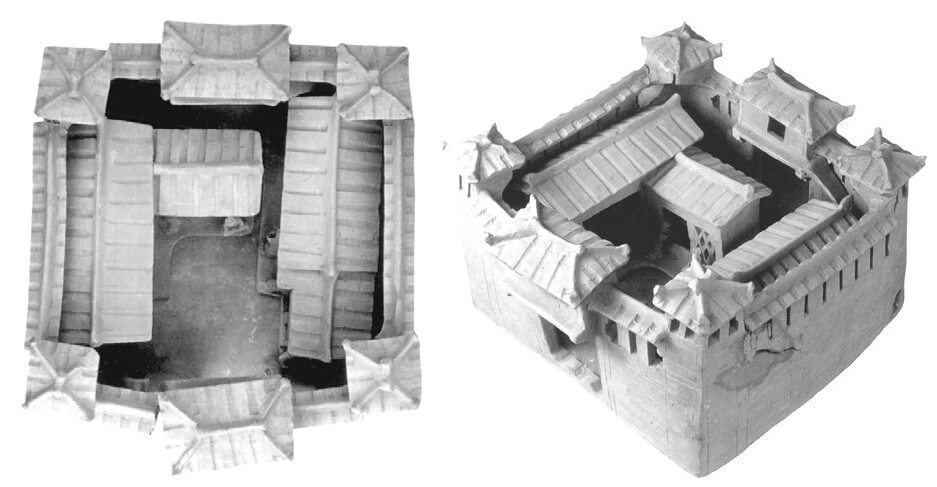
Liang Ji hid at home, not daring to go out, but the army could storm in at any moment. He finally realized that the situation was hopeless—Emperor Huan of Han would never let him off. So, with trembling hands, he took out poison and swallowed it all.
After Liang Ji's death, reactions varied greatly across the court and society: commoners and men of ambition rejoiced, while the officials and ministers of the Liang family turned ashen-faced, having lost all the power they once relied on. Emperor Huan of Han, determined to finish the job, executed all of Liang Ji's family and relatives, dismissed every Liang family member holding office in the court, and had those guilty of serious crimes dragged out of the palace gates and beheaded. When this sweeping purge was complete, the Eastern Han court had lost over three hundred officials, all of whom were Liang Ji's close associates. This shows just how vast Liang Ji's influence had been.
Emperor Huan of Han returned all the lands seized by Liang Ji to the common people and granted noble titles to the five eunuchs, marking the beginning of eunuchs replacing the consort clans in controlling the imperial court.