
After Guo Wei overthrew the Later Han Dynasty, he established the Later Zhou Dynasty and ascended the throne as emperor, historically known as Emperor Taizu of Later Zhou. Upon becoming emperor, Guo Wei initiated reforms in the political, economic, and military systems of Later Zhou. Three years later, Guo Wei died of illness, by which time both of his biological sons had already passed away, leaving only his adopted son Chai Rong alive. Thus, Chai Rong smoothly succeeded the throne, becoming Emperor Shizong of Later Zhou, whom historians regard as the "most enlightened ruler of the Five Dynasties."
Chai Rong was handsome in appearance, with a calm and reserved personality, speaking little. Born during a time of chaos, he became an orphan at a very young age. His uncle by marriage, Guo Wei, adopted him, making him both Guo Wei's adopted son and his nephew by marriage. During his youth, Chai Rong worked as a tea merchant in Jiangling, gaining deep insight into the hardships of the common people.
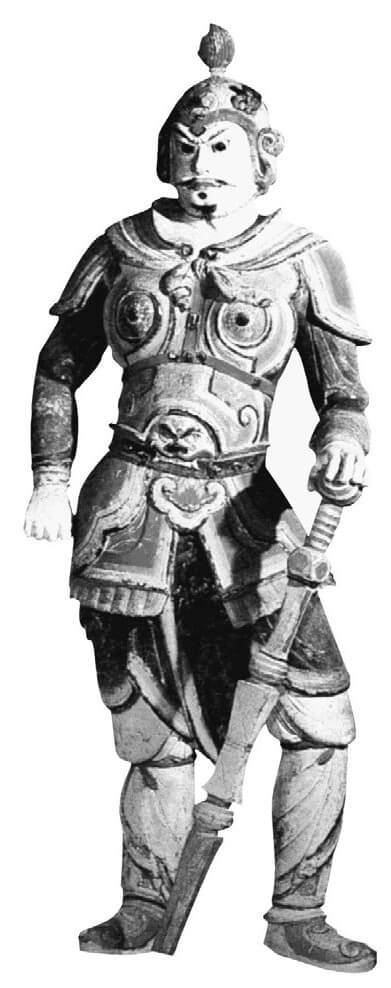
After ascending the throne, Chai Rong's first challenge was an attack from the Northern Han. When the Northern Han colluded with the Khitan to launch a large-scale invasion of the Later Zhou, Chai Rong had been on the throne for less than ten days. In this critical moment, Chai Rong did not lose his composure. He decided to personally lead the campaign, and although many court officials voiced objections, this did not change his mind. He commanded the troops himself on the battlefield, and despite the Later Zhou army being outnumbered by the invading Northern Han and Khitan forces, the Later Zhou ultimately emerged victorious. After the war, Chai Rong rewarded merit and punished fault, executing over seventy officers who had fled the battlefield, and began a strict reorganization of the military to enhance its combat effectiveness.
Not only in military affairs, but Chai Rong also implemented a series of reform measures in politics and economy. His actual reign was very short, only five years, yet his goal was to rule for thirty years: "Use ten years to expand the realm, ten years to nurture the people, and ten years to achieve peace."
During his reign, Chai Rong vigorously rectified official governance and selected talented individuals. In the chaotic Five Dynasties period, corrupt officials ran rampant, but Chai Rong severely punished them without any favoritism. He established a strict system for evaluating officials. During this time, several officials were demoted for traveling under the pretext of official business. Additionally, Chai Rong reformed the imperial examination system to recruit more talented people to contribute to the state.
To lighten the people's burden, Chai Rong abolished most taxes and encouraged them to reclaim wasteland, vigorously developing agricultural production. He also abolished cruel punishments like lingchi (death by a thousand cuts) and established a new legal code, the "Great Zhou Penal Code," governing the realm with benevolence and righteousness.
Chai Rong's reform measures achieved remarkable results, leading to the rapid economic development of the Later Zhou Dynasty. He constructed military fortifications around Kaifeng, expanded roads within the city, improved canal transportation, and built water conservancy projects, transforming Kaifeng into one of the most advanced cities in China at that time.
Chai Rong implemented continuous reforms domestically while waging wars abroad year after year. Shortly after ascending the throne, he decisively defeated the Northern Han, then launched a campaign against the Later Shu, ultimately achieving a great victory. During his five-year reign, he personally led three military expeditions against the Southern Tang, achieving remarkable results that greatly strengthened the power of the Later Zhou. Later, the Northern Han once again allied with the Liao dynasty to attack the Later Zhou. Chai Rong led his troops in fierce battles for forty-two days, winning repeatedly. He originally planned to press forward and reclaim the Sixteen Prefectures of Youyun in one fell swoop, but at that moment, he suddenly fell gravely ill and soon passed away.
If Chai Rong had not died young, then with his military talent, reclaiming the Sixteen Prefectures of Youyun might not have been a difficult task. In this way, he could have unified the north, and since the southern regimes at the time generally lacked strength, unifying the south and then the entire country would have been even easier for Chai Rong. Later, Zhao Kuangyin established the Northern Song Dynasty and unified the whole country in just twenty years, which was inseparable from the foundation laid by Chai Rong in the earlier period.
Although Chai Rong died young, it did not prevent him from being hailed as the "Greatest Wise Ruler of the Five Dynasties" and becoming a key figure in ending the chaotic political situation of the Five Dynasties and Ten Kingdoms.