
During the Five Dynasties and Ten Kingdoms period, dynastic changes came so rapidly that one could hardly keep up, and it was only in such a historical environment that a figure emerged who served through four dynasties, under ten different rulers, and held the position of prime minister for over twenty years—a true "everlasting official" whose name was Feng Dao.
In the late Tang Dynasty, Feng Dao joined the service of Liu Shouguang as a military advisor. Later, after Liu Shouguang was defeated in battle, Feng Dao fled to Taiyuan and took a position under the eunuch Zhang Chengye, the military supervisor of Hedong. Feng Dao was highly learned and exceptionally skilled at writing essays, which earned him Zhang Chengye's appreciation. Zhang Chengye recommended him to Jin King Li Keyong, and he became the chief secretary of the Hedong Circuit under Li Keyong, gaining the favor of Li Cunxu. After ascending the throne, Li Cunxu promoted Feng Dao to Vice Minister of the Ministry of Revenue.
According to Ouyang Xiu's records in the New History of the Five Dynasties, Feng Dao was a very frugal and self-disciplined person. During the war between the Later Jin and Later Liang along the Yellow River, Feng Dao lived in a thatched hut with the army and used straw as his bedding at night. He distributed all his salary to share with his attendants, and during meals, he ate exactly the same food as they did. When a soldier captured a beautiful woman and insisted on giving her to Feng Dao, he reluctantly accepted her, found a room to settle her in, and after locating her parents, returned her to them, reuniting the family.
After his father's death, Feng Dao returned to his hometown of Jingcheng to observe the mourning period. At that time, a famine struck, and to aid the local villagers, he distributed all his family's wealth. He then moved into a thatched cottage to live. Whether it was plowing fields or chopping firewood, he did everything himself. Some families, lacking able-bodied men, could not farm their land and had to let fertile fields turn into wasteland. Feng Dao would go to their fields at night, when no one was around, to help with the plowing. When the landowners discovered the truth, they came to thank him. But in Feng Dao's view, his actions were not worthy of such gratitude.
After his mourning period ended, he served as a Hanlin Academician in the Later Tang Dynasty. Later, when Li Siyuan raised an army to rebel and ascended the throne, Feng Dao was appointed as an Academician of the Duanyin Hall. Li Siyuan had long heard of Feng Dao's great reputation and greatly admired him. Feng Dao received continuous promotions, and within just one year, he became the Prime Minister of the Later Tang Dynasty. This aroused jealousy from some people, who constantly attacked Feng Dao, but Li Siyuan always regarded him as a trusted confidant. At that time, many children of aristocratic families obtained official positions through connections, but in reality, these people had no real ability. During his tenure in the Later Tang Dynasty, Feng Dao continuously suppressed these aristocratic offspring while promoting many talented scholars from humble backgrounds.
During Li Siyuan's reign, the Later Tang Dynasty enjoyed stability and consecutive years of bountiful harvests. To prevent Li Siyuan from becoming complacent and careless, Feng Dao used a personal experience to caution him. Feng Dao recounted that when he was an official in the Hedong region, he once traveled through an extremely treacherous path, gripping the reins tightly and treading as if on thin ice, fearing any mishap. But when he reached flat ground, thinking he was finally safe, he unexpectedly fell off his horse. Feng Dao summarized his lesson: when in danger, people tend to be cautious and thus avoid disaster, but when in a safe environment, they often become careless, allowing misfortune to strike. Feng Dao also told Li Siyuan, "High grain prices starve the farmer; low grain prices hurt the farmer." This line from Nie Yizhong's "Farmers' Poem" was simple yet contained profound principles of governance. Li Siyuan immediately ordered his attendants to copy down the poem, and from then on, he often recited it.
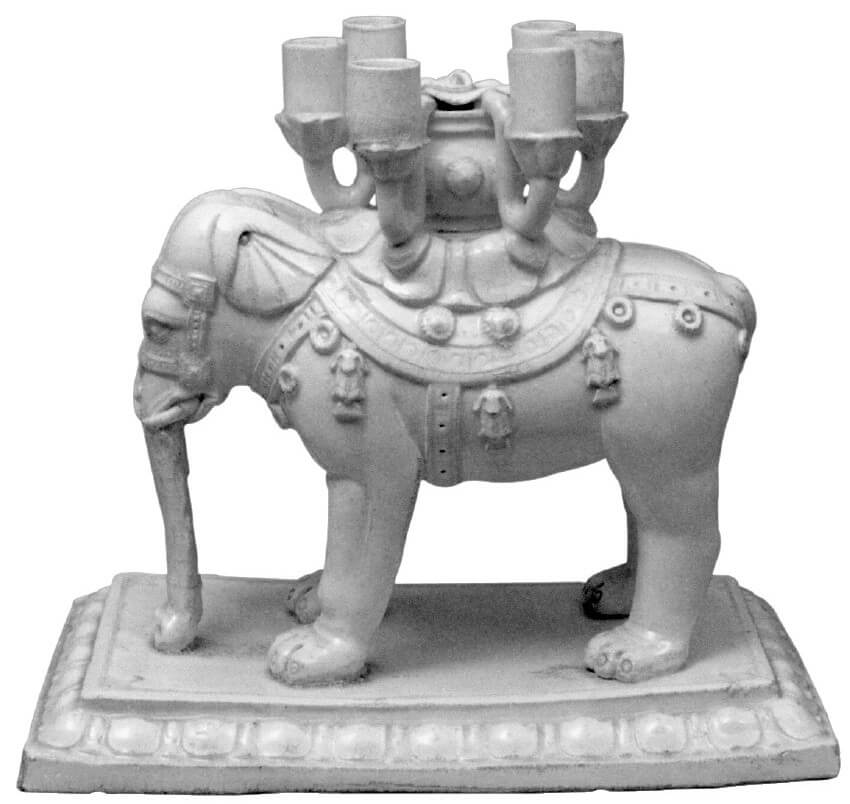
Later, someone presented a jade cup to Li Siyuan, engraved with the words "Eternal National Treasure Cup." In response, Feng Dao remarked that a ruler's most precious treasure is actually benevolence and righteousness. Li Siyuan did not initially understand Feng Dao's meaning, but after listening to a civil official's explanation, he came to realize it and immediately accepted Feng Dao's advice, rewarding him accordingly.
During Li Siyuan's reign, Feng Dao used woodblock printing to publish the Nine Confucian Classics, marking the first time this was recorded in ancient Chinese history. Considering how chaotic the Five Dynasties and Ten Kingdoms period was, this achievement would have been nearly impossible without Feng Dao's persistent efforts.
After Shi Jingtang established the Later Jin Dynasty, Feng Dao once again served as Prime Minister until Shi Jingtang's son Shi Chonggui was captured by the Liao Dynasty and died of illness, leading to the fall of the Later Jin. Subsequently, Feng Dao held the positions of Grand Tutor of the Liao Dynasty, then Grand Preceptor of the Later Han, and Grand Preceptor of the Later Zhou. When Chai Rong, Emperor Shizong of the Later Zhou, launched an attack on the Northern Han, he was obstructed by Feng Dao, who claimed that Chai Rong's abilities were not comparable to those of Emperor Taizong of Tang. Enraged by this remark, Chai Rong ordered Feng Dao to oversee the construction of the tomb of Guo Wei, Emperor Taizu of the Later Zhou, and forbade him from accompanying the campaign. Shortly after the project was completed, Feng Dao fell ill and died. After his death, Chai Rong posthumously honored him as the Prince of Ying and granted him the posthumous title Wenyi.
Feng Dao's life spanned the Later Tang, Later Jin, Later Han, and Later Zhou dynasties, during which he served ten different rulers across these four courts—a behavior that, in ancient China's culture of unwavering loyalty to one's sovereign, was destined to attract widespread criticism. Many historians, including Ouyang Xiu and Sima Guang, held his political morality in deep contempt. However, considering the chaotic social environment in which Feng Dao lived, as long as he chose to enter officialdom, he inevitably had to deal with multiple dynasties and numerous rulers. From a certain perspective, Feng Dao's choices were understandable.