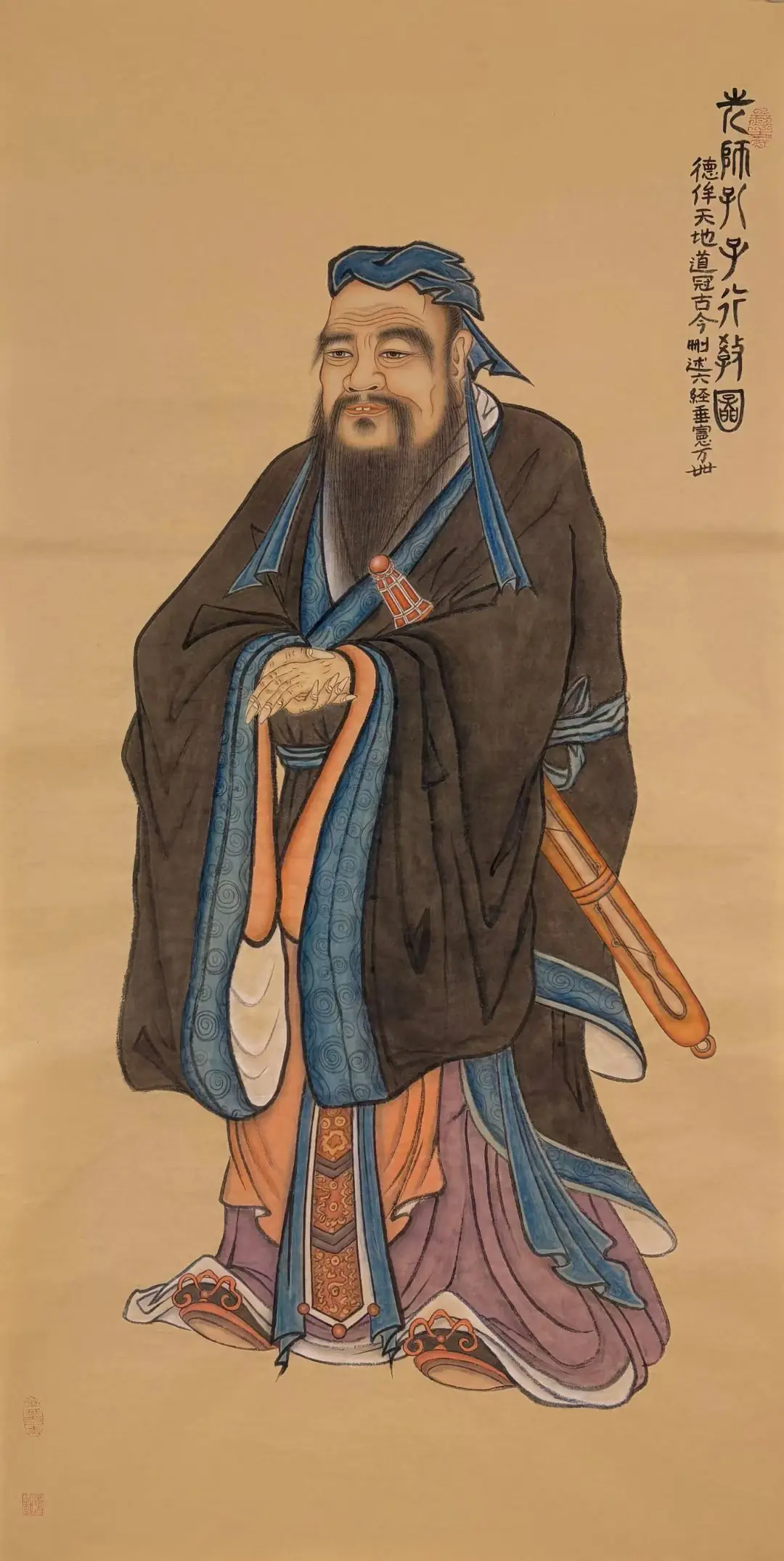
The Original Quote:
子曰:“孝哉闵子骞!人不间于其父母昆弟之言。”
Zǐ yuē: “Xiào zāi Mǐn Zǐqiān! Rén bù jiàn yú qí fùmǔ kūndì zhī yán.”
English Translation:
The Master said: “How filial was Min Ziqian! No man could find fault with what his parents and brothers said of him.”
Key Concepts Explained:
- 孝 (xiào): Filial piety—the foundational virtue of respecting, honoring, and caring for one’s parents and elders, considered the root of all moral conduct in Confucian thought.
- 仁 (rén): Benevolence or humaneness—the core Confucian virtue of loving others, which begins with filial devotion and extends outward to all humanity.
- 礼 (lǐ): Ritual propriety—the proper forms of conduct and social harmony that embody and express inner virtues like filial piety and benevolence.
Cultural Context:
This passage from The Analects (Book 11, Chapter 5) praises Min Ziqian, a disciple of Confucius renowned for his extraordinary filial devotion. The classical story of “Whipping the Reed Catkins” (鞭打芦花, biān dǎ lúhuā) recounts how young Min endured a stepmother’s cruelty—being given a coat stuffed with reed catkins instead of cotton—yet pleaded for her not to be expelled, saying “With Mother at home, only one child suffers cold; without Mother, three children will be orphaned.” His selfless forgiveness transformed his family. This episode illustrates the Confucian ideal that filial piety (孝, xiào) is not mere obedience but a profound moral force that harmonizes family and society. Confucius regarded filial devotion as the root of benevolence (仁, rén), teaching that one who truly loves and respects parents will naturally extend that care to all. In traditional China, such virtue was seen as essential for social stability, inspiring emulation and fostering communal harmony—a principle that remains relevant in cross-cultural discussions of ethics and character education.