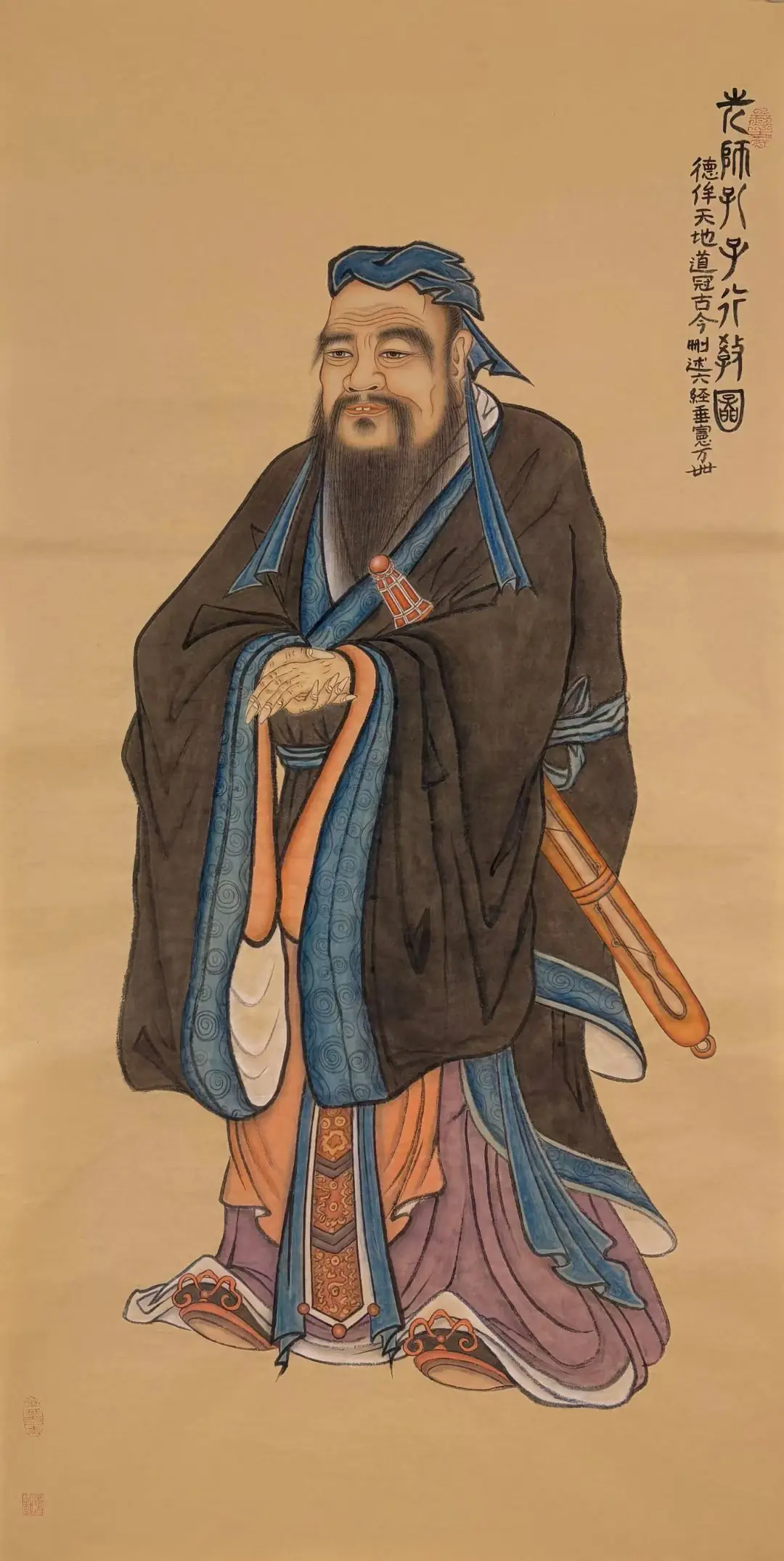
The Original Quote:
子畏于匡,颜渊后。子曰:“吾以女为死矣!”曰:“子在,回何敢死!”
Zǐ wèi yú Kuāng, Yán Yuān hòu. Zǐ yuē: “Wú yǐ rǔ wéi sǐ yǐ!” Yuē: “Zǐ zài, Huí hé gǎn sǐ!”
English Translation:
The Master was detained in Kuang, and Yan Yuan arrived later. The Master said: “I thought you had perished!” Yan Yuan replied: “While you, Master, are alive, how would Hui dare to die?”
Key Concepts Explained:
- Ren (仁): Humaneness or benevolence—the core virtue of Confucian ethics, reflecting deep care and loyalty between teacher and disciple, as shown in Yan Yuan’s devotion.
- Li (礼): Ritual propriety—the social bonds and duties that frame relationships like that of master and student, here expressed through mutual respect and concern.
- Ming (命): Fate or mandate—the idea that one’s life is bound by moral purpose; Yan Yuan’s response implies that his life is contingent on serving his teacher, not on mere survival.
Cultural Context:
This anecdote from the Analects (Book 11, Chapter 22) captures a moment of crisis during Confucius’s travels, when he was besieged in Kuang. Yan Hui (Yan Yuan), his most beloved disciple, arrives late, and their exchange reveals a profound trust forged through shared hardship. In Confucian tradition, such “friendship in adversity” (患难之交, huànnàn zhī jiāo) is treasured as a bond that transcends self-interest, reflecting the ideal of mutual loyalty within hierarchical relationships. This story has been cited for centuries to illustrate how true fellowship is tested by danger and sustained by moral commitment, resonating with later tales like that of Chao Gu assisting the exiled Su brothers during the Song dynasty.