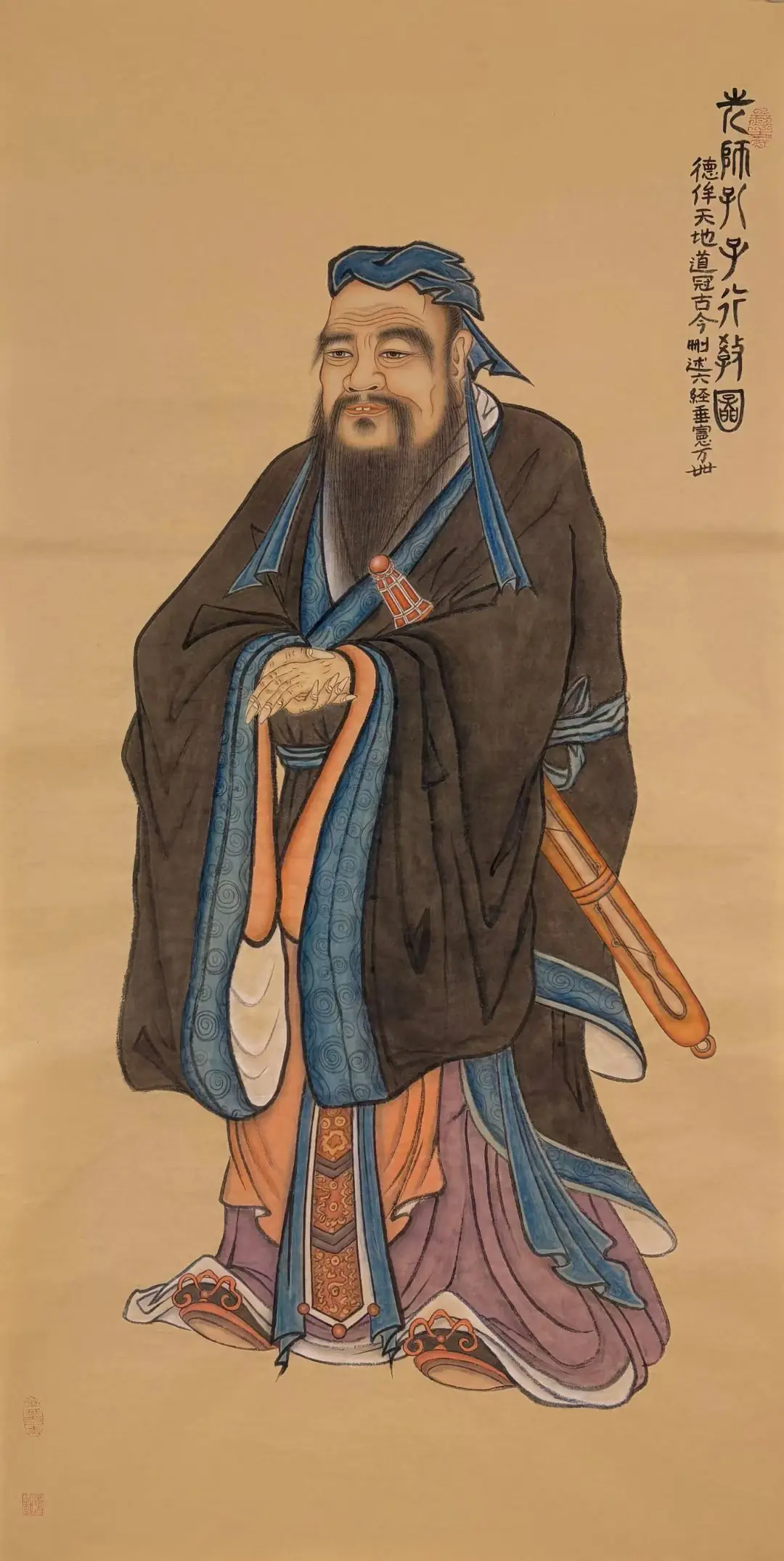
The Original Quote:
子畏于匡,曰:“文王既没,文不在兹乎?天之将丧斯文也,后死者不得与于斯文也;天之未丧斯文也,匡人其如予何?”
Zǐ wèi yú Kuāng, yuē: “Wén wáng jì mò, wén bù zài zī hū? Tiān zhī jiāng sàng sī wén yě, hòu sǐ zhě bù dé yǔ yú sī wén yě; Tiān zhī wèi sàng sī wén yě, Kuāng rén qí rú yǔ hé?”
English Translation:
When the Master was detained in Kuang, he said: “Since King Wen has passed away, does not culture (wén) reside here in me? If Heaven intended to destroy this culture, then I, who came after him, would not have been given a part in it. If Heaven does not intend to destroy this culture, what can the men of Kuang do to me?”
Key Concepts Explained:
- 命 (Mìng): Often translated as “decree” or “fate,” Mìng in Confucian thought refers to Heaven’s mandate—a purposeful destiny that assigns responsibilities to individuals, guiding their moral and cultural mission.
- 文 (Wén): Literally “pattern” or “culture,” Wén encompasses the rites, music, literature, and ethical traditions inherited from the Zhou dynasty, seen as the foundation of civilised society.
- 礼 (Lǐ): “Ritual propriety” or “rites,” Lǐ denotes the social norms and ceremonial practices that maintain harmony and order, central to Confucian self-cultivation and governance.
- 仁 (Rén): “Benevolence” or “humaneness,” Rén is the core virtue of Confucianism, embodying compassion and the ideal of moral perfection through relational ethics.
Cultural Context:
This passage from The Analects (Book 9, Chapter 5) recounts an incident where Confucius and his disciples were mistakenly besieged in Kuang by locals who confused him with the tyrant Yang Hu. In the face of mortal danger, Confucius expresses unwavering faith in his role as a vessel of Zhou cultural heritage (wén). This reflects the Confucian doctrine of “Heaven’s mandate” (tiān mìng), where the sage sees his life’s work—preserving and transmitting ancient rites and values—as divinely ordained. Historically, this moment underscores Confucius’s resilience and the ethical imperative to uphold civilization against chaos, a theme that resonated through later Chinese thought, inspiring figures like the Song dynasty scholar Zhu Xi to view cultural continuity as a sacred duty.