Pinyin: Anxixiang
Aliases
Zhuobei Luoxiang
Source
Styrax tonkinensis (Pierre) Craib ex Hartw.Styrax tonkinensisDried resin of (Pierre) Craib ex Hart.
Botanical Description
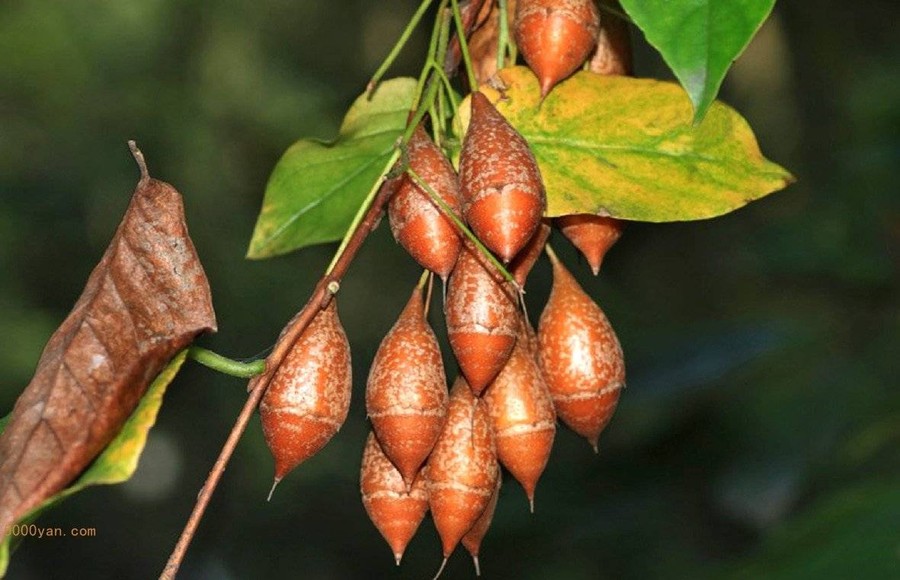
Tree, 5-20 m tall. Bark gray-brown, with irregular longitudinal cracks; branches slightly flattened, densely covered with brown long trichomes, later becoming glabrous. Leaves alternate; petiole 8-15 mm long, densely covered with brown stellate trichomes; leaf blade elliptic, elliptic-ovate to ovate, 5-18 cm long, 4-10 cm wide, apex shortly acuminate, base rounded or cuneate, upper surface glabrous or with stellate trichomes on veins of young leaves, lower surface densely covered with gray to pinkish-green stellate tomentum, margin entire, young leaves sometimes with 2-3 teeth, lateral veins 5-6 pairs. Terminal panicles relatively large, 5-15 cm long; lower racemes shorter; pedicels and inflorescence rachis densely covered with yellowish-brown stellate pubescence; calyx cup-shaped, 5-toothed; flowers white, 1.2-2.5 cm long, 5-lobed, lobes ovate-lanceolate; calyx and corolla densely covered with white stellate trichomes; stamens 10, equal in length, filaments flat, sparsely covered with white stellate trichomes, united into a tube at base; style about 1.5 cm long. Fruit subglobose, about 1 cm in diameter, densely covered with stellate tomentum. Seeds ovoid, chestnut-brown, densely covered with small tubercles and stellate trichomes. Flowering April to June, fruiting August to October.
Habitat and Distribution
It grows on slopes, valleys, sparse forests, or forest edges at an altitude of 100-2000 m. It is distributed in Jiangxi, Fujian, Hunan, Guangdong, Hainan, Guangxi, Guizhou, Yunnan, and other areas.
Harvesting and Processing
For trees that have grown healthily for more than 10 years, the trunk is naturally damaged or incised in summer and autumn to collect the resin that flows out, which is then dried in the shade.
Medicinal Properties
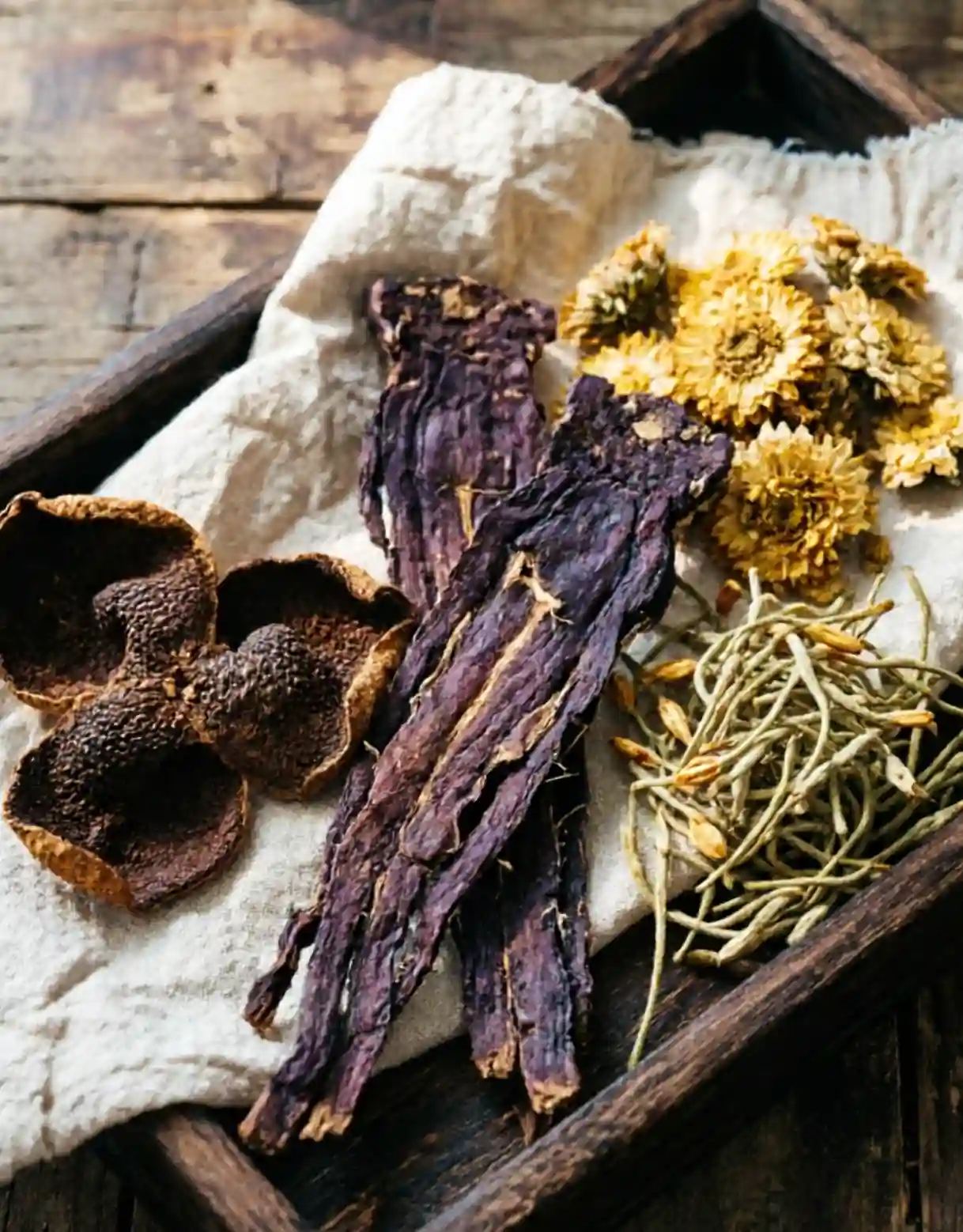
This product consists of irregular small pieces, slightly flattened, often adhering into masses. The surface is orange-yellow with a waxy luster (naturally exuded resin); or it appears as irregular cylindrical or flat blocky pieces with a grayish-white to pale yellowish-white surface (artificially cut resin). It is brittle, easily broken, with a flat, white fracture that gradually turns pale yellowish-brown to reddish-brown upon standing. It softens and melts when heated. It has an aromatic odor, a slightly pungent taste, and a gritty sensation when chewed.
Chemical Constituents
This product primarily contains volatile oils, triterpenoids, and other chemical constituents. These include benzoic acid, 3-benzoyloleanolic acid, coniferyl benzoate, vanillin, and other components.
Pharmacology
Stimulates the respiratory mucosa to increase secretion and promotes sputum expulsion.
Properties and Channel Entry
Acrid, bitter, neutral. Enters the Heart, Liver, and Spleen channels.
Functions and Indications
Opens the orifices and awakens the Spirit, moves Qi and activates Blood, alleviates pain
Dosage and Administration
Internal use: grind into powder, 0.3-1.5 g; or made into pills or powder.
Precautions and Contraindications
Those with Yin deficiency and exuberant Fire should use with caution.
Prescriptions
1. For prolonged cold abdominal pain unrelieved: Anxixiang (Benzoinum, ground), Buguzhi (Fructus Psoraleae, stir-fried) 30 g each, Awei (Ferula, ground) 6 g. Grind and mix the three ingredients into a fine powder, form into pills with vinegar-cooked rice paste, each pill the size of a small bean. Take 10 pills on an empty stomach with rice porridge. (From *Shengji Zonglu*, Anxixiang Wan). 2. For Wind-caused low back and leg pain with cold numbness and limb weakness: Anxixiang (Benzoinum) 60 g, Fuzi (Radix Aconiti Lateralis Praeparata, blast-fried, skin and umbilicus removed) 60 g, Hujinggu (Tiger Bone, coated with suet and roasted until yellow) 60 g. Grind the above ingredients into a powder, take 3 g before meals, mixed with warm wine. (From *Shenghui Fang*, Anxixiang San). 3. For epilepsy in men and women (occult Wind-epilepsy): Anxixiang (Benzoinum, clear and free of sand or stones) and Qiandan (Minium, lead tetroxide) 30 g each. Grind into a fine powder, mix thoroughly with fresh blood from a sheep's heart, form into pills the size of wutong seeds. Take 10 pills on an empty stomach with warm water. (From *Shengji Zonglu*, Anxixiang Wan). 4. For infantile convulsions due to fright: Anxixiang (Benzoinum) about the size of a soybean, burn it and the condition will resolve on its own. (From *Qixiao Liangfang*). 5. For postpartum blood syncope or blood distention in women, with trismus near death: Anxixiang (Benzoinum) 3 g, Wulingzhi (Faeces Trogopterori, ground fine with water) 15 g. Mix evenly, take 3 g per dose, decocted with stir-fried ginger water. (From *Fangmai Zhengzong*, Anxixiang Wan). 6. For sudden heart pain, or frequent episodes over years: Anxixiang (Benzoinum) ground into powder, take 1.5 g in boiling water. (From *Yishi Dexiao Fang*).