
In the late Western Jin Dynasty, the "Rebellion of the Eight Princes" erupted, and the Jie leader Shi Le and the Xiongnu leader Liu Cong seized this opportunity to attack the Central Plains, plunging northern China into a state of fragmentation. Zu Ti, deeply concerned for his country and people, studied diligently with his close friend Liu Kun, hoping that one day they could lead a northern expedition to restore the Central Plains.
In 311 AD, Luoyang was captured by Liu Yao, and Emperor Huai of Jin became a prisoner, with warfare raging across the Central Plains. To escape the conflict, the people of the Central Plains began migrating southward. Zu Ti wanted to fight bravely on the battlefield but lacked military command, so he could not resist the enemy's invasion. Thus, he led his family and fellow villagers south to avoid disaster. Along the way, he warmly cared for others, actively maintained order, willingly gave up his horse for the elderly and weak, and shared his clothes, food, and medicine with those in need. Because of his many contributions and strategic mind, everyone unanimously elected him as the "leader of the exodus," the head of the refugee group. Zu Ti successfully led this group to Jingkou (present-day Zhenjiang, Jiangsu) and settled there. Although he had fled south, Zu Ti's ambition to resist foreign invasion and restore the Central Plains never wavered. To prepare for a future recovery, he selected young and strong refugees, organized them, and trained them in martial arts. This move attracted many northern refugees who had fled south, as well as patriots eager to restore the Central Plains, to join his forces. Soon, his army grew to several hundred men. Seeing Zu Ti's growing power, Sima Rui, the Prince of Langya, co-opted him by appointing him as Military Advisor. While in Jiangnan, Zu Ti never forgot the Central Plains and repeatedly petitioned Sima Rui to lead a northern expedition, but he never received a response.
During the Qingming Festival, Wang Dao brought up the matter of reclaiming the Central Plains to many Eastern Jin officials who had fled south, deeply moving them. They submitted memorials to Emperor Yuan of Jin, urging him to launch a northern expedition. Upon hearing this, Zu Ti was overjoyed and rushed to Jiankang to join the other southern officials in petitioning the emperor for battle.
In his memorial to Sima Rui, Zu Ti wrote: "The Rebellion of the Eight Princes gave the Hu people an opportunity to seize the Central Plains. Now, the people of the north are suffering in dire straits, and they all wish to drive out the Hu and restore the Central Plains. Therefore, if Your Majesty issues an imperial decree for a northern expedition, we are willing to immediately lead our troops and advance into the Central Plains. The northern people will surely cooperate with us, fighting side by side to eliminate the Hu. In this way, the goal of restoring the Central Plains can be achieved swiftly."
Emperor Yuan of Jin only wished to rule peacefully south of the Yangtze River and had no ambition to recover the Central Plains. Moreover, the Eastern Jin regime had only just been established, and if he rashly launched a military campaign, it would drain the nation's strength and give the enemy an opportunity to exploit. Therefore, he always adopted a delaying tactic, ignoring Zu Ti and others.
Although his repeated memorials yielded no results, Zu Ti's determination to lead a northern expedition to reclaim the Central Plains never wavered. He continued to submit memorials to Emperor Yuan of Jin. Seeing Zu Ti's persistent and sincere appeals, Emperor Yuan adopted a perfunctory approach, appointing him as General of Valiant Might and Inspector of Yuzhou. However, although Emperor Yuan granted Zu Ti these official titles, he did not provide him with weapons or troops, only symbolically giving him three thousand bolts of cloth and provisions for a thousand men.
Zu Ti placed great importance on this nominal position, and upon receiving the imperial decree, he immediately returned from Jiankang to Jingkou. When the local people learned of his plan to launch a northern expedition, they flocked to join him. Zu Ti organized and trained these recruits, and his army quickly expanded from a few hundred to several thousand soldiers. Soon after, he purchased over a dozen large ships, fully preparing for the northern campaign.
In the autumn of 313 AD, Zu Ti led the troops he had organized himself across the Yangtze River heading north. The people of Jingkou rushed to the riverbank to see them off. Zu Ti, already over fifty years old, was still full of energy. Dressed in battle robes and wearing a sword, he stood on the warship bidding farewell to the crowd. As the ship moved forward, the people on the shore gradually receded. When the vessel reached the middle of the river, Zu Ti, watching the surging waters, felt deeply stirred. He walked to the bow, looked up at the sky, and struck the ship's railing repeatedly with an oar, declaring solemnly: "Fellow countrymen, we must recover the Central Plains. If we fail to achieve this goal, when I return, I will throw myself into the river." Hearing Zu Ti's impassioned words, the soldiers were greatly moved, and each one was filled with fighting spirit. They replied: "We are willing to follow you, General, even if it means losing our heads and dying in battle."
Zu Ti successfully led his men across the Yangtze River and set up camp in Huaiyin. There, he began recruiting soldiers, forging weapons, and conducting military training. The local people strongly supported him. Before long, Zu Ti had assembled a force of two thousand troops. After a series of careful preparations, he officially led his soldiers on a northern expedition.
Zu Ti led his troops steadily forward, and the local people along the way warmly supported and backed them. After winning several major battles, Zu Ti's forces annihilated tens of thousands of enemy soldiers and recaptured much of the territory south of the Yellow River.
In many areas north of the Yangtze River at that time, there were numerous armed forces led by local landlords and powerful families, who set up fortified strongholds and carved out their own territories. Some of them held their ground in self-defense, some allied with the Hu tribes to oppose the Jin Dynasty, while others joined the Jin to resist the Hu, often engaging in fierce conflicts over land. Zu Ti believed that if he could win over these people and have them join his northern expedition, his forces would be greatly strengthened. To this end, he invited these landlords to his military camp and said to them: "Now the Hu are invading our land, and our nation is at a critical moment of survival. If we continue to fight among ourselves, we will be no different from traitors to our people. To drive the Hu out of our territory, we must unite and serve our country. This is what true heroes and champions should do." Zu Ti's words deeply moved these men, so they set aside their past grievances and rallied together to support his northern campaign. With their backing, Zu Ti's prestige grew, his army swelled in numbers, and he won nearly every battle he fought.
In 319 AD, Chen Chuan, the fortress lord of Pengpi (near present-day Kaifeng, Henan), colluded with Tao Bao, a subordinate of Shi Le, the ruler of the Later Zhao state, to organize 50,000 elite troops in an attempt to stop Zu Ti's army from advancing northward. The two sides engaged in a decisive battle at Pengpi, fighting for over forty days without a clear victor, as both armies faced critical shortages of food supplies. At this critical moment, Zu Ti devised an excellent strategy. He sent over a thousand soldiers carrying bags filled with soil into the Jin army camp. Then, he dispatched a few soldiers carrying several bags of rice, deliberately stopping to rest halfway. When Tao Bao saw these soldiers from his camp, he immediately sent men to seize the rice. The rice-carrying soldiers, spotting the enemy, abandoned their bags and fled. Tao Bao's starving troops, having gone days without food, were so excited by the rice that they devoured it half-cooked. Mistaking the soil bags for rice, Tao Bao believed the Jin army had ample supplies while facing his own food crisis, leaving him deeply unsettled. He then sent soldiers to request provisions from Shi Le. Upon receiving the message, Shi Le ordered immediate aid to Tao Bao. Anticipating this, Zu Ti set an ambush along the supply route and seized the Later Zhao's grain. Without food, Tao Bao's forces could no longer sustain themselves, so he led his troops in a night retreat. Zu Ti pursued and recaptured several cities occupied by the enemy. Over the following years, Zu Ti continued to lead his army in defeating Later Zhao forces, driving the enemy out of the region south of the Yellow River.
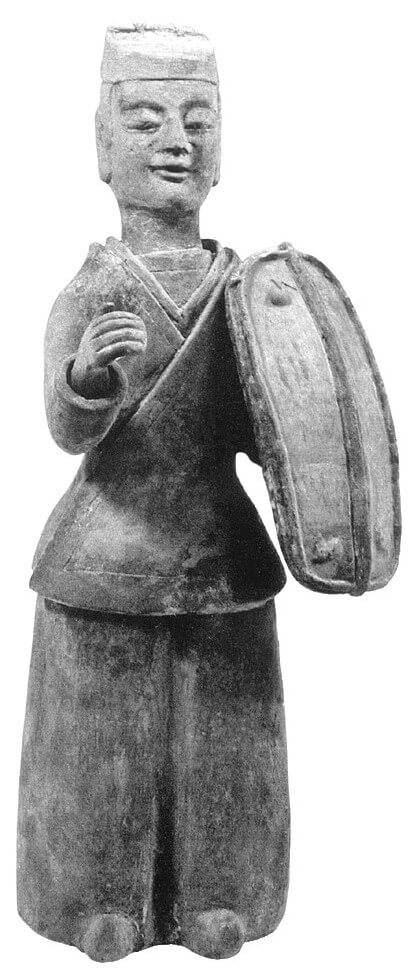
Although Zu Ti was a military commander, he often led his troops from the front lines and fought with great courage during battles. Under his leadership, the Northern Expedition army fought with exceptional bravery. Moreover, this army maintained strict military discipline and frequently helped civilians whose homes had been destroyed to farm the land, earning the deep affection and respect of the local people.
Just as Zu Ti was sharpening his weapons and preparing to advance further to reclaim the entire Central Plains, Sima Rui, driven by jealousy and fear that Zu Ti's growing power might become uncontrollable, devised a plan to restrain him. Sima Rui sent his trusted subordinate Dai Yuan to oversee the military affairs of the six northern provinces, stripping Zu Ti of his military command. Despite Zu Ti's wholehearted dedication to the state, he was met with such an outcome, leaving him deeply disheartened. Soon after, news arrived that his close friend Liu Kun had been killed by the imperial court. Overcome with grief and exhaustion from overwork, Zu Ti fell ill. Even while bedridden, he did not forget the defenses along the Yellow River and personally sent men to construct fortifications to prevent attacks from Shi Le.
In 321 AD, Zu Ti died of depression, his ambitions unfulfilled.