In 1004, Empress Dowager Xiao of the Liao Dynasty personally led an army of 200,000 troops to invade the Northern Song Dynasty. Initially, the Song forces suffered repeated defeats and were at a disadvantage, causing widespread panic within the Northern Song court. However, before long, the once formidable Liao army began to show signs of exhaustion. It turned out that the 200,000 Liao troops had advanced deep into enemy territory without adequate supply lines, making it difficult to sustain their provisions. This led to wavering morale among the soldiers, gradually causing them to lose their battlefield advantage.
Meanwhile, under the strong insistence of Kou Zhun, the Prime Minister of the Northern Song Dynasty, the Northern Song emperor personally led the army into battle, greatly boosting the morale of Song soldiers. Seeing the situation turning unfavorable, Empress Dowager Xiao abandoned warfare and instead adopted peaceful negotiations, engaging in diplomatic talks with the Northern Song government.
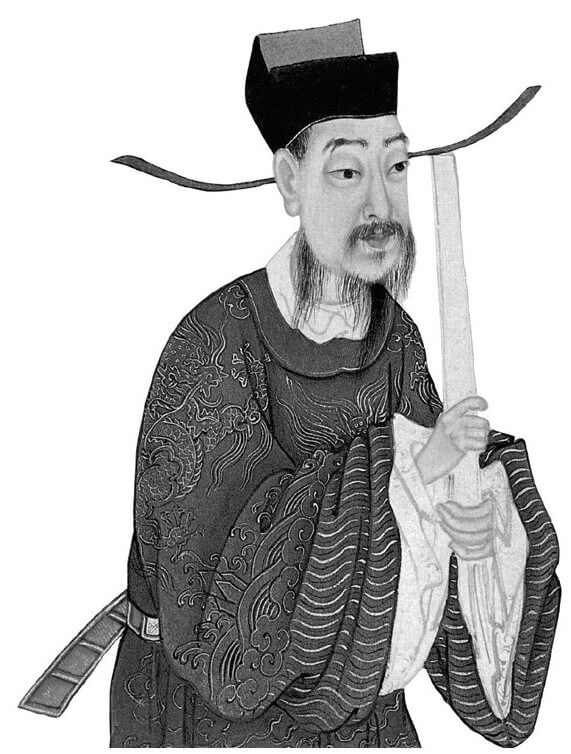
At that time, the reigning emperor of the Northern Song Dynasty was Song Zhenzong, Zhao Heng, who was the third son of Song Taizong, Zhao Guangyi. His mother was not the empress, so according to tradition, the throne should never have passed to him. However, history often takes dramatic and unexpected turns—Zhao Guangyi's eldest and second sons both encountered unforeseen incidents that disqualified them from inheriting the throne.
The eldest son, Zhao Yuanzuo, was born to Empress Yuande and was the undisputed heir to the throne, but unexpectedly he went mad. It turned out that Emperor Taizong of Song had always been deeply wary of his own fourth younger brother, Zhao Tingmei, because Taizu and Taizong's mother had left a "golden casket edict" on her deathbed, requiring Taizu to pass the throne to his younger brother Taizong, and then Taizong to pass it to his younger brother Zhao Tingmei. After ascending the throne, Taizong did not want to fulfill his promise to his mother and pass the throne to Zhao Tingmei, but he could not directly violate the "golden casket edict," so he falsely accused Zhao Tingmei of treason and imprisoned him. Zhao Yuanzuo interceded on behalf of his fourth uncle, knowing that his uncle had no intention of rebellion, but Taizong ignored him. Not long after, Zhao Tingmei fell ill from depression in prison and died young. Upon hearing this news, Zhao Yuanzuo could not bear the shock and went mad.
His second son, Zhao Yuanxi, had always been deeply favored by Emperor Taizong, but unfortunately, Zhao Yuanxi died suddenly of illness at the age of twenty-seven. One day during the morning court session, Zhao Yuanxi suddenly felt unwell and returned to his residence to rest, after which his condition rapidly worsened. When Emperor Taizong personally went to visit him, he could still have simple conversations with him, but soon after, he passed away from the illness. Upon hearing the news, Emperor Taizong could not help but weep bitterly, and later posthumously conferred upon him the title of Crown Prince.
Under these circumstances, Zhao Heng was fortunate enough to become the third emperor of the Northern Song Dynasty. His uncle, Emperor Taizu of Song, and his father, Emperor Taizong of Song, had both braved battlefields and overcome obstacles, but Emperor Zhenzong was the complete opposite. Growing up in the imperial palace, he was pampered and sheltered, leading to a weak character and a tendency to settle for the status quo. Had it not been for the insistence of Prime Minister Kou Zhun, Emperor Zhenzong would never have had the courage to personally lead a military campaign. In fact, even before setting out for the front lines, he had already dispatched a peace envoy named Cao Liyong.
During the peace negotiations, the Liao government demanded that the Northern Song cede territory. Although Emperor Zhenzong of Song was timid, he fully understood how ceding land would mean losing sovereignty and humiliating the nation, so he firmly rejected this demand. However, he agreed to send the Liao annual payments of goods and money as a condition for the Liao army to withdraw. The Liao government accepted his proposal, and the subsequent point of contention between the two sides became the amount of these annual tributes.
Emperor Zhenzong of the Song Dynasty instructed Cao Liyong that the annual tribute limit was one million. Kou Zhun, knowing the emperor's character well, understood that he would compromise with the Liao Dynasty to the extreme. To minimize their side's losses, Kou Zhun threatened Cao Liyong, saying that the annual tribute must absolutely not exceed three hundred thousand, and if Cao Liyong failed to achieve this in negotiations, Kou Zhun would take his life. In the final agreement reached, the total amount of silver and silk that the Northern Song Dynasty paid annually to the Liao Dynasty came to exactly three hundred thousand.
The Song and Liao dynasties ceased hostilities in early December and began peace negotiations, concluding a treaty at the beginning of the following year. The treaty stipulated that the two states would regard each other as brother nations, with Emperor Shengzong of Liao addressing Emperor Zhenzong of Song as elder brother, Emperor Zhenzong of Song addressing Emperor Shengzong of Liao as younger brother, and referring to Empress Dowager Xiao, Shengzong's mother, as aunt; both sides agreed to withdraw their troops with the Baigou River as the boundary; the Song dynasty would annually send tribute to the Liao, including one hundred thousand taels of silver and two hundred thousand bolts of silk; and the two sides would establish mutual trade markets along their shared border.
Since the treaty was signed in Chanzhou, it became known as the "Chanyuan Treaty." For the next hundred years, no major wars broke out between the Song and Liao dynasties. The year after the treaty was signed, when Empress Dowager Xiao celebrated her birthday, Emperor Zhenzong sent envoys to offer congratulations. When famine struck the Liao border region, the Song government sent relief supplies. After Emperor Zhenzong passed away, Emperor Shengzong of Liao, along with all his civil and military officials and the imperial consorts, mourned his death.
While the Song and Liao dynasties coexisted peacefully, they continuously engaged in economic and cultural exchanges, mutually supplying each other's needs and advancing together, allowing the people to enjoy peace and improve their living conditions. This was the beneficial aspect of the Chanyuan Treaty, but its drawbacks were also quite evident.
The Northern Song government, despite holding a favorable position, signed such an unequal treaty, requiring it to send large amounts of goods and money to the Liao Dynasty each year, which worsened the nation's financial burden, and these burdens were naturally passed on to the common people. The exploitation of the people grew increasingly severe, intensifying conflicts with the ruling class, and laying the fuse for the frequent peasant uprisings that later erupted.