
During Emperor Shunzong's reign of the Tang Dynasty, bureaucrats and scholar-officials launched a movement to revive the Tang, historically known as the "Yongzhen Reform."
In the late Tang Dynasty, two major political ills emerged: military governors' separatism and eunuch usurpation of power, with the latter sparking the Yongzhen Reform.
Eunuchs were a product of the autocratic system. Originally serving as servants to the emperor and his concubines, most came from the lower rungs of society. Before entering the palace, they were subjected to castration, which inflicted deep psychological trauma and distorted their personalities. Because they served the emperor and those close to him, they had to be extremely cautious; even a minor mistake could lead to execution, often causing their psychology to become twisted. Concentrated within the palace and sharing common interests, they easily formed factions.
During the early Tang Dynasty, rulers imposed strict restrictions on eunuchs. Under Emperor Taizong, eunuchs were merely servants responsible for delivering orders and attending to daily needs, and their numbers were limited. By the time of Emperor Zhongzong, eunuchs began to receive official titles, and their numbers surged to over a thousand. Under Emperor Xuanzong, the number of eunuchs reached three thousand, with more than a thousand holding ranks of the fifth grade or above, and some even attaining the third grade. During the An Lushan Rebellion, Emperor Suzong became even more reliant on eunuchs; Li Fuguo, having accompanied Suzong to Lingwu for his ascension, gained great favor and became a figure of immense power, dominating both the court and the country.
In 763 AD, the Tibetan army attacked Jingzhou, putting Chang'an in grave danger. Emperor Daizong of the Tang Dynasty fled to Shanzhou to save himself. The eunuch Yu Chao'en led the Shence Army and the troops of Shanzhou to welcome the emperor to safety, earning great merit. As a result, Emperor Daizong trusted him deeply and appointed him as the Pacification Commissioner in charge of the Shence Army. From then on, Yu Chao'en became extremely arrogant and looked down on everyone. When Emperor Daizong could no longer tolerate this, he secretly conspired with Prime Minister Yuan Zai to have Yu Chao'en executed.
After Yu Chao'en's death, Emperor Daizong of Tang no longer dared to entrust military power to eunuchs, so eunuchs lost control of the army. During the reign of Emperor Dezong of Tang, in order to suppress the rebellion launched by Li Xilie, the military governor of Huaixi, Emperor Dezong deployed troops from Jingyuan to Xiangcheng. The Jingyuan soldiers, angered by not receiving rewards, mutinied, storming into Chang'an to loot and kill, forcing Emperor Dezong to flee to Fengtian. Eunuchs Huo Xianming and Dou Wenchang led a group of eunuchs and attendants to protect Emperor Dezong along the way, thus allowing eunuchs to regain military power. Emperor Dezong then placed all imperial guards, including the Left and Right Shence Armies and the Tianwei Army, under eunuch control.
As their power expanded, eunuchs grew more unscrupulous, seizing control of the court and committing numerous atrocities against the people.
Eunuchs frequently left the palace to purchase goods from the common people in the markets; when they spotted items they liked, regardless of whether the seller was willing, they would buy them at prices far below the original cost, a practice known as "palace market." Additionally, the eunuchs dispatched large numbers of agents to bustling areas of Chang'an to scout around; upon seeing goods being sold by the people, they would forcibly purchase them at very low prices. The eunuchs also established five kennels within the palace—dog kennels, eagle kennels, falcon kennels, carving kennels, and sparrowhawk kennels—and the eunuchs in charge of these were called "the Five Kennel Commissioners," who often extorted money from the people under the pretext of meeting the palace's needs.
The actions of the eunuchs had become unbearable for the court officials and the people of Chang'an.
Emperor Daizong of the Tang Dynasty appointed his son Li Song as crown prince, and Li Song often discussed current affairs with Wang Shuwen and Wang Pi, who accompanied him in his studies. Wang Shuwen told Li Song about many of the eunuchs' evil deeds, and Li Song realized that to revitalize the country, he needed to reform the government and eliminate the corrupt eunuchs. Thus, Li Song decided to crack down on eunuch power after ascending the throne. However, before he could take the throne, he suffered a stroke and lost the ability to speak. Emperor Daizong fell ill from anxiety and died shortly after.
In 805 AD, Crown Prince Li Song ascended the throne as Emperor Shunzong of Tang.
After Emperor Shunzong of the Tang Dynasty ascended the throne, he began to reform the imperial government. Wang Shuwen and Wang Pi were favored by Emperor Shunzong and promoted to Hanlin Academicians, with Wang Shuwen also serving as Deputy Commissioner of Salt and Iron. He recommended the highly respected official Wei Zhiyi as Chancellor and appointed a group of talented officials such as Liu Zongyuan and Liu Yuxi to carry out reforms. Since the reign title of that year was Yongzhen, this reform was called the "Yongzhen Reform."
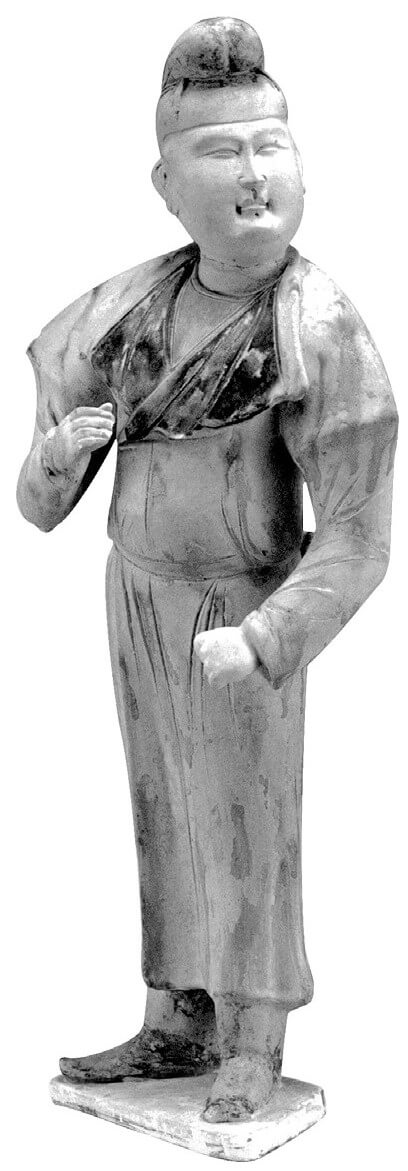
After Wang Shuwen and his associates took power, they first abolished the Palace Market and the Five Workshops Agency. When the people of Chang'an heard this, they all cheered with joy.
Afterward, they had Emperor Shunzong of Tang issue an edict forbidding local officials from presenting the emperor with any tribute beyond the regular annual offerings. The third reform measure promoted by Wang Shuwen and his associates was cracking down on corrupt officials. Li Shi, the governor of the capital region, abused his power as a member of the imperial clan and committed many cruel acts. One year, a severe drought struck Guanzhong, leading to poor harvests. To boost his political record, Li Shi falsely reported a bumper harvest to the court and demanded that the people pay taxes as if it were a bountiful year. Many farmers, unable to afford the taxes, were forced to sell their homes. When Wang Shuwen learned of this, he demoted Li Shi to the position of Prefectural Administrator of Tongzhou.
Wang Shuwen also decided to crack down on the power of the eunuchs. He stopped the salaries of nineteen eunuchs, including the inner attendant Guo Zhongzheng, and dismissed a large number of idle personnel from the palace. Wang Shuwen understood that the eunuchs were able to be so arrogant mainly because they held military power. To change the situation of eunuch domination, it was necessary to take control of the imperial guard forces away from them. To this end, he appointed Han Tai as the military adjutant of the Shence Army field camp and Fan Xichao as the military commissioner of the various Shence Army units west of the capital. The eunuchs saw through Wang Shuwen's intentions and instructed the Shence Army generals not to hand over military authority to Han Tai and Fan Xichao, thus Wang Shuwen's attempt to seize military power from the eunuchs failed.
After the An Lushan Rebellion, the most severe political malady was the separatist rule of military governors, and Wang Shuwen and his associates recognized this, thus firmly resisting the expansion of these governors. Wei Gao, the military governor of Jiannan West Circuit, sent envoys to Chang'an to demand that Wang Shuwen appoint him as the governor of Jiannan West, Jiannan East, and Shannan West Circuits in order to expand his territory, but Wang Shuwen flatly rejected Wei Gao's request.
Wang Shuwen and his colleagues' reforms eliminated some political abuses, alleviated the burdens on the common people, and brought greater stability to society, earning the support of the populace. However, their reforms targeted the military governors of the provinces and the eunuch factions, so they faced significant resistance.
The eunuch Ju Wenzhen and his associates, fearing that the reforms of Wang Shuwen and his faction would severely weaken eunuch power, devised a plan to eliminate them. They first installed Tang Shunzong's eldest son, Li Chun, as crown prince, then forged an imperial edict to strip Wang Shuwen of his position as Hanlin academician. Subsequently, Wang Shuwen returned home to observe mourning for his mother's death, leaving the reformist group, including Wang Pi, without a leader and unable to resist the eunuch faction. Ju Wenzhen colluded with regional military governors, exploiting Tang Shunzong's severe illness to push Crown Prince Li Chun into overseeing state affairs. Soon after, Ju Wenzhen and his allies elevated Li Chun to the throne, and Li Chun became Emperor Xianzong of Tang.
After Emperor Xianzong ascended the throne of the Tang Dynasty, many officials who had colluded with eunuchs were given important positions, while Wang Shuwen was demoted to be the Sima of Yuzhou and was killed by eunuchs the following year. Additionally, Liu Zongyuan, Liu Yuxi, and six others were also demoted to serve as Sima in remote regions, and they were collectively known as the "Two Kings and Eight Simas."
After the failure of the "Yongzhen Reform," Tang Dynasty politics became more corrupt, and the once prosperous empire gradually declined.