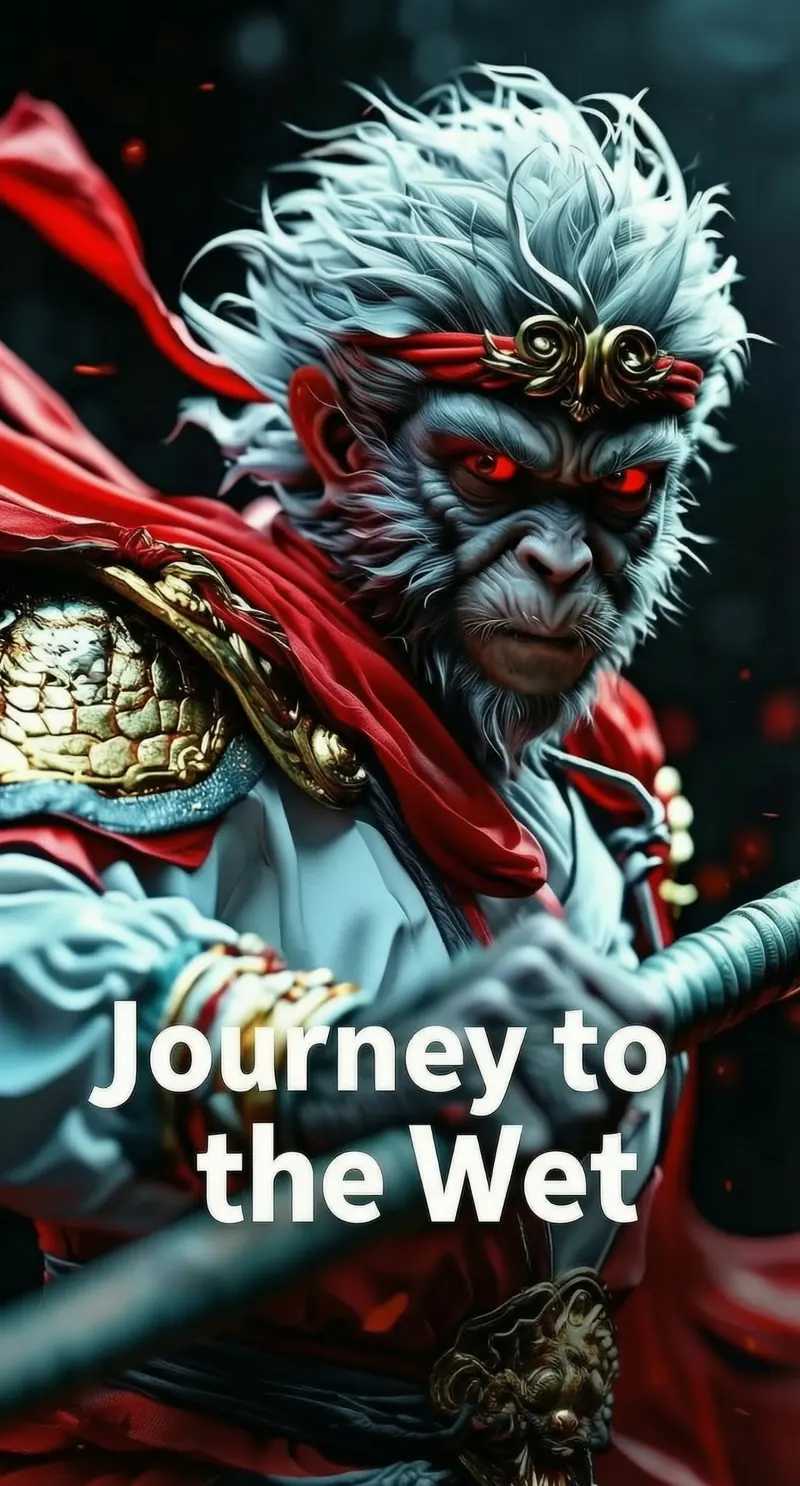
Let us set aside the matter of Tang Sanzang and his four disciples being carried away by the Vajra Guardians on the wind. In Chen Village , the people of the Life-Saving Temple rose at dawn, preparing fruits and delicacies to offer to Tang Sanzang. When they reached the tower, however, the monk was nowhere to be found. They asked each other, panic-stricken and uncertain what to do, weeping and crying out, "We have let the living Buddha slip away!"
After much fuss to no avail, they had no choice but to carry their offerings up to the tower, burn paper money, and conduct a sacrificial ceremony. From that day onward, four major offerings and twenty-four minor offerings were held every year. People came seeking cures for illness, prayers for peace, blessings for marriage, and petitions for children—day after day, they burned incense and paid homage. Truly, "The golden censer's incense never fades through a thousand years; the jade lamp's flame forever bright for ten thousand ages ."
Meanwhile, the Eight Great Vajra Guardians summoned a second fragrant wind and, within a few days, delivered the four pilgrims to the Eastern Land. Gradually, the city of Chang'an came into view. It turned out that after Emperor Taizong had seen Sanzang off from the city gates on the thirteenth day of the ninth month in the thirteenth year of the Zhenguan reign , he had ordered officials from the Ministry of Works to build a Scripture-Viewing Tower outside the western gate of Chang'an by the sixteenth year . This tower was specially constructed to receive the scriptures, and the emperor himself visited it every year.
On that very day, Taizong had climbed the tower once more when he suddenly saw the western sky filled with auspicious vapors and waves of fragrant wind. The Vajra Guardians halted midair and called out, " Holy Monk , this is Chang'an City. We cannot descend—the people here are too shrewd and might perceive our true forms. Great Sage Sun and the other two disciples need not come down either. You alone shall deliver the scriptures to your sovereign, then return at once. We shall await you in the heavens to report back to the Buddha together."
The Great Sage replied, "Venerable Ones, your words are reasonable, but how can my master carry the scripture bundles alone? How can he lead the horse? We must accompany him. Please wait a moment in the sky—there will be no delay."
The Vajra Guardian said, "Some days ago, Bodhisattva Guanyin reported to the Tathagata that the round trip must take no more than eight days to complete the required number for one full canon of scriptures. Already more than four days have passed. I fear that Zhu Bajie might be tempted by worldly riches and delay the deadline."
Zhu Bajie laughed and said, "My master is becoming a Buddha, and I too wish to become one—why would I covet wealth and honor? You coarse fellow! We will all wait here. Once I hand over the scriptures, I will return with you to report our mission."
The Fool shouldered the scripture bundles, Sha Wujing led the horse, and the Pilgrim guided Tang Sanzang as they descended from their clouds, landing beside the Scripture-Viewing Tower.
When Emperor Taizong and his officials saw them, they immediately descended the tower to greet them. "Imperial Brother, you have returned!" the emperor exclaimed.
Tang Sanzang quickly knelt to pay homage. The emperor raised him up and asked, "Who are these three?"
Sanzang replied, "They are disciples I took along the way."
Overjoyed, Taizong ordered his attendants, "Bring my imperial carriage and horse! Let the Imperial Brother mount and accompany me back to court."
After thanking the emperor for his grace, Sanzang mounted the horse. The Great Sage, wielding his golden-banded staff, walked beside him. Zhu Bajie and Sha Wujing supported the horse and carried the bundles, following the emperor's procession into Chang'an.
Truly it was:
In those days of peace and festivity, civil and military officials shone with talent. Within the monastery halls, monks expounded the Dharma; in the Golden Throne Hall, the emperor dispatched his ministers. The passport was bestowed upon Tang Sanzang, and the scriptures were destined to harmonize the Five Elements. Through bitter trials, fierce demons were vanquished one by one; now, with merit accomplished, they joyfully enter the imperial capital.
As the four pilgrims followed the procession into the court, all of Chang'an knew that the scripture seekers had returned. At the Hongfu Temple , where Sanzang had once lived, the monks were astonished to see that all the treetops of the pine trees had bent eastward. "Strange! Strange!" they exclaimed. "There was no wind last night—how did the treetops twist around?"
One of Sanzang's former disciples said, "Fetch our robes quickly! The master who went for scriptures has returned!"
The other monks asked, "How do you know?"
The former disciple replied, "When the master left, he said, 'After I depart, whether three years, five years, six years, or seven, whenever you see the pine treetops pointing east, you will know I have returned.' The master's words are those of a Buddha—they cannot be wrong!"
The monks hastily donned their robes and rushed out. By the time they reached West Street , word had already spread: "The scripture seekers have just arrived! His Majesty has already welcomed them into the city!"
The monks ran swiftly and encountered the procession. Not daring to approach too closely, they followed behind all the way to the palace gates.
Tang Sanzang dismounted and entered the court with the others. He left the dragon-horse , scripture bundles, and his disciples—the Pilgrim, Zhu Bajie, and Sha Wujing—at the foot of the jade steps . Emperor Taizong issued a decree: "Let the Imperial Brother ascend the hall." He also offered Sanzang a seat.
After thanking the emperor and sitting down, Sanzang ordered the scripture bundles brought forward. The Pilgrim and the others retrieved the scrolls, and the attending officials presented them to the emperor.
Taizong asked, "How many scrolls of scriptures are there in total? How did you obtain them?"
Three Storeys replied, "Your servant reached Vulture Peak and paid homage to the Tathagata. The Buddha then sent the two venerable ones, Ananda and Kasyapa , to lead me first to the Jeweled Tower for a meal, then to the Precious Pavilion to receive the scriptures. Those two venerable ones demanded gifts, and since your servant had none prepared, they gave us wordless scriptures . After thanking the Buddha and heading east, a demonic wind suddenly snatched the scriptures away. Fortunately, my disciple has supernatural powers and retrieved them, but they were scattered on the ground. When we opened them, they were all blank, wordless volumes. We returned to plead with the Buddha, who said that when these scriptures were completed, a holy monk of the Bhikshu order had once descended to recite them for the Elder Zhao of the House of Shravasti . The recitation ensured safety for the living and deliverance for the dead, yet the elder only paid three pecks and three pints of gold dust —and the Buddha still felt he had sold them too cheaply, fearing that future generations would have no funds. Realizing that the two venerable ones' demand for gifts was tacitly approved by the Buddha, we had no choice but to offer them the purple-gold begging bowl Your Majesty bestowed upon me. Only then did we receive the true scriptures with words. These scriptures comprise thirty-five sections; from each section, a few scrolls were selected for transmission, totaling five thousand and forty-eight scrolls —exactly the number for one full canon."
The emperor was even more delighted and decreed: "Let the Imperial Banquet Hall prepare a feast at the Eastern Pavilion to honor the Imperial Brother."
Seeing the three disciples standing at the foot of the steps with their extraordinary appearances, Taizong asked, "Are your eminent disciples truly from foreign lands?"
The elder knelt and said, "My eldest disciple is surnamed Sun, with the Dharma name Wukong, whom I also call the Pilgrim Sun. He was originally from the Water Curtain Cave on the Flower-Fruit Mountain in the Land of Aolai, Eastern Continent of Superior Divinity. Five hundred years ago, he caused great havoc in the Heavenly Palace and was suppressed by the Tathagata beneath a stone casket on the Two Realms Mountain. Thanks to Bodhisattva Guanyin's persuasion to turn toward goodness, he willingly took refuge. When your servant arrived there, I rescued him, and throughout the journey, he has been my protector. My second disciple is surnamed Zhu, with the Dharma name Wuneng, whom I call Zhu Bajie. He was originally a demon of the Cloud Path Cave on the Fu Ling Mountain. He too was persuaded by the Bodhisattva to embrace goodness and was subdued by the Pilgrim. On the journey, he has been strong in carrying the bundles and capable in fording rivers. My third disciple is surnamed Sha, with the Dharma name Wujing, whom I call Sha Heshang. He was originally a demon of the Flowing Sands River. He too received the Bodhisattva's guidance and took refuge in the Buddhist faith. As for this horse, it is not the one Your Majesty bestowed."
Taizong said, "Its coat looks the same—how is it different?"
Three Storeys replied, "When your servant reached the Eagle's Sorrow Gorge on Coiled Serpent Mountain, the original horse was devoured by this one. Fortunately, the Pilgrim invited the Bodhisattva to inquire, and we learned that it was the son of the Dragon King of the Western Sea. Because he had committed a crime, the Bodhisattva rescued him and allowed him to serve as your servant's mount. At that time, he transformed into the form of the original horse, hence the matching coat. Thanks to him, we crossed mountains and traversed countless rugged paths. I rode him on the outward journey, and he carried the scriptures on the return—he has rendered great service."
Emperor Taizong praised him repeatedly and then asked, "How far did you travel westward?"
Three Storeys said, "According to the Bodhisattva, it was one hundred and eight thousand miles. I did not keep count along the way, but I know that fourteen years have passed. Every day we crossed mountains, every day we forded rivers. We also passed through several kingdoms, and their seals are all on the travel passport." With that, he called for his disciples to bring forth the passport and presented it to the emperor.
Taizong examined it. The passport had been issued on the thirteenth day of the ninth month in the thirteenth year of the Zhenguan reign. He smiled and said, "You have labored long on this journey. It is now the twenty-seventh year of the Zhenguan reign." The passport bore the seals of the Precious Elephant Realm, the Black Chicken Kingdom, the Cart Slow Kingdom, the Women's Kingdom of Western Liang, the Festival Kingdom, the Purple-Gold Kingdom, the Children-Snatching Kingdom, the Dharma-Destroying Kingdom, the Jade Flower Prefecture, and the Heavenly Kingdom. After examining them, the emperor put the passport away.
At that moment, the attending officials invited everyone to the feast. Emperor Taizong took Tang Sanzang by the hand and descended the hall together. He asked, "Are your disciples familiar with court etiquette?"
Three Storeys replied, "My disciples are all uncouth mountain and river demons by origin and do not understand the rituals of our court. I beg Your Majesty to forgive them."
Emperor Taizong laughed and said, "No blame, no blame. Let them all come to the Eastern Pavilion for the feast."
Tang Sanzang thanked the emperor and called his three disciples to follow. When they arrived at the Eastern Pavilion, they saw within: embroidered hangings on the doors, red carpets spread on the floor. Rare fragrances filled the air, and exotic delicacies were fresh and abundant. Amber cups and crystal goblets inlaid with gold and studded with gems; golden plates and white jade bowls carved with brocade and entwined with flowers. There were well-boiled turnips, sugar-glazed fragrant taro, sweet mushrooms, and exotic seaweed. Repeatedly served were ginger-spiced bamboo shoots, and dish after dish of honey-mixed sunflower seeds. Wheat gluten, toon leaves, wood ear mushrooms, tofu skin, stone flower fairy vegetables, dried fern powder, pepper-boiled radish, and mustard-mixed melon shreds. Several plates of vegetarian dishes were not enough—there were also many kinds of rare fruits: walnuts, persimmon cakes, longan, lychees, Xuanzhou chestnuts, Shandong jujubes, Jiangnan ginkgo nuts, rabbit-head pears, hazelnuts, pine nuts, lotus seeds, melon seeds, olives, crab apples, apples, sand pears, arrowroot, tender lotus roots, crisp plums, and bayberries—nothing was missing. There were also steamed pastries, honeyed delicacies, fine dishes, and fine wines, fragrant teas, and rare treasures. The countless hundred flavors of rare delicacies were all of the highest quality. Truly, this was the great Central Kingdom, different from the Western Regions.
The master and his three disciples, along with the civil and military officials, stood in attendance on either side. Emperor Taizong sat in the center. Songs and dances, music and performances—all was solemn and orderly. Everyone rejoiced throughout the day.
It was exactly:
The sovereign's grand feast surpassed the age of Yao and Shun; having obtained the true scriptures, blessings overflowed. Through a thousand ages, it spreads, forever flourishing; the Buddha's light illuminates the imperial dwelling.
That evening, after the feast of gratitude concluded, Emperor Taizong returned to the palace, and the officials went home. Tang Sanzang and his disciples returned to the Hongfu Temple, where all the monks knelt to welcome them. As soon as they entered the mountain gate, the monks reported, "Master, this morning all the pine treetops were bent eastward! We remembered your words and went outside the city to meet you, and indeed you have returned!"
The elder was especially pleased and entered the abbot's quarters. At this time, Zhu Bajie no longer clamored for tea or food, nor did he act unruly. The Pilgrim and Sha Wujing were also composed and steady. Because their spiritual work was complete, they naturally became peaceful. That night, they rested.
The next morning, Emperor Taizong held court and said to his ministers, "I think the Imperial Brother's merit is too great—there is nothing with which to repay him. Unable to sleep last night, I composed a few lines of poetry offhand to express my gratitude, but I have not yet written them down. Let the Imperial Secretary come forward. I shall recite, and you shall write."
The poem the emperor recited was:
I have heard that the Two Forms have substance, manifesting creation to contain all life; the Four Seasons are formless, concealing cold and heat to transform all things. Thus, when gazing at heaven and observing earth, even the foolish and ignorant recognize their signs; understanding the hidden and discerning the manifest, even the wise and sagely rarely exhaust their mysteries. Yet heaven and earth embrace the dual forces, and what is easy to recognize is that they have form; the dual forces reside within heaven and earth, and what is difficult to fathom is that they are formless. Therefore, we know that when form is manifest and can be verified, even the foolish are not confused; when shape is hidden and cannot be seen, even the wise remain bewildered. How much more so when the Buddha's Way reveres emptiness, riding the mysterious and controlling the still! It broadly saves all beings and governs the ten directions. When it manifests its awe-inspiring power, nothing is above it; when it exerts its divine force, nothing is beneath it. In its greatness, it fills the universe; in its subtlety, it enters the smallest particle. It is neither destroyed nor born, enduring a thousand kalpas throughout eternity; it is both hidden and manifest, bestowing a hundred blessings forever. The wondrous Way is profound and mysterious—following it, none can perceive its boundaries; the Dharma-stream is deep and still—drawing from it, none can fathom its source. Therefore, we know that the ignorant masses and the vulgar commoners, when they approach its principles, can they remain without doubt? Yet the rise of the Great Teaching is rooted in the Western Land. It spread to the Han court through a bright dream, shining upon the Eastern regions and flowing with compassion. In ancient times, when forms and traces were divined, words had not yet spread, yet transformation was achieved. In the age of constant seeing and constant hearing, the people looked up to virtue and knew to follow. Later, when the shadowy form returned to truth, passing through ages and generations, the golden countenance concealed its radiance, not reflecting the three thousand lights; the beautiful image opened its patterns, revealing the thirty-two marks. Thus, the subtle words spread widely, saving bird-kind from the three evil paths; the remaining teachings extended far, guiding all beings to the ten stages. The Buddha has scriptures that distinguish the Greater and Lesser Vehicles; moreover, he has the Dharma that transmits the arts of error and truth. Our monk, Master Xuanzang, is the leader of the Dharma gate. In childhood, he cherished truth and keenness, early awakening to the merit of the three emptinesses; in maturity, he embraced spiritual purity, first encompassing the practice of the four forbearances. The wind in the pines and the moon on the water are not enough to compare with his purity; the immortal dew and the bright pearl cannot match his brilliance and luster! Therefore, with wisdom he penetrates without obstruction, and with spirit he measures the unformed. He transcends the six dusts and stands aloof, making his fragrance endure through a thousand ages. He concentrates his mind on the inner realm, compassionate and upright, his spirit hidden; he dwells in thought on the mysterious gate, yet many gates are erroneous. He desires to separate the strands and straighten the principles, to broaden the former teachings; to cut off falsehood and continue truth, to open the way for later learners. Therefore, he sets his heart on the Pure Land and travels the Dharma through the Western Regions. He undertakes perilous journeys afar, leaning on his staff and traveling alone. Snow flies at dawn, and he loses his way on the road; startled sand rises at dusk, and the sky is lost beyond the horizon. For ten thousand miles of mountains and rivers, he pushes through mist and clouds; through a hundred cycles of cold and heat, he passes through frost and rain, leaving his traces. His sincerity is heavy, his toil light; his seeking is profound, his desire to attain is great. He roamed the Western lands for fourteen years. He exhaustively visited foreign kingdoms, seeking the true teaching. At the Twin Trees and the Eight Waters, he savored the Way and fed on the wind; at the Deer Park and the Vulture Peak, he gazed upon wonders and admired the extraordinary. He received the ultimate words from the former sages and accepted the true teaching from the superior worthies. He explored the profound gate and thoroughly studied the mysterious enterprise. The Way of the Three Vehicles and the Six Disciplines galloped through his mind; the texts of one canon and a hundred baskets surged like waves in his mouth. From the boundless lands he traversed, the scriptures he obtained were numbered. In all, he obtained the essential texts of the Great Vehicle, thirty-five sections in total, comprising five thousand and forty-eight scrolls, to be translated and spread in China, propagating the glorious enterprise. He drew the merciful clouds from the Western extremity and poured the Dharma rain upon the Eastern border. The holy teaching, once deficient, is now complete; the living beings, once guilty, now return to blessings. He quenches the dry flames of the burning house and together pulls them from the deluded path; he calms the turbid waves of metal and water, and together they reach the other shore. Thus, we know that evil deeds cause one to fall through karma, and good deeds cause one to rise through conditions. The beginning of rising and falling is created by oneself. For example, the cassia tree grows on high peaks—only by reaching the clouds can it reveal its flowers; the lotus emerges from green waves—flying dust cannot stain its leaves. It is not that the lotus is naturally pure and the cassia naturally chaste, but rather that what they rely upon is high, so trivial things cannot burden them; what they depend upon is pure, so defilements cannot touch them. Now, if plants and trees, which are without consciousness, can still rely on goodness to become good, how much more so for humans, who have consciousness—should they not rely on blessings to achieve blessings? We hope that the true scriptures, when spread, will be as endless as the sun and moon; and that the vast blessings, when extended far, will be as eternal as heaven and earth!
After writing it down, the emperor summoned Tang Sanzang to court. By this time, the elder was already waiting outside the palace gates to express his gratitude. Upon hearing the summons, he hurried in, knelt, and paid homage. The emperor bade him ascend the hall and handed him the written poem.
After reading it, Tang Sanzang again knelt to thank him and asked, "Your Majesty's poem is elegant, ancient, and profound in principle—may I ask its name?"
The emperor replied, "I composed it offhand last night to express my gratitude to the Imperial Brother. It is called the 'Preface to the Holy Teaching.' What do you think of it?"
The elder kowtowed and thanked him profusely.
The emperor continued, "My learning is shallow, and my writing is poor. Especially regarding the Buddhist scriptures, I am even more ignorant. The preface I composed offhand is truly crude—placing my clumsy words on golden tablets is like putting tiles among pearls. When I think of it myself, I feel ashamed. It is truly not worth praising, and yet you trouble yourself to thank me."
At that moment, the officials joined in congratulations and bowed before the "Preface to the Holy Teaching." Soon, it spread throughout the palace and beyond.
Emperor Taizong asked, "Imperial Brother, could you recite the true scriptures once?"
The elder replied, "Your Majesty, to recite the true scriptures, one must find a Buddha-land. The precious hall is not a place for reciting scriptures."
The emperor was delighted and asked his attendants, "Which temple in Chang'an City is clean?"
The minister Xiao Yu stepped forward and reported, "There is a Wild Goose Pagoda Temple in the city—it is very clean."
The emperor immediately ordered the officials, "Let each of you reverently carry a few scrolls of scripture and follow me to the Wild Goose Pagoda Temple. I invite the Imperial Brother to expound the scriptures."
The officials each carried the scriptures and followed the emperor's procession to the Wild Goose Pagoda Temple. There, a high platform was erected and arranged properly. The elder instructed, "Zhu Bajie and Sha Wujing, lead the dragon-horse and arrange the baggage. Let the Pilgrim stay by my side." He then said to the emperor, "Your Majesty, if you wish to spread the true scriptures throughout the world, you must first have copies made. Only then can they be distributed. The original scrolls must be treasured and not treated lightly."
The emperor laughed and said, "The Imperial Brother is right! Quite right!" He immediately summoned officials from the Hanlin Academy and the Imperial Secretariat to copy the true scriptures. He also ordered a temple built east of the city, called the Temple of Transcribing the Yellow, specifically for copying the scriptures.
The elder held several scrolls of scripture and ascended the high platform. Just as he was about to begin recitation, he suddenly felt waves of fragrant wind. The Eight Great Vajra Guardians appeared in midair and called out, "You who recite scriptures, put down the scrolls and return with us to the Western Heaven!"
At the foot of the platform, the Pilgrim, Zhu Bajie, Sha Wujing, and the white horse instantly rose from the ground. The elder also dropped the scriptures and flew from the high platform into the clouds above the nine heavens, following the Vajra Guardians as they departed.
Emperor Taizong and the officials, startled, bowed toward the sky.
It was exactly:
The holy monk, striving to obtain the scriptures, roamed the Western lands for fourteen years. He endured hardships along the way, suffering calamities; he crossed many mountains and rivers, experiencing trials. When his merit reached eight or nine, he added yet more; when his practice fulfilled three thousand, it encompassed the great thousand. The great enlightenment's wondrous texts returned to the upper kingdom, and to this day they are forever preserved in the Eastern Land.
After the emperor and the officials finished their bows, they selected eminent monks to hold a Water and Land Assembly at the Wild Goose Pagoda Temple, reciting the Great Canon of True Scriptures to liberate the wronged souls in the underworld and widely spread benevolent deeds. The copied scriptures were disseminated throughout the world—this need not be recounted in detail.
Meanwhile, the Eight Great Vajra Guardians rode the fragrant wind, carrying the elder and his four companions, including the horse, back to Vulture Peak. The round trip was completed within exactly eight days. At that time, all the deities on Vulture Peak were listening to the Dharma before the Buddha. The Eight Great Vajra Guardians led the master and disciples inside and said to the Tathagata, "Your disciples previously received your golden decree to deliver the holy monk to the Tang Kingdom. We have now delivered the scriptures to the Tang emperor and have returned to report our mission."
The Tathagata called Tang Sanzang and the others forward to receive their titles. He said, "Holy Monk, in your former life, you were my second disciple, named Golden Cicada. Because you did not listen to my Dharma teachings and slighted my doctrine, I exiled your true spirit to be reborn in the Eastern Land. Now you have sincerely taken refuge, abide by my teachings, and have carried my scriptures back—your merit is great. I elevate you to the Great Position of True Fruit, to be the Buddha of Sandalwood Virtue."
"Sun Wukong, because you caused great havoc in the Heavenly Palace, I used my great divine power to suppress you beneath the Five Elements Mountain. Fortunately, your calamity period has ended, and you have taken refuge in Buddhism. You have been able to conceal evil and promote good, and on the journey, you have rendered merit in subduing demons. You have been consistent from beginning to end. I elevate you to the Great Position of True Fruit, to be the Buddha of Victorious Combat."
"Zhu Wuneng, you were originally the Heavenly River Deity, Marshal Tian Peng. Because you became drunk at the Peach Festival and molested a celestial maiden, you were exiled to the mortal world and reborn in the form of a pig. Fortunately, you still cherished the aspiration to be human. While committing evil in the Cloud Path Cave on Fu Ling Mountain, you were willing to take refuge in Buddhism. On the journey, although you still had a mischievous heart and did not completely abandon lustful desires, you rendered merit in carrying the bundles. I elevate you to the Position of True Fruit, to be the Altar-Cleansing Angel."
Zhu Bajie grumbled, "They all become Buddhas—how come I'm only made an Altar-Cleansing Angel?"
The Tathagata replied, "Because you have a greedy mouth, a lazy body, and an enormous appetite. Throughout the four great continents, there are many who revere my Buddhist teachings. Whenever Buddhist ceremonies are held, you will be responsible for cleansing the altars. This is a position with ample food and drink—what is wrong with that?"
"Sha Wujing, you were originally the Curtain-Raising General. Because you broke a crystal cup at the Peach Festival, you were exiled to the mortal world and ended up in the Flowing Sands River, harming life and devouring people. Fortunately, you took refuge in my teachings, served with sincere heart, and protected the holy monk on his journey, leading the horse and climbing mountains—you have rendered merit. I elevate you to the Great Position of True Fruit, to be the Golden-Bodied Arhat."
The Tathagata then said to the white horse, "You were originally the son of the Dragon King of the Broad Jin Sea in the Western Ocean. Because you disobeyed your father's command and committed the sin of unfilial conduct, you fortunately took refuge in the Buddhist Dharma. Every day you carried the holy monk to the Western Heaven, and then carried the scriptures back to the Eastern Land—you too have merit. I elevate you to the Position of True Fruit, to be the Eightfold Heavenly Dragon Horse."
The elder and his three disciples all kowtowed to express their gratitude, and the white horse also gave thanks. The Tathagata then ordered the Ksitigarbha Guardian to lead the white horse to the Dragon-Transforming Pool behind the cliff of Vulture Peak and push the horse into the pool. In a moment, the horse stretched its body, shed its skin and hair, and changed its head and horns. Golden scales grew all over its body, silver whiskers emerged beneath its chin, auspicious vapors surrounded it, and its four hooves trod on auspicious clouds. It flew out of the Dragon-Transforming Pool and coiled around the Heaven-Supporting Ornamental Pillar within the mountain gate. All the Buddhas praised the Tathagata's great Dharma.
Sun the Pilgrim said to Tang Sanzang, "Master, now I too have become a Buddha, just like you. Do I still have to wear this golden fillet? Do not recite the Tightening Spell to restrain me anymore! Quickly recite the Loosening Spell, take off the golden fillet, and smash it to pieces—do not let the Bodhisattva use it to torment others again."
Tang Sanzang replied, "At that time, because you were difficult to control, I used this method to restrain you. Now that you have become a Buddha, the golden fillet has naturally disappeared. How could it still be on your head? Feel for yourself."
The Pilgrim reached up and touched his head—the golden fillet was indeed gone.
At that moment, the Buddha of Sandalwood Virtue, the Buddha of Victorious Combat, the Altar-Cleansing Angel, and the Golden-Bodied Arhat each took their positions. The Eightfold Heavenly Dragon Horse also returned to its true station.
There is a poem to bear witness:
The single true thusness descends into the dust, harmonizing the four marks and cultivating the body again. The Five Elements discuss form and emptiness, returning to stillness; the hundred demons' empty names need not be discussed. The true fruit of sandalwood returns to great enlightenment; the completed rank and position escape from the cycle of suffering. The scriptures spread throughout the world, grace and light vast; the five sages dwell on high in the gate of non-duality.
When the five attained their fruits, all the Buddhas, Bodhisattvas, holy monks, Arhats, Ksitigarbha Guardians, Bhikshus, Upasikas, and also the immortals from every mountain and cave—the great spirits, the Six Ding and Six Jia, the Meritorious Officers, the Guardian Spirits of the Faith, the Earth Spirits—all those who had attained the Way, who had come to listen to the Dharma, now returned to their respective positions.
Behold the Vulture Peak: At the summit of the Vulture Peak, colorful clouds gathered; in the Land of Ultimate Bliss, auspicious vapors drifted. The golden dragon rested peacefully; the jade tiger lay calmly. The sun and moon came and went as they pleased; the tortoise and snake coiled at will. The red phoenix and green simurgh were at ease; the black gibbon and white deer were joyful. Strange flowers bloomed in all four seasons; immortal peaches were ever fresh. A thousand kinds of fruits and flowers vied in splendor; the sky was filled with auspicious vapors, swirling endlessly.
All pressed their palms together in reverence and chanted together:
Homage to the Ancient Buddha of the Burning Lamp. Homage to the Buddha of Healing, the King of Light. Homage to Shakyamuni Buddha. Homage to the Buddhas of the Past, Present, and Future. Homage to the Buddha of Purity and Joy. Homage to the Buddha Vipashyin. Homage to the Buddha King of the Jeweled Banner. Homage to the Venerable Buddha Maitreya. Homage to Amitabha Buddha. Homage to the Buddha of Infinite Life. Homage to the Buddha Who Guides to Truth. Homage to the Buddha of Indestructible Vajra. Homage to the Buddha of Jeweled Light. Homage to the Buddha King of the Venerable Dragons. Homage to the Buddha of Diligent Goodness. Homage to the Buddha of Jeweled Moonlight. Homage to the Buddha Who Reveals No Ignorance. Homage to the Buddha Shravana. Homage to the Buddha Narayana. Homage to the Buddha of Merit and Virtue. Homage to the Buddha of Talent and Merit. Homage to the Buddha of Good Pacing. Homage to the Buddha of Sandalwood Light. Homage to the Buddha of the Mani Banner. Homage to the Buddha of the Wisdom Torch. Homage to the Buddha of Ocean-Virtue Bright Light. Homage to the Buddha of Great Compassionate Light. Homage to the Buddha King of Compassionate Power. Homage to the Buddha of Virtuous Excellence. Homage to the Buddha of Vast Adornment. Homage to the Buddha of Golden Flower Light. Homage to the Buddha of Talent and Bright Light. Homage to the Buddha of Wisdom and Victory. Homage to the Buddha of Worldly Still Light. Homage to the Buddha of Sun and Moon Light. Homage to the Buddha of Sun, Moon, and Pearl Light. Homage to the Buddha King of the Wisdom Banner. Homage to the Buddha of Wondrous Sound. Homage to the Buddha of the Everlasting Light Banner. Homage to the Buddha Who Views the World's Lamp. Homage to the Buddha King Who Surpasses All Dharmas. Homage to the Buddha of Sumeru Light. Homage to the Buddha King of Great Wisdom Power. Homage to the Buddha of Golden Sea Light. Homage to the Buddha of Great Penetrating Light. Homage to the Buddha of Talent and Light. Homage to the Buddha of Sandalwood Virtue. Homage to the Buddha of Victorious Combat. Homage to the Bodhisattva Guanyin. Homage to the Bodhisattva Mahasthamaprapta. Homage to the Bodhisattva Manjushri. Homage to the Bodhisattva Samantabhadra. Homage to the Bodhisattvas of the Pure and Vast Oceanic Assembly. Homage to the Buddhas and Bodhisattvas of the Lotus Pool Assembly. Homage to the Bodhisattvas of the Western Paradise. Homage to the Great Bodhisattvas of the Three Thousand Ksitigarbha Guardians. Homage to the Great Arhats of the Five Hundred. Homage to the Bodhisattvas of the Bhikshu and Upasika Orders. Homage to the Bodhisattvas of the Boundless and Infinite