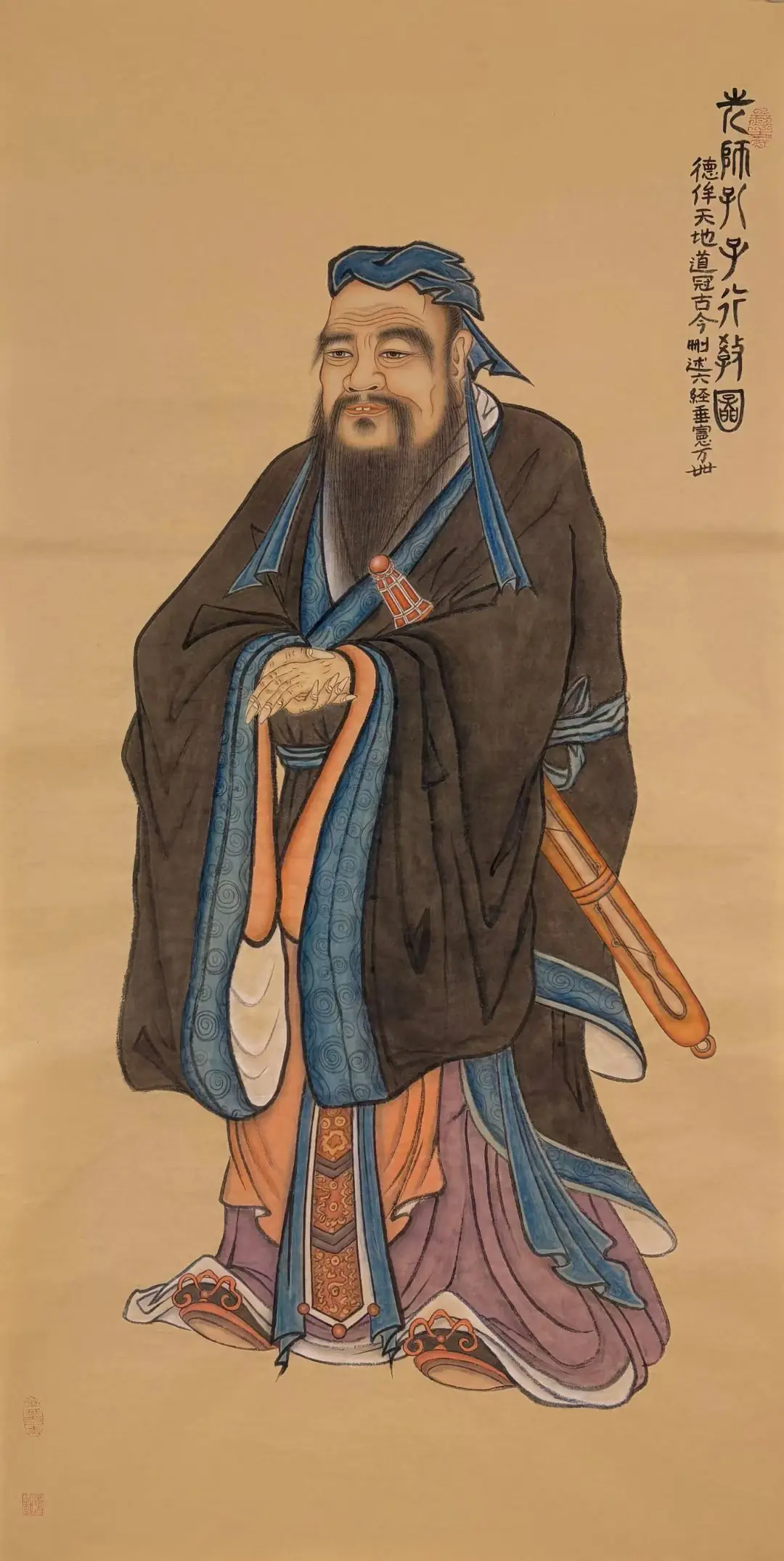
The Original Quote:
子贡问曰:“孔文子何以谓之‘文’也?”子曰:“敏而好学,不耻下问,是以谓之‘文’也。”
Zǐgòng wèn yuē: “Kǒng Wénzǐ hé yǐ wèi zhī ‘wén’ yě?” Zǐ yuē: “Mǐn ér hào xué, bù chǐ xià wèn, shì yǐ wèi zhī ‘wén’ yě.”
English Translation:
Zigong inquired, “Why was Kong Wenzi given the posthumous title ‘Wen’ (Cultured)?” The Master replied, “He was quick-witted yet fond of learning, and he did not feel shame in seeking counsel from those beneath him. Thus, he was called ‘Wen’.”
Key Concepts Explained:
- Wen (文): A Confucian virtue denoting cultural refinement, literary cultivation, and moral elegance. As a posthumous title, it honors one who embodies learning and propriety.
- Min (敏): Quickness of mind or intelligence, but in Confucian thought, it is paired with diligence (好学) to emphasize that natural talent must be tempered by sustained effort.
- Bu Chi Xia Wen (不耻下问): Literally “not ashamed to ask those below.” This phrase encapsulates the Confucian ideal of humility in learning, where status does not hinder the pursuit of knowledge.
Cultural Context:
This passage from the Analects (Lunyu) reflects Confucius’s emphasis on lifelong learning as a moral imperative. In ancient China, posthumous titles like “Wen” were granted by rulers to honor exemplary lives. Kong Wenzi (a noble of the State of Wei) earned this distinction not through birthright but through intellectual humility. The concept of “bu chi xia wen” challenges hierarchical norms, suggesting that true wisdom transcends social rank. This ideal influenced generations of scholars, from the physician Hua Tuo (who disguised himself to learn from a village doctor) to poets who accepted corrections from humble critics. It underscores a core Confucian belief: knowledge is a communal treasure, and the teacher may appear in any guise.