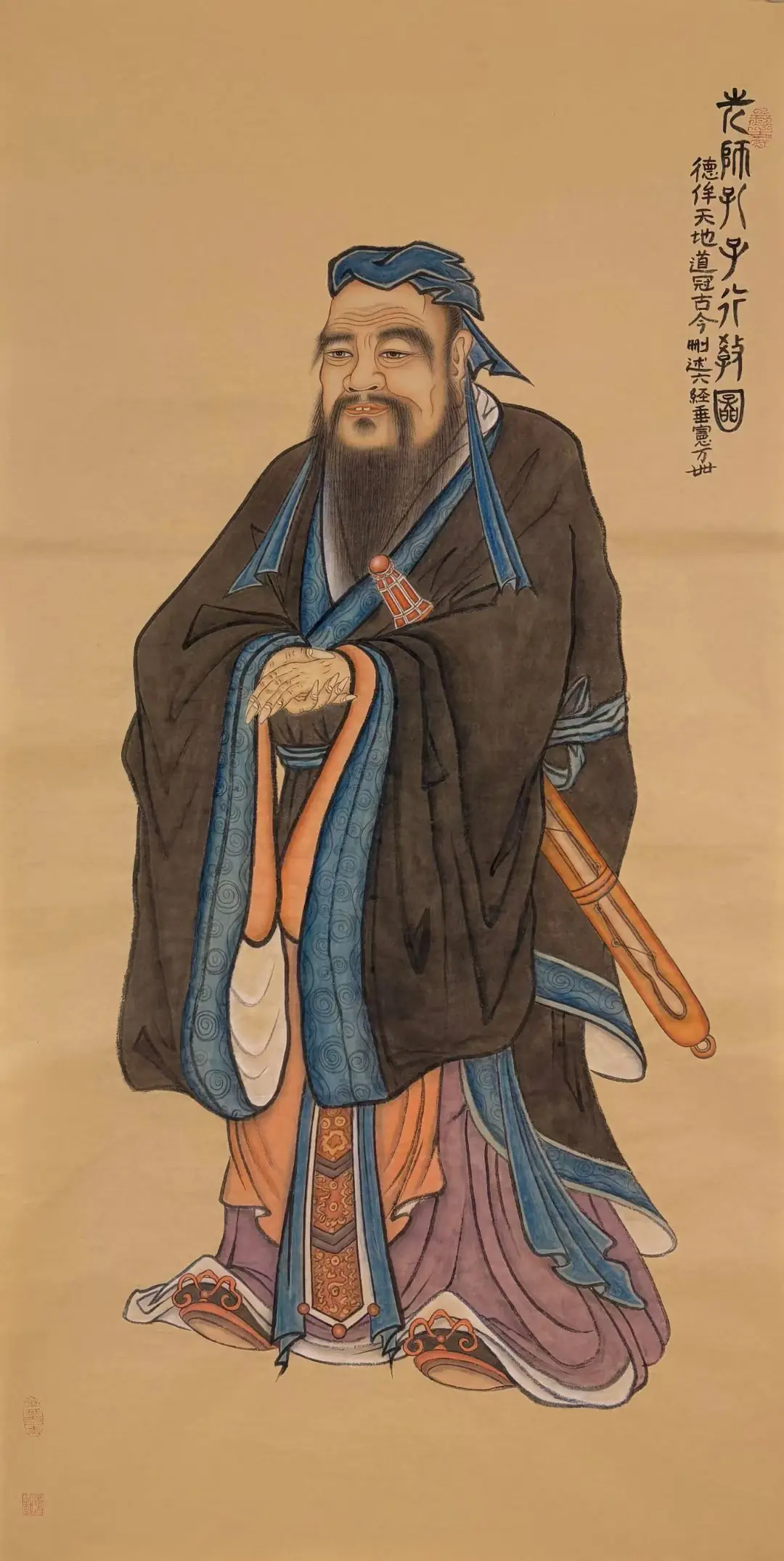
The Original Quote:
子贡曰:“夫子之文章,可得而闻也;夫子之言性与天道,不可得而闻也。”
Zǐgòng yuē: “Fūzǐ zhī wénzhāng, kě dé ér wén yě; fūzǐ zhī yán xìng yǔ tiāndào, bù kě dé ér wén yě.”
English Translation:
Zigong said: “Of the Master’s cultural refinements—his teachings on rites, music, and the classics—we are permitted to hear and learn. Yet of his discourses on human nature (xìng) and the Way of Heaven (tiāndào), we have never been granted an audience.”
Key Concepts Explained:
- 文章 (wénzhāng): Literally “patterns and writings,” here referring to Confucius’s explicit teachings on cultural forms such as the Odes (Shī), Documents (Shū), Rites (Lǐ), and Music (Yuè)—the tangible, learnable aspects of moral cultivation.
- 性 (xìng): Human nature—the innate moral disposition and character with which one is born, a topic Confucius approached with deliberate reserve, leaving its deeper dimensions for advanced students to intuit.
- 天道 (tiāndào): The Way of Heaven—the transcendent, cosmic order and moral principle governing the universe. Confucius rarely expounded on it directly, emphasizing instead the practical path of rén (仁, benevolence) in human affairs.
- 命 (mìng): Fate or the Mandate of Heaven—the inscrutable forces shaping life, which Confucius acknowledged with reverence but did not exhaustively define, urging students to focus on ethical effort rather than metaphysical speculation.
- 礼 (lǐ): Rites and propriety—the structured forms of social conduct and ritual that embody moral order, forming the accessible foundation of Confucian education.
- 仁 (rén): Benevolence or humaneness—the core virtue of Confucianism, often taught through example and practice rather than abstract definition.
Cultural Context:
This passage from the Analects (Lúnyǔ) captures a defining feature of Confucian pedagogy: its emphasis on the immanent and practical over the transcendent and esoteric. Zigong, one of Confucius’s most perceptive disciples, observes that while the Master freely imparted knowledge of cultural forms (wénzhāng), he deliberately withheld systematic teachings on human nature (xìng) and the Way of Heaven (tiāndào). This reflects the Confucian principle that “the Way of Heaven is distant, while the human way is near” (tiāndào yuǎn, réndào ěr). Confucius prioritized moral cultivation through tangible rites, music, and historical study, believing that profound truths about human nature and cosmic order could only be grasped through personal realization—not through abstract lectures. By “showing the tip” (shì zhī yǐ duān) rather than elaborating fully, he invited students to deepen their understanding through lived practice and self-cultivation, a hallmark of Confucian educational philosophy that continues to influence East Asian approaches to learning and ethics.