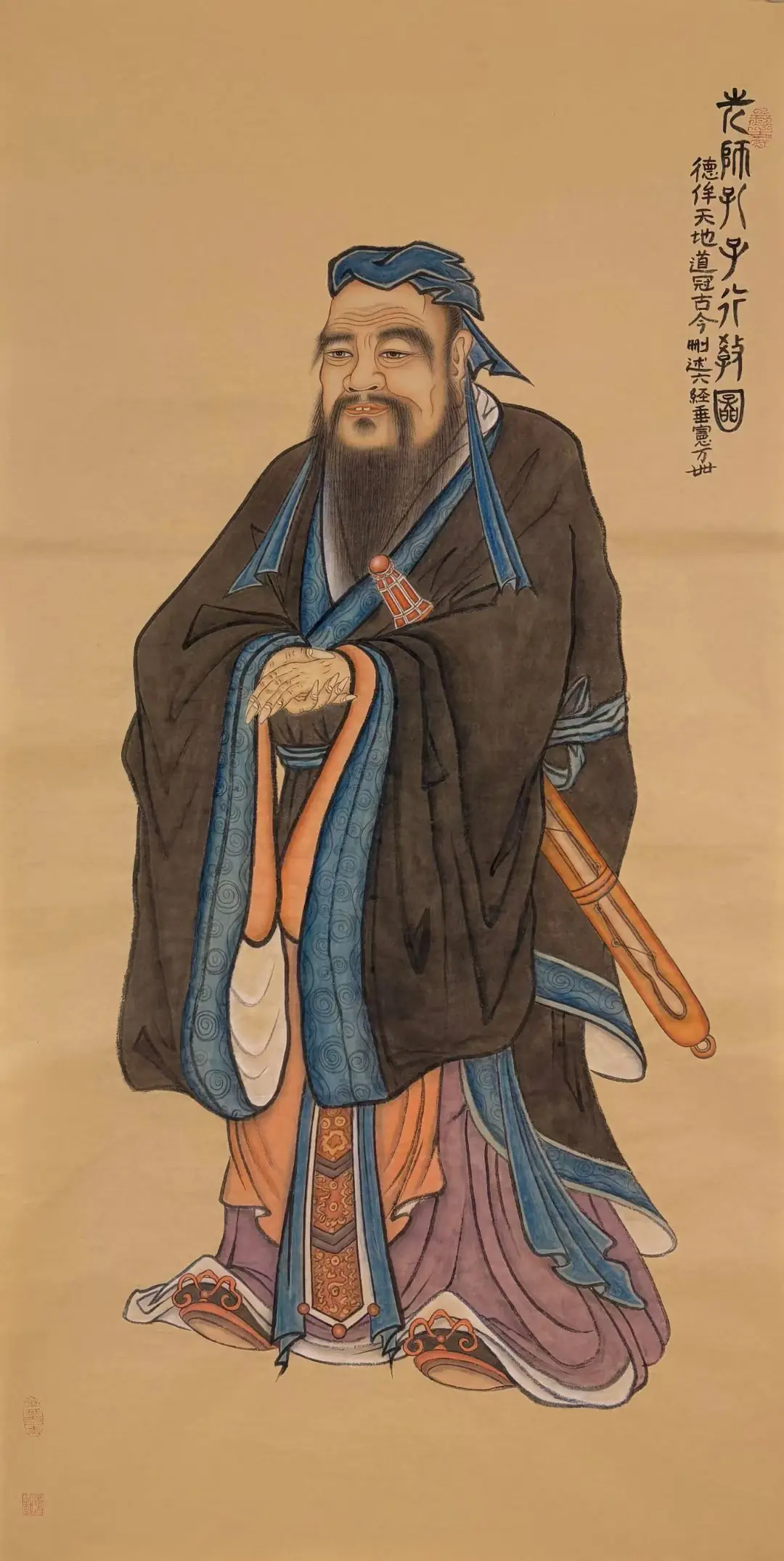
Ran Geng (c. 544-439 BCE), styled Bo Niu, of the Ran clan, was seven years younger than Confucius and a native of the State of Lu. He is mentioned twice in The Analects. Upright and correct in character, he was skilled in social interactions. Among Confucius’s disciples, he was renowned for his virtuous conduct alongside Yan Hui (Confucius’s most beloved disciple) and Min Ziqian (a disciple known for filial piety). After Confucius first served as steward of Zhongdu and later was promoted to Minister of Works, he appointed Ran Geng to succeed him as steward of Zhongdu. Governing with De (Virtue) to benefit the people and practicing Ren (Benevolence) in administration, his achievements were remarkable, making Zhongdu a model for other feudal states and earning high praise from Confucius. During Confucius’s travels through various states, Ran Geng remained by his side. After returning to Lu, he contracted a severe illness, took to his bed, and refused to see others. When he was critically ill, Confucius visited him, stood outside the window holding his hand, and lamented deeply: “Death is fated! But how could such a man suffer such a disease? How could such a man suffer such a disease!” He felt profound sympathy and grief for Ran Geng’s misfortune. Gongsun Chou (a disciple of Mencius) believed that Ran Geng’s learning and virtue were close to Confucius’s, though not as broad and profound. He was ranked among Confucius’s “Four Disciplines and Ten Philosophers” (in the category of virtuous conduct).
Discover the life of Ran Geng (Bo Niu), a virtuous Confucian disciple praised for moral conduct and governance with De (Virtue).