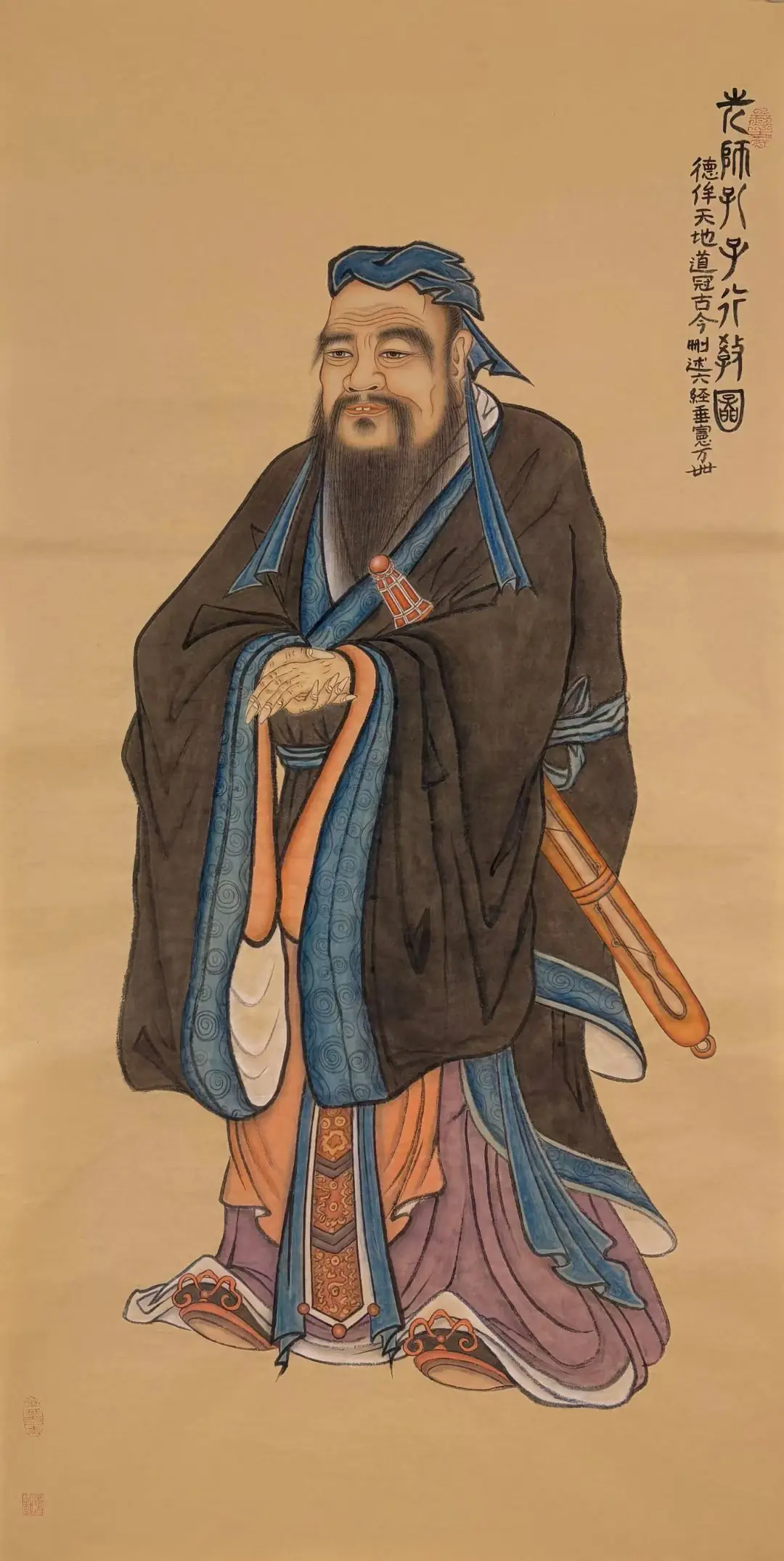
Shen Dang, whose birth and death years are unknown, had the given name Dang and the courtesy name Zhou (according to the Records of the Grand Historian: Biographies of the Disciples of Zhongni). The Analects, Book Five: Gongye Chang mentions Confucius's disciple Shen Cheng: "The Master said, 'I have never seen a truly strong person.' Someone replied, 'What about Shen Cheng?' The Master said, 'Cheng is full of desires—how can he be strong?'" In ancient pronunciation, "Dang" (Dang) was similar to "Cheng" (Cheng), so some consider Shen Cheng and Shen Dang to be the same person (according to Sima Zhen's Tang dynasty commentary, Records of the Grand Historian: Suoyin). The Confucius Family Sayings: Biographies of Seventy-Two Disciples does not list Shen Dang but instead includes "Shen Hui, courtesy name Zhou." Ancient scholars once regarded Shen Cheng, Shen Dang, and Shen Hui as one person. After the Tang dynasty, for a period, Shen Cheng and Shen Dang were considered two separate individuals. In the 27th year of the Kaiyuan reign of Emperor Xuanzong of Tang (739 CE), Shen Cheng was posthumously enfeoffed as "Earl of Lu," while Shen Dang was enfeoffed as "Earl of Zhaoling." In the second year of the Dazhong Xiangfu reign of Emperor Zhenzong of Song (1009 CE), Shen Cheng was further enfeoffed as "Marquis of Wendeng," and Shen Dang as "Marquis of Zichuan." By the ninth year of the Jiajing reign of the Ming dynasty (1530 CE), they were again regarded as the same person, identified as Shen Cheng, and referred to as "Worthy Master Shen."
Discover the intriguing story of Shen Dang, a disciple of Confucius whose identity intertwines with Shen Cheng.