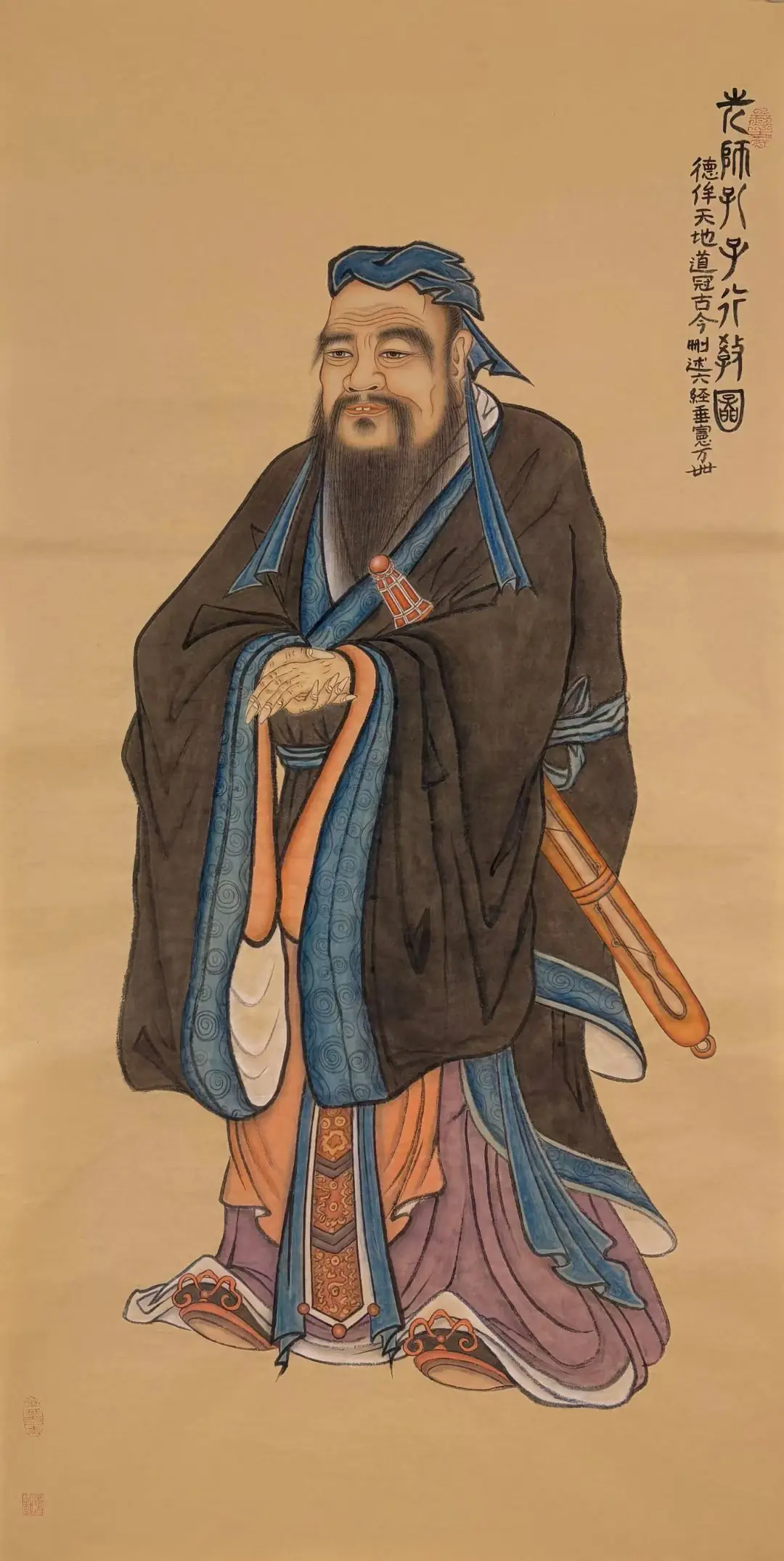
The Original Quote:
子曰:“予欲无言。”子贡曰:“子如不言,则小子何述焉?”子曰:“天何言哉?四时行焉,百物生焉,天何言哉?”
Zǐ yuē: “Yǔ yù wú yán.” Zǐgòng yuē: “Zǐ rú bù yán, zé xiǎo zǐ hé shù yān?” Zǐ yuē: “Tiān hé yán zāi? Sì shí xíng yān, bǎi wù shēng yān, tiān hé yán zāi?”
English Translation:
The Master said, “I wish to speak no more.” Zigong replied, “If you, Master, do not speak, then how shall we, your disciples, transmit your teachings?” The Master answered, “Does Heaven speak? Yet the four seasons pursue their course, and the hundred creatures continue to be born. Does Heaven speak?”
Key Concepts Explained:
- 天命 (Tiānmìng): The Mandate of Heaven or Heavenly decree, representing the inherent order and moral law of the cosmos that operates silently yet pervasively.
- 无为 (Wúwéi): Non-action or effortless action, a Daoist-adjacent concept here used to describe Heaven’s influence without verbal instruction, emphasizing spontaneous natural governance.
- 自化 (Zìhuà): Self-transformation, the process by which all things develop and flourish according to their own nature, guided by inherent principles rather than external commands.
Cultural Context:
This passage from the Analects (Lunyu, 17.19) reflects Confucius’s pedagogical subtlety during the Spring and Autumn period (770–476 BCE), a time of social upheaval. Rather than imposing rigid doctrines, Confucius here echoes the Daoist ideal of silent influence—using Heaven as a metaphor to urge students toward personal insight and observation of natural order. This dialogue underscores the Confucian emphasis on 悟 (wù, intuitive understanding) over mere rote transmission, a principle that shaped East Asian education for millennia, valuing inner realization alongside textual study.