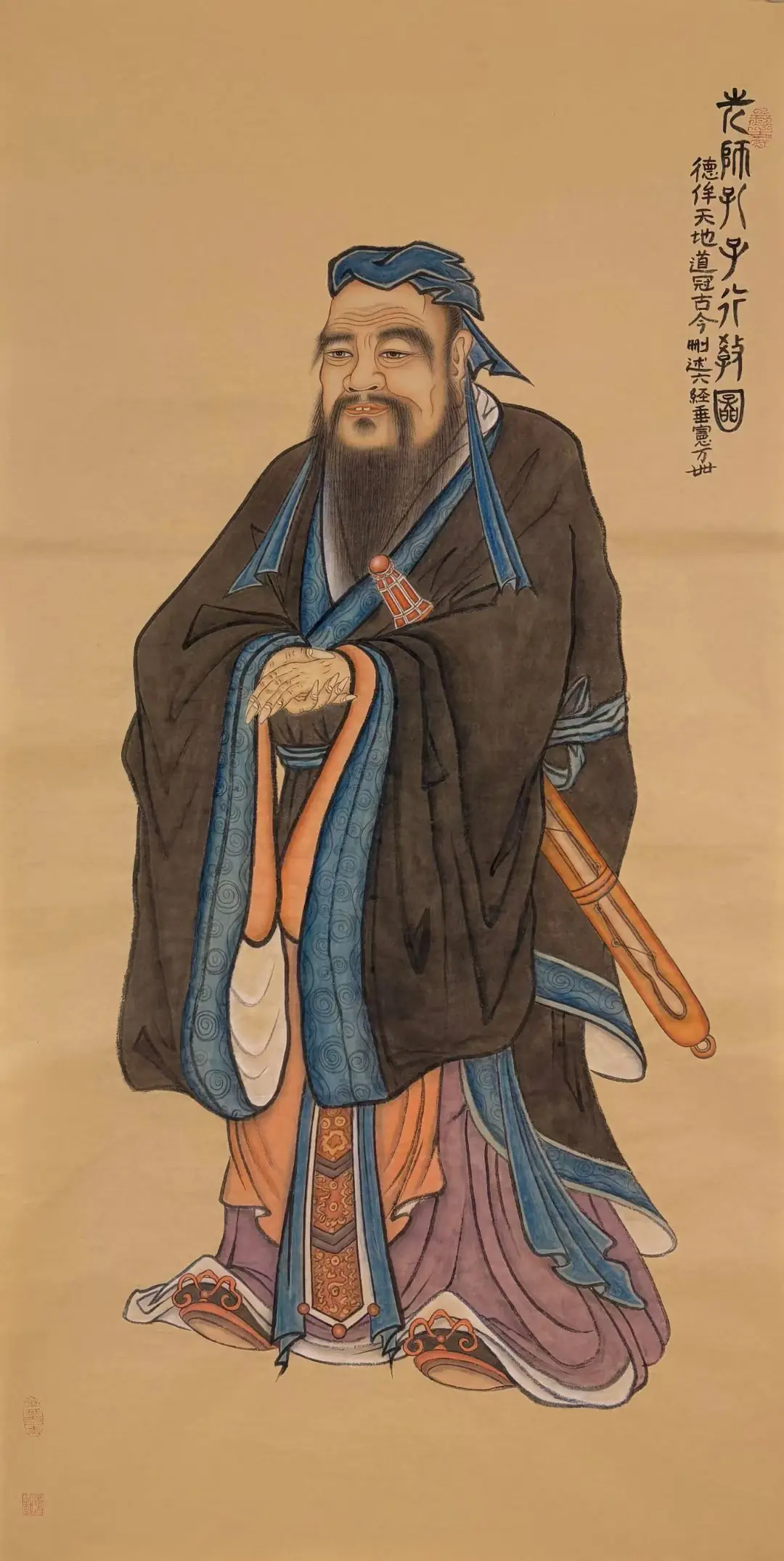
The Original Quote:
子贡曰:“君子亦有恶乎?”子曰:“有恶。恶称人之恶者,恶居下流而讪上者,恶勇而无礼者,恶果敢而窒者。”曰:“赐也亦有恶乎?”“恶徼以为知者,恶不孙以为勇者,恶讦以为直者。”
Zǐgòng yuē: “Jūnzǐ yì yǒu wù hū?” Zǐ yuē: “Yǒu wù. Wù chēng rén zhī è zhě, wù jū xiàliú ér shàn shàng zhě, wù yǒng ér wú lǐ zhě, wù guǒgǎn ér zhì zhě.” Yuē: “Cì yě yì yǒu wù hū?” “Wù jiǎo yǐwéi zhì zhě, wù bù xùn yǐwéi yǒng zhě, wù jié yǐwéi zhí zhě.”
English Translation:
The disciple Zigong inquired: "Does the noble person (jūnzǐ) also harbor hatred or aversion?" The Master replied: "Indeed, there are things he detests. He detests those who broadcast the faults of others, those who, being in low station, slander their superiors, those who possess courage but lack ritual propriety (lǐ), and those who are resolute yet obstinate and unyielding." The Master then asked: "And you, Ci (Zigong's given name), do you also have things you detest?" Zigong answered: "I detest those who plagiarize and pass it off as wisdom (zhì), those who mistake insolence for courage (yǒng), and those who expose others' secrets while claiming to be upright (zhí)."
Key Concepts Explained:
- 君子 (jūnzǐ): The "noble person" or "profound person"—an ideal of moral cultivation and social responsibility in Confucianism, not defined by birth but by virtue.
- 礼 (lǐ): Ritual propriety or normative social conduct—the framework of customs, rites, and manners that harmonize human relationships and express inner virtue.
- 恶 (wù): Righteous aversion or moral disgust—a discerning emotion that distinguishes good from evil, distinct from petty hatred; Confucian ethics acknowledges that even the virtuous must oppose wrongdoing.
- 勇 (yǒng): Courage or bravery—valued only when guided by lǐ and justice; without moral grounding, it becomes reckless or arrogant.
- 直 (zhí): Uprightness or straightforwardness—a virtue, but one that must be tempered by benevolence (rén) and propriety; blunt truth-telling without compassion is condemned as mere rudeness.
- 知 (zhì): Wisdom or knowledge—authentic understanding derived from learning and reflection, not from theft of others' ideas.
Cultural Context:
This dialogue from the Analects (Lúnyǔ, Book 17, Chapter 24) illustrates a crucial nuance in Confucian ethics: the noble person (jūnzǐ) is not a passive "goody-goody" (好好先生) who loves all indiscriminately, but one who exercises moral judgment with clarity. In the Warring States period (475–221 BCE), when social hierarchies were contested, Confucius and his disciples sought to define virtue through both positive cultivation and the rejection of specific vices. The passage condemns four types of moral failings in others—spreading gossip, slandering superiors, reckless courage, and stubbornness—and three forms of hypocrisy: intellectual theft, false bravery, and self-righteous exposure of others. This reflects the Confucian commitment to a balanced, relational ethics where love (rén) is complemented by righteous indignation, and social harmony depends on both compassion and clear boundaries. The exchange also highlights the pedagogical style of Confucius, who often turned questions back to his students to deepen their self-reflection.