
In 180 BC, on her deathbed, Empress Dowager Lü handed over command of the Southern and Northern Armies to Lü Lu and Lü Chan, instructing them to station heavy troops at the palace after her death and not to attend her funeral, to avoid being seized by the Liu clan and ministers. After Empress Dowager Lü's death, the Lü clique planned to rebel while the Liu family had yet to elect a new emperor, but many powerful court officials, especially Guan Ying, Zhou Bo, and Chen Ping—all founding elders—supported the Liu clan, so the Lü family dared not act rashly.
Liu Zhang, the Marquis of Zhuxu, was married to the daughter of Lü Chan. One day, his wife revealed to him that the Lü family was plotting a rebellion. Realizing the gravity of the situation, Liu Zhang immediately informed his elder brother, Liu Xiang. Upon learning of the Lü family's planned uprising, King Liu Xiang of Qi took preemptive action by raising an army to suppress them. He reached out to other princes surnamed Liu, urging a united front, while also seeking support from court officials like Chen Ping and Zhou Bo. Chen Ping and Zhou Bo, upon hearing that Liu Xiang intended to overthrow the Lü clique, expressed their full backing.
At that time, the military power of both the southern and northern armies was held by Lü Lu and Lü Chan. Zhou Bo wanted to mobilize troops but had no idea where to find an army. Lü Lu had a close friend named Li Ji, and the two shared a deep bond. Zhou Bo, realizing he couldn't seize military authority from Lü Lu by force, decided to use a clever trick. While Li Ji was away from home, Zhou Bo brought Li Ji's father to his own residence. When Li Ji returned and couldn't find his father, Zhou Bo sent someone to tell him that if he could persuade Lü Lu to hand over military command, his father would be safely returned home. With no other choice, Li Ji went to see Lü Lu and said, "Now that Empress Lü has just passed away, the court is in turmoil. King Liu Xiang of Qi is watching eagerly. You, the King of Zhao, are leading troops stationed in the capital, which might make people suspect you of plotting rebellion and cause unnecessary misunderstandings. It would be better to hand over military authority to Zhou Bo. Once Liu Xiang sees you withdraw your troops, his army will also retreat, and the ministers will have no reason to doubt you. Isn't that a good outcome?"
After hearing Li Ji's reasoning, Lü Lu found it convincing and handed over the military seal of the Northern Army to Zhou Bo. Zhou Bo took the seal and rushed straight to the Northern Army camp. When the soldiers saw that Zhou Bo had taken command, they all expressed their willingness to support the Liu family. Thus, Zhou Bo led the Northern Army alongside King Liu Xiang of Qi to oppose the Lü clan faction.
Before plotting their rebellion, Lü Lu and Lü Chan had agreed on a date to attack the palace. When Lü Lu handed over the military seal to Zhou Bo, Lü Chan was unaware of this; at that time, he was ordering Guan Ying to lead troops to suppress the army of the King of Qi. Guan Ying had no intention of siding with the Lü clan; he secretly contacted the King of Qi and agreed that both sides would hold their troops in check, waiting for the Lü group to act rashly before swiftly eliminating them. Seeing that Guan Ying was slow to act, Lü Chan decided to personally lead his forces to storm the palace, still believing that Lü Lu would coordinate with him from within. In reality, Lü Lu had already returned to his own fiefdom. When Lü Chan entered the palace with his troops, the forces of Zhu Xu Hou Liu Zhang surrounded him from all sides. Lü Chan laughed, saying Liu Zhang overestimated himself, but after waiting a long time without seeing Lü Lu appear, he finally realized the situation was lost. Liu Zhang killed Lü Chan in the battle, took command of the Southern Army, and then Liu Xiang, Zhou Bo, and Guan Ying joined forces to defeat the Lü clan. In history, this event is known as the "Cleansing of the Lü Clan."
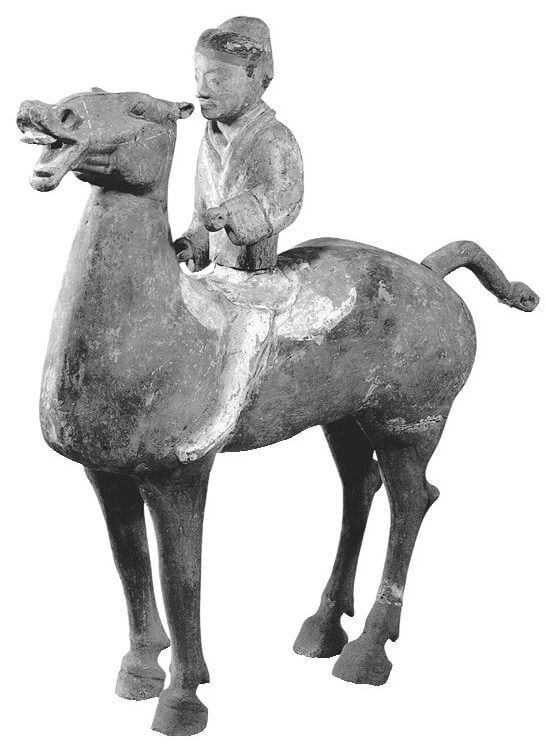
During Empress Dowager Lü's regency, she forced many descendants of the Liu family to their deaths, leaving only two of Emperor Gaozu of Han's sons alive: Liu Chang, the Prince of Huainan, and Liu Heng, the Prince of Dai. After eliminating the Lü clan, ministers began discussing who should be made emperor. Having endured the bloody turmoil of the Lü family's influence as relatives of the imperial clan, the ministers had no desire to support another emperor with powerful maternal relatives. Logically, Liu Xiang, the Prince of Qi, had made great contributions in suppressing the rebellion, but he was of the grandson generation; if Emperor Gaozu had no surviving sons, he might have been considered. What worried the ministers most was that Liu Xiang's maternal uncle wielded considerable power, so Chen Ping and Zhou Bo could not establish Liu Xiang as emperor. Although Liu Chang, the Prince of Huainan, was a suitable candidate, his mother's family was no less powerful than Liu Xiang's uncle. This left only Liu Heng, the Prince of Dai, whose mother, Consort Bo, was known for her cautious and upright conduct, and whose family had no notable influence to boast of. The ministers unanimously decided to make Liu Heng emperor, historically known as Emperor Wen of Han.