Duke Huan of Qi (r. 685-643 BCE, whose surname was Jiang and personal name was Xiaobai) was the foremost of the "Five Hegemons of the Spring and Autumn Period." During Qi's internal turmoil, Prince Xiaobai fled to the State of Ju, while his brother Prince Jiu, whose mother was from the State of Lu, sought refuge there. In the twelfth year of Duke Xiang's reign (686 BCE), Gongsun Wuzhi assassinated Duke Xiang of Qi and declared himself ruler. The following year, a man from Yonglin killed Gongsun Wuzhi. With Qi suddenly without a ruler and in chaos, Prince Xiaobai secretly returned from Ju upon hearing the news. Meanwhile, the people of Lu, learning of Gongsun Wuzhi's death, dispatched troops to escort Prince Jiu back to claim the throne, sending Guan Zhong (a future Prime Minister of Qi) with soldiers to block the route from Ju to Qi. In the ensuing conflict, Guan Zhong shot an arrow that struck Xiaobai's belt buckle; Xiaobai feigned death and fell to the ground. Guan Zhong sent a messenger back to Lu to report victory, so Lu leisurely escorted Prince Jiu home, arriving only six days later. By then, Xiaobai had already rushed back to Qi day and night and was established as ruler—this was Duke Huan of Qi.
With the recommendation of Bao Shuya (a wise minister of Qi), Duke Huan of Qi set aside past grievances and appointed Guan Zhong (a renowned reformer and strategist) as Prime Minister to carry out reforms. Qi's national strength greatly increased and gradually became powerful. He first repaired relations with neighboring states, returning previously occupied lands to Lu, Wei, and Yan, making them protective barriers to his south, west, and north respectively. In the seventh year of Duke Huan's reign (679 BCE), he convened a meeting of the rulers of Song, Chen, Cai, and Zhu at Zhen, becoming the first feudal lord in history to act as an alliance leader. Later, when Song violated the alliance, Duke Huan, in the name of the Son of Heaven (the Zhou king), led several states to attack Song, forcing it to sue for peace. Subsequently, he twice led joint military campaigns and convened six alliances with various lords, historically known as "Nine Assemblies of the Feudal Lords." At that time, tribes such as the Rong and Di frequently attacked the various Chinese states. Duke Huan raised the banner of "Honoring the King and Expelling the Barbarians" (Zun Wang Rang Yi), sending troops to rescue allies, attacking the Mountain Rong in the north and punishing Chu in the south, unifying the realm and becoming the hegemon of China, winning the support of all states and rewards from the Zhou king. In his later years, Duke Huan became muddled and trusted petty men like Yi Ya and Shu Diao (two treacherous court officials), eventually starving to death during a civil strife.
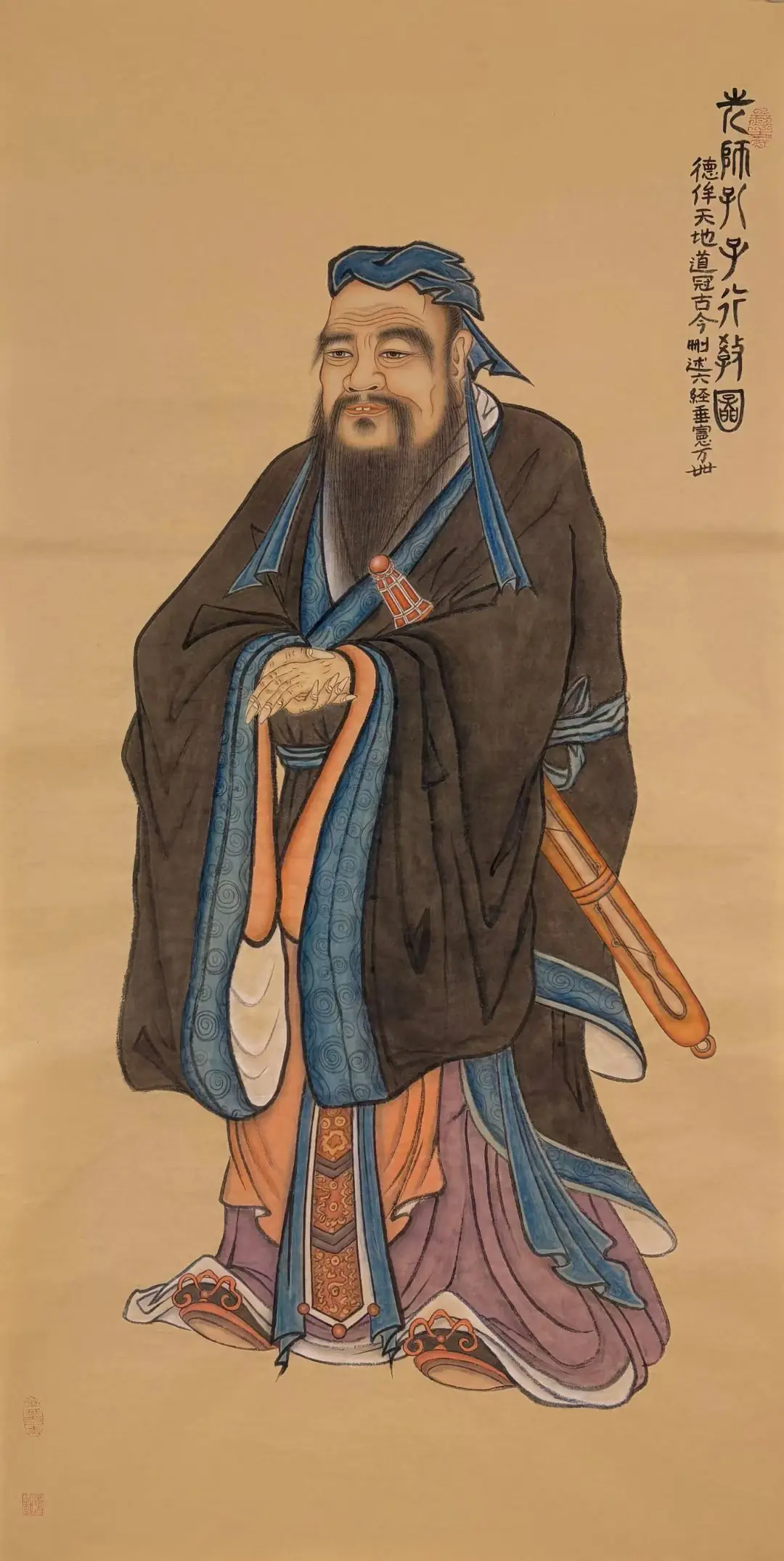
Duke Huan of Qi, as the first hegemon of the Spring and Autumn Period, did not resort to power strategies or deceitful tactics. He convened alliances with the various lords and led righteous armies to expel the barbarian tribes and rescue the Central States. Therefore, Confucius commented, "Duke Huan of Qi was upright and not cunning."