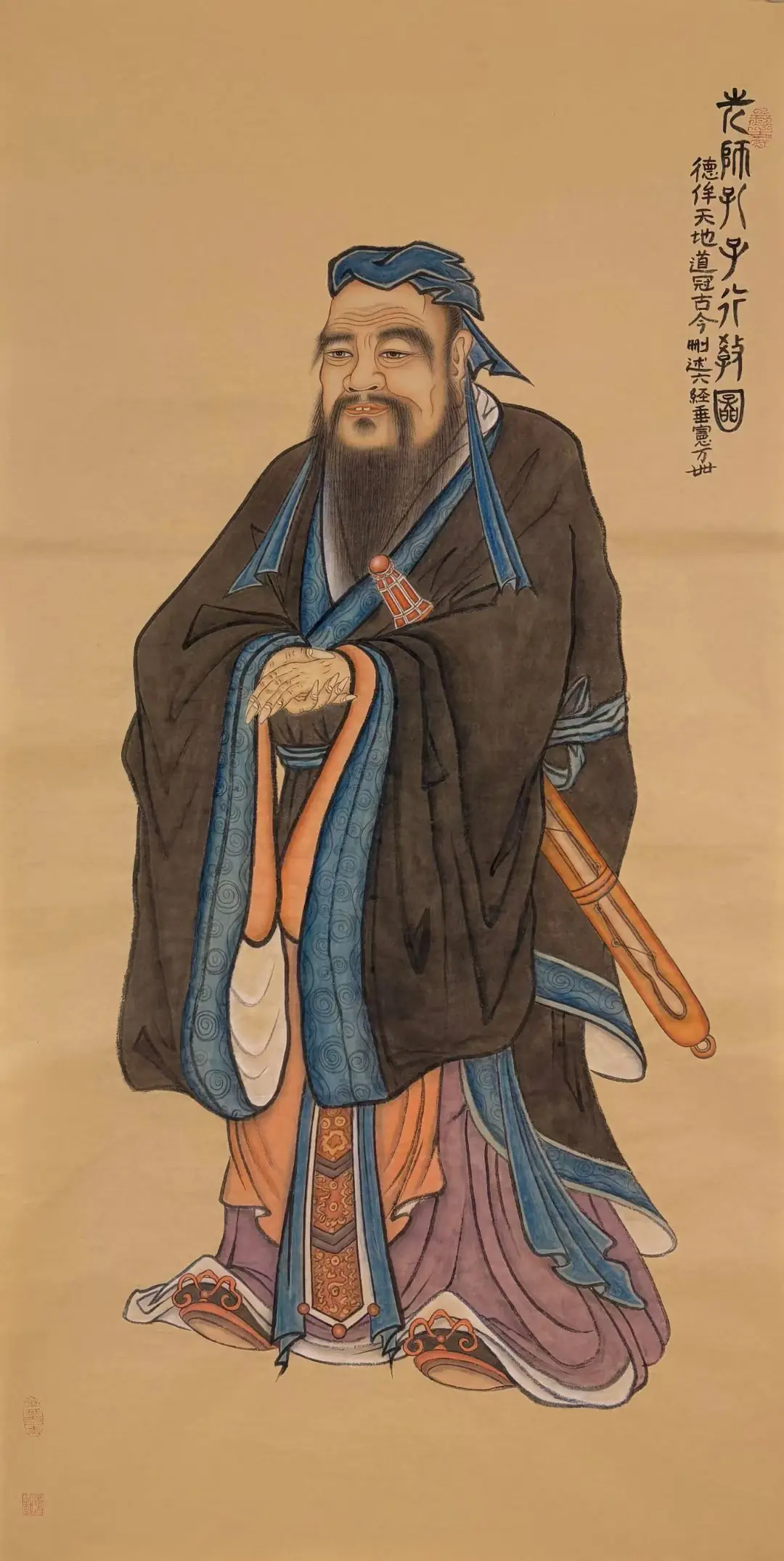
Zuo Qiuming (a historian of the State of Lu, contemporary with or slightly older than Confucius, dates unknown), whose surname was Qiu and given name Ming, was called Zuo Qiuming because his father served as the Left Scribe Official. He was blind, thus later generations also called him "Blind Zuo." He is traditionally credited with writing the Spring and Autumn Annals of Master Zuo (also known as the Zuo Commentary, or Zuozhuan) and the Discourses of the States (Guoyu). These two books record many important historical events of the Western Zhou and Spring and Autumn periods, preserving a wealth of original materials of incalculable historical, literary, scientific, and military value, highly esteemed by historians and literati throughout the ages. He is mentioned once in The Analects. Zuo Qiuming was erudite and of noble character. He affirmed Confucian ethics such as "the ruler being righteous, the minister dutiful, the father kind, the son filial, the elder brother loving, and the younger brother respectful," valued the role of Li (Propriety), held clear attitudes toward historical events, and was deeply valued by the Duke of Lu. According to records, when the Duke of Lu wanted to appoint Confucius as Minister of Education (Sitou), he was about to summon the Three Huan families (the three powerful noble clans of Lu) to discuss its feasibility and mentioned this to Zuo Qiuming. Zuo praised Confucius as a sage, saying that when a sage is in power, those who err will be dismissed, and that consulting the Three Huan would be like asking a tiger for its skin. The Duke of Lu therefore did not consult the Three Huan and immediately appointed Confucius as Minister of Education.
He was an elder greatly admired by Confucius, and the two had a close relationship. Together, they once traveled to the Zhou court to consult documents and records at the Grand Historian's office. After returning to the State of Lu, Confucius wrote the concise Spring and Autumn Annals (Chunqiu), while Zuo Qiuming (a historian and contemporary of Confucius) composed the voluminous Zuo Commentary (Zuozhuan). Zuo Qiuming was upright, honest, and of noble character, and Confucius regarded him as a role model. When discussing his own principles of conduct, Confucius said: "Sweet words, flattering looks, and cringing postures—such an attitude, Zuo Qiuming considers shameful, and I too consider it shameful. Hiding resentment while pretending to be friendly—Zuo Qiuming considers this shameful, and I too consider it shameful."