Ji Huanzi (?-492 BCE), also known as Ji Sun Si, was a member of the Ji clan by surname, with the given name Si, the posthumous title "Huan," and is historically referred to as Ji Huanzi. He was a senior minister (qing dafu) of the State of Lu during the Spring and Autumn Period (770-476 BCE), and the son of Ji Pingzi (Ji Sun Yi Ru). The "Sun" in "Ji Sun Si" is an honorific title; "Ji Sun" is not a clan name, and the designation "Ji Sun [given name]" was used exclusively for the clan leader, while ordinary members of the lineage were only called "Ji [given name]." Thus, Ji Huanzi belonged to the Ji clan, not the Ji Sun clan.
In 505 BCE, after Ji Pingzi died, Ji Huanzi was established as Minister. During Ji Huanzi's time, the power and prestige of the Three Huan families (descendants of Duke Huan of Lu), led by the Ji family, declined in the State of Lu, while the influence of their stewards suddenly increased, creating a situation where "stewards held the reins of state." He was imprisoned by his steward Yang Hu and was only released after reaching a covenant with him; afterward, Yang Hu governed Lu for three years. In the eighth year of Duke Ding of Lu (502 BCE), Yang Hu rebelled, attempting to kill Ji Huanzi during a banquet. On his way to the feast, Ji Huanzi persuaded his charioteer Lin Chu to drive him to the Mengsun family, where he allied with them to defeat Yang Hu and quell the rebellion. Ji Huanzi thus regained control over the great power of Lu.
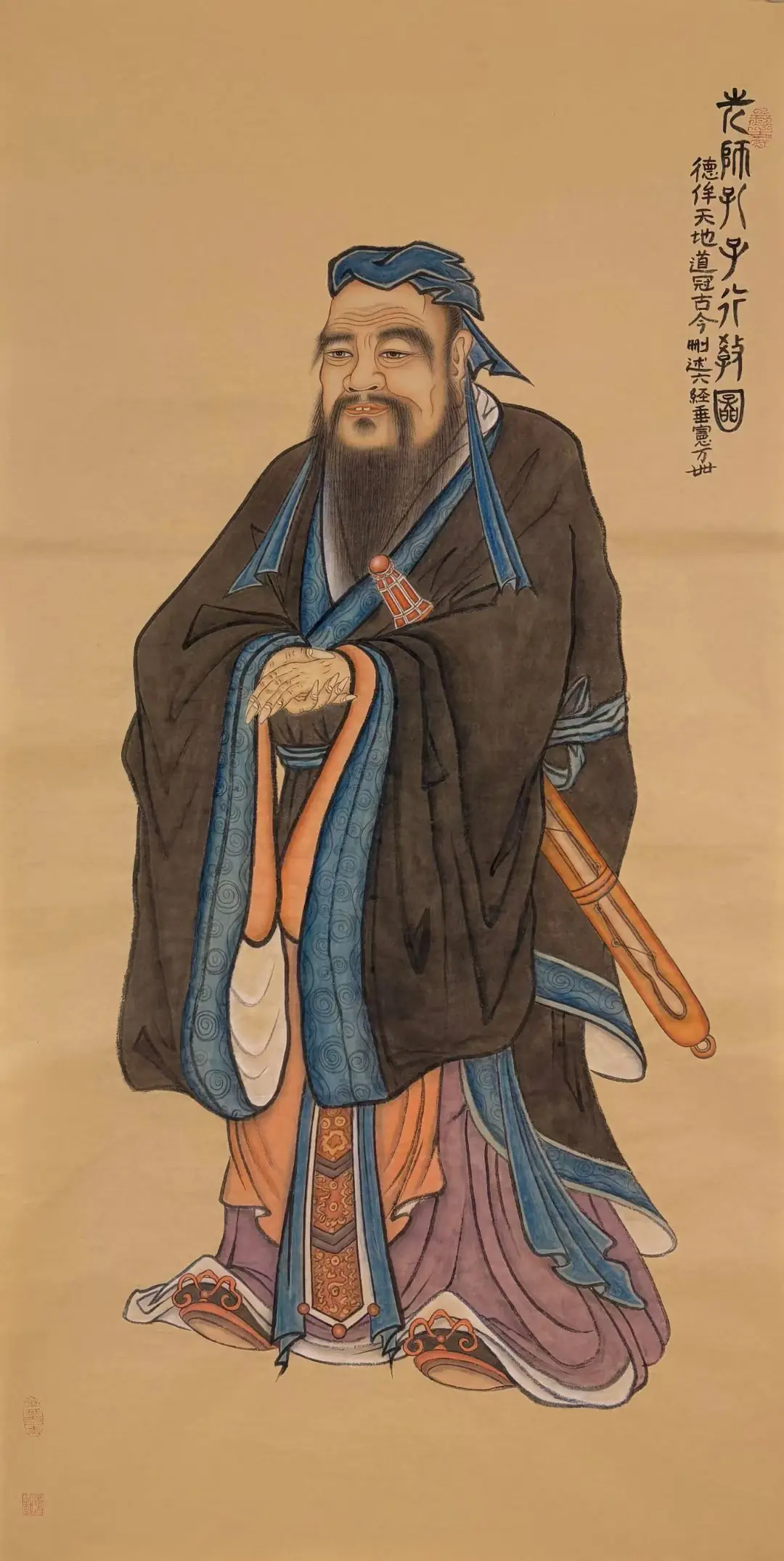
After Confucius was promoted to Grand Minister of Justice (Da Sikou) in the State of Lu, he sought to implement the plan to "Dismantle the Three Fortified Cities" (Duo San Du) in order to strengthen the power of the ducal house and curb the influence of the private clans. However, at that time, the "Three Huan" clans (the three powerful noble families of Lu) were in power, and they could not abandon their own authority. Confucius's disciple Zi Lu (a loyal and courageous disciple serving as steward to the Ji family) said to the Ji family: "In the thirteenth year of Duke Zhao, Nan Kuai occupied the strong city of Fei and rebelled; we attacked for years but could not recapture it. In the tenth year of Duke Ding, Hou Fan rebelled by holding the fortified city of Hou; we besieged it for over a year and could not conquer it. This is because Fei and Hou are too dangerous and fortified, and our stewards have repeatedly used them to betray the Three Huan. To prevent future trouble, it is better to take the opportunity to destroy Fei and Hou." Given that the stewards' power had grown too large to control, Ji Huanzi (head of the Ji clan) accepted Confucius's proposal to dismantle the three cities and ordered the destruction of the cities controlled by the stewards. He sent Zi Lu to oversee the operation. First, the Shusun clan destroyed the city of Hou. Then, the Ji clan ordered the destruction of its own city of Fei. At that time, the steward of Fei, Gongshan Burao, resisted. He allied with Shusun Zhe and led the people of Fei to attack the capital. Confucius sent Shen Juxu and Yue Qi to fight, defeating the Fei people. Gongshan Burao and Shusun Zhe fled to the State of Qi. Thus, the city of Fei was destroyed. After Hou and Fei were dismantled, the only remaining city was Cheng, which belonged to the Meng clan. The steward of Cheng, Gonglian Chufu, said to the Meng clan: "If Cheng is destroyed, then the State of Qi will surely be able to enter northern Lu easily. Moreover, Cheng is the safeguard of the Meng clan. Without Cheng, where will the Meng clan be?" So the Meng clan secretly resisted and opposed the destruction of Cheng. Duke Ding saw that two of the three cities had been destroyed, but this one could not be taken down. He sent troops to attack, but they failed to capture it. The matter was left unresolved. Ji Huanzi also realized that Confucius's ultimate goal in "Dismantling the Three Fortified Cities" was to strengthen the ducal house and curb the private clans, so he no longer supported Confucius.
Later, the people of Qi saw that the State of Lu was gradually growing stronger after employing Confucius. So they sent female musicians as gifts, and Duke Ding and Ji Huanzi (the head of the Ji family and chief minister of Lu) watched them, failing to hold court for several days. Confucius was compelled to wander through various states. In the third year of Duke Ai of Lu, Ji Huanzi died, and his son Ji Sunfei succeeded him.