
Li Shizhen (1518–1593), courtesy name Dongbi, styled himself in his later years as the Hermit of Binhu, was born in Qizhou, Hubei (present-day Qichun, Huanggang, Hubei). His father, Li Yanwen, was a renowned local physician. The Li family's backyard was filled with medicinal herbs, and from the moment Li Shizhen began to toddle, he formed an inseparable bond with these plants. As he grew older, his understanding of these herbs deepened, and he spent his days immersed in the backyard. However, because physicians at the time were regarded by the wealthy and noble as belonging to a lowly class, with very humble social status, Li Yanwen naturally did not want his intelligent son to suffer the same discrimination and humiliation he endured. Instead, he hoped his son would bring honor to the family through scholarly success and imperial examinations. At fourteen, Li Shizhen passed the county-level exam to become a xiucai, but he had no interest in studying the hollow and tedious eight-legged essay style. After failing the provincial-level exam three times, and given his frail health from childhood and his deep passion for medicine, he expressed to his father his determination to abandon the imperial examination path and focus on learning medicine. After careful consideration, Li Yanwen ultimately agreed to his son's request and devoted himself to teaching him diligently.
One day, Li Yanwen went out for house calls, leaving only Li Shizhen in the clinic. Two patients then arrived—one with red, swollen, and painful eyes, and the other suffering from severe diarrhea. Li Shizhen pondered for a while and said, "My father won't be back until evening. How about I try prescribing a remedy for you first? If it doesn't work, you can come back to see my father." The patient with diarrhea, in extreme discomfort, couldn't care less and eagerly said, "Fine, fine—how could the young master of a healer's family get the prescription wrong?" The patient with swollen eyes, covering them with both hands, also urged Li Shizhen to write the prescription. Li Shizhen decisively prepared the medicines, and the patients left with them. When Li Yanwen returned home, Li Shizhen gave his father a detailed, well-reasoned account of the consultations and prescriptions. As Li Yanwen listened, he nodded repeatedly, thinking to himself that his son had not only read many medical texts but could also apply that knowledge to real treatment—truly the makings of a fine doctor. His initial surprise turned to delight, and he gave his son even more freedom to practice medicine. Within a few years, Li Shizhen became a highly respected physician in the region.
During his medical practice, Li Shizhen discovered that many entries in ancient medical texts were erroneous. For instance, the *Rihua Bencao* mistakenly conflated the swelling-reducing *mu bie zi* (Momordica cochinchinensis) with *hu zhang* (Polygonum cuspidatum), which was used to treat severe sores. A mental patient died shortly after taking a prescription containing *fang kui* (Peucedanum), because the doctor, following the ancient text, had substituted *lang du* (Euphorbia fischeriana) for *fang kui*. Since *lang du* is highly toxic, how could consuming it not lead to death?
Frequent fatal accidents caused by medication deeply shocked Li Shizhen. He thought that while ancient medical texts undoubtedly contained rich knowledge and valuable experience, they also had errors and omissions; if not corrected in time, how many people would have their conditions worsened or even lose their lives as a result. With this in mind, Li Shizhen immediately went to his father and had a heartfelt conversation with him by lamplight. After learning of his son's grand ambition, Li Yanwen said earnestly, "Your idea of revising the herbal compendium is good, but it will be very difficult to implement, as it requires substantial manpower and financial resources, likely only the imperial court has such capacity. Moreover, with your current medical knowledge, you are far from meeting the requirements for compiling such a book, so you should first focus on intensive study, don't you think?" Hearing this, Li Shizhen felt reassured. From then on, he immersed himself completely in the vast sea of medical texts, spending ten years thoroughly reading classical medical works such as the Inner Canon, the Classic of Materia Medica, the Treatise on Cold Damage Disorders, and the Synopsis of the Golden Chamber, along with numerous books on plants and trees, accumulating many valuable reading notes and materials.
In the 30th year of the Jiajing reign (1551), Li Shizhen, renowned for his medical expertise, was employed by the Prince of Chu's palace to oversee ritual ceremonies and medical affairs. Although Li Shizhen was initially reluctant to associate with imperial relatives, he considered that the Prince of Chu might help him convey his goal of revising the materia medica to the court, so he went to the palace. Before long, Li Shizhen gained widespread fame for curing the prince's heir of sudden collapse and other difficult diseases, and was recommended as a medical official in the Imperial Hospital of the Ming Dynasty. The Imperial Hospital, the central medical institution of the Ming, housed a vast collection of rare medical texts and drug specimens not commonly seen elsewhere, greatly broadening Li Shizhen's horizons. During his time there, he studied, copied, and illustrated medical texts day and night, absorbing a wealth of medical knowledge. He repeatedly proposed revising the materia medica to the hospital, but instead of receiving support, he faced unwarranted ridicule and slander. Li Shizhen quickly realized that the Imperial Hospital was not the place to fulfill his aspirations, so after one year, he resolutely resigned on the pretext of illness and returned to his hometown.
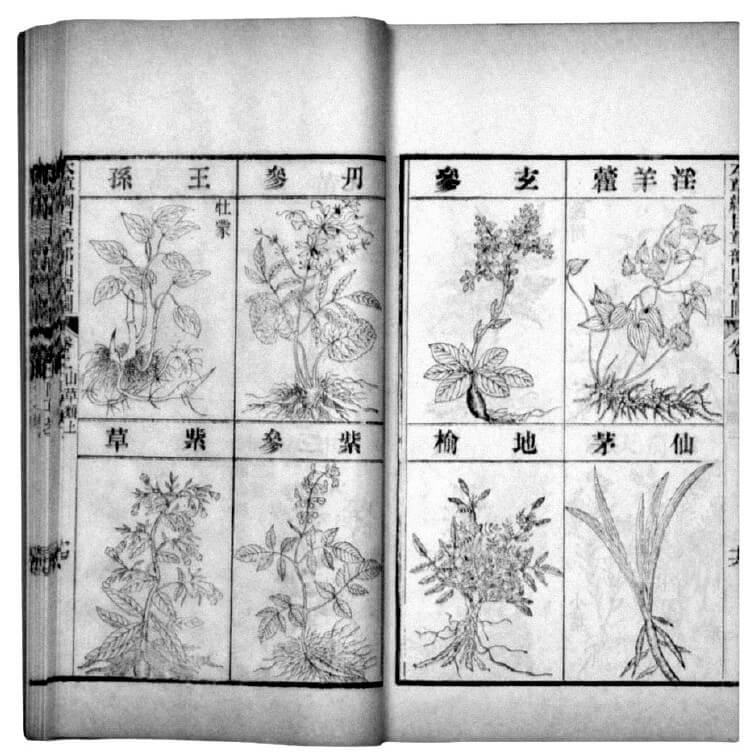
The year after he left the Imperial Medical Institute, at the age of thirty-five, Li Shizhen began rewriting medical texts, naming his work the *Compendium of Materia Medica*. At first, things went smoothly, but soon problems emerged. *Bencao* (materia medica) was the ancient term for pharmacology, encompassing plants like flowers, fruits, and trees; animals such as birds, beasts, fish, and insects; and minerals like lead, tin, sulfur, and mercury—named for the predominance of plant-based substances. Over the centuries, many works on materia medica had been published, but none covered the medical advances from the Eastern Han Dynasty's *Shennong's Classic of Materia Medica* to Li Shizhen's time, spanning over a thousand years. Upon discovering this gap, Li Shizhen took on the heavy task. However, he did not anticipate the vast number of medicinal substances; without understanding each one's properties and habits, he risked repeating the mistakes of his predecessors in confusing different herbs. From then on, wearing straw sandals and carrying a medicine basket, accompanied by his disciple Pang Xian and his son Li Jianyuan, Li Shizhen ventured deep into mountains and wilderness for field investigations. He visited renowned doctors and learned scholars, collected folk remedies, and humbly sought knowledge from farmers, fishermen, woodcutters, hunters, and miners, learning much about medicinal substances not found in books. For instance, *yuntai* (rape plant) was commonly used in treatments, but what did it really look like? The *Shennong's Classic of Materia Medica* did not clarify, and various commentaries were unclear. Through guidance from a vegetable farmer and examining the actual plant, Li Shizhen confirmed it was simply oilseed rape, and he provided a detailed annotation in the *Compendium of Materia Medica*. Hearing that a northern drug called *mandala* had leaves like eggplant and flowers like morning glory, causing people to dance wildly or even fall into a stupor when ingested, Li Shizhen traveled north, found the plant, personally tested the flower's effects, and recorded: "For cutting sores or moxibustion, one should first take this, and it will not feel painful." Modern pharmacology has confirmed that mandala flowers indeed have properties that paralyze the sympathetic nervous system.
During his field investigations, Li Shizhen never forgot to treat the local people's illnesses. A woman had been bleeding from her nasal cavity for a whole day and night, and no treatment had been effective. Li Shizhen sliced garlic and applied it to the patient's soles, and soon the bleeding stopped. This remedy was exactly what he had learned from folk practices. As his investigations deepened, Li Shizhen came to realize more profoundly that knowledge exists everywhere—as long as one learns attentively, there will be new gains every day.
In 1578, Li Shizhen finally completed *Compendium of Materia Medica*, a groundbreaking pharmacological masterpiece.
The Compendium of Materia Medica was completed by Li Shizhen after traveling over ten thousand miles, listening to the opinions of countless people, consulting more than eight hundred books, and spending twenty-seven years on the work. It consists of sixteen sections, including five on plants: herbs, grains, vegetables, fruits, and woods; six on animals: insects, scales, shells, birds, beasts, and humans; four on minerals: metals, jade, stones, and salts; and one other section, totaling fifty-two volumes and about two million characters. The compendium includes 1,892 medicinal substances, 374 of which were newly added, along with over 11,000 prescriptions and more than 1,100 illustrations. Its content covers knowledge from many fields such as botany, zoology, mineralogy, chemistry, astronomy, and meteorology, drawing on the essence of previous herbal works, correcting past errors and omissions as much as possible, and making many important discoveries and breakthroughs. Its scale surpasses any previous herbal compendium, with a systematic and rigorous organizational structure, making a tremendous contribution to traditional Chinese medicine and standing as a milestone in the history of Chinese medical literature.
Regrettably, Li Shizhen never lived to see his monumental work published in his lifetime. In the early autumn of 1596 (the 26th year of the Wanli era), Li Shizhen passed away, and the Compendium of Materia Medica was carved into printing blocks under the supervision of bookseller Hu Chenglong and others, finally being printed three years later. This work not only made immense contributions to traditional Chinese medicine but also greatly advanced the development of natural sciences worldwide. As soon as it was published, it spread like wildfire, traveling across the globe and being recognized as the "Great Classic of Eastern Medicine." Its author, Li Shizhen, is not only a source of pride for the Chinese nation but also a world-renowned cultural figure.