
Zhang Juzheng, courtesy name Shuda, pseudonym Taiyue, was a native of Jiangling in Huguang (present-day Hubei Province), a Ming Dynasty politician and reformer. During his tenure, he implemented the Wanli New Policies, which to some extent alleviated various domestic conflicts and extended the Ming Dynasty's lifespan by several decades.
Zhang Juzheng understood the Six Classics and their great principles at age seven, passed the imperial examination for a bachelor's degree at twelve, became a provincial graduate at sixteen, and earned the highest degree of jinshi at twenty-three, whereupon he was appointed as a compiler and later promoted to a lecturer in the Hanlin Academy. In the twenty-eighth year of the Jiajing reign (1549), at age twenty-six, Zhang submitted a memorial on current political affairs to Emperor Shizong, systematically outlining his reform proposals for the first time, but they went unnoticed. In the thirty-third year of the Jiajing reign (1554), Zhang returned to his hometown on the pretext of recuperating from illness, deeply experiencing the hardships of the people's lives, and his political thinking gradually matured. Three years later, he returned to serve in the Hanlin Academy, waiting for the right opportunity to act. In the forty-first year of the Jiajing reign (1562), the treacherous Grand Secretary Yan Song fell from power, and Zhang's mentor Xu Jie succeeded him as chief grand secretary. Upon taking office, Xu Jie, together with Zhang, drafted Emperor Shizong's posthumous edict, correcting the abuses of large-scale construction projects during Shizong's reign and rehabilitating wronged court officials, which was widely welcomed by both officials and the people. Two years later, on Xu Jie's recommendation, Zhang became the tutor to Prince Yu, Zhu Zaihou. Xu Jie's move was far-sighted, as Prince Yu was likely to inherit the throne in the future.
In the forty-fifth year of the Jiajing era (1566), Emperor Shizong died, and Prince Yu ascended the throne, becoming Emperor Muzong of Ming, also known as the Longqing Emperor. From a young age, he developed a cautious and benevolent character because he was not favored by his father, and he only became emperor after his two elder brothers died prematurely. After taking the throne, he never made any significant political decisions, to the point where he was oftenUniversityThe officials arranged for him to attend grand ceremonies to establish his prestige. Emperor Longqing's reluctance to intervene in specific court affairs, or rather his incompetence, allowed capable officials to freely exercise imperial power. After Emperor Longqing ascended the throne, Zhang Juzheng, as expected, was promoted to Left Vice Minister of the Ministry of Personnel and concurrently served in the Wenyuan Pavilion, leveraging his status as a former minister of Prince Yu.UniversityZhang, having entered the Grand Secretariat, began participating in state affairs. A few months later, Zhang Juzheng was reassigned as Minister of Rites and Grand Secretary of the Wuying Hall, gradually gaining opportunities to exercise his political talents. Soon after, Xu Jie, due to old age and illness, was forced to retire and return to his hometown, leaving the Grand Secretariat's power largely in the hands of Gao Gong. During his tenure, Gao Gong, being overly arrogant and domineering, often drew criticism from his colleagues. In the sixth year of the Longqing era (1572), Emperor Muzong, still in his prime, died from overindulgence in aphrodisiacs, and the throne was inherited by his son, Emperor Shenzong. Emperor Shenzong was the Wanli Emperor, Zhu Yijun, who ascended the throne at only ten years old, so state affairs were handled by his mother, Empress Dowager Li. Empress Dowager Li deeply trusted Zhang Juzheng, and Emperor Shenzong had even greater faith in him. Seizing the opportunity of the new emperor's ascension, Zhang Juzheng, in alliance with Empress Dowager Li and the eunuch Feng Bao, accused Gao Gong of "monopolizing power and overstepping authority," forcing him back to his hometown. Thus, Zhang Juzheng became the Senior Grand Secretary, thereafter wielding sole control over the nation's military and political affairs for a decade.
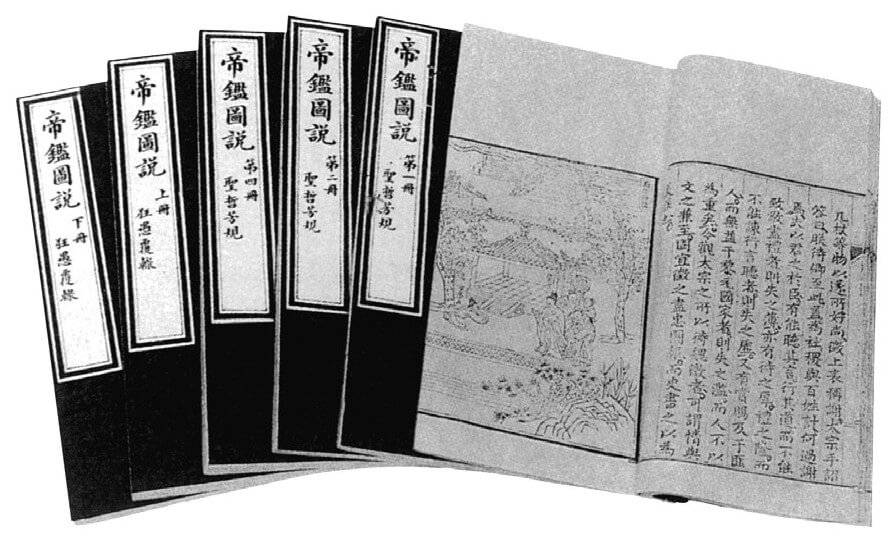
During these ten years, Zhang Juzheng, highly valued by the court, implemented a series of reforms, historically known as the "Wanli New Policies."
In terms of governance, Zhang Juzheng believed that the prevailing atmosphere of laxity and corruption in the court and among the people, leading to widespread hardship, was primarily due to "unclear administration of officials." Therefore, he submitted a memorial to implement the "Kaocheng Law," which was similar to modern performance evaluation systems. Guided by the principles of "upholding sovereign authority, assessing official duties, and ensuring credible rewards and punishments," it clarified the responsibilities of officials at all levels and urged them to complete annual assessment tasks as required; if someone failed to fulfill their tasks, they would be demoted, even to the status of a commoner. Its main purpose was to suppress the corrupt practices of officials neglecting their duties and vying for power, thereby making the bureaucracy clear and orderly. During the implementation of the Kaocheng Law, Mu Chaobi, who had rendered meritorious service in guarding Yunnan, repeatedly broke the law. Zhang Juzheng then had Mu Chaobi's son inherit his title and sent swift horsemen to arrest Mu Chaobi. Mu Chaobi did not resist and was later imprisoned by Zhang Juzheng in Nanjing. At that time, "bandits" suddenly emerged in large numbers, even robbing government storehouses. Local authorities often concealed such incidents and did not report them. Zhang Juzheng ordered that anyone who concealed such matters would be dismissed and investigated, and local officials no longer dared to hide the truth.
In the fifth year of the Wanli era (1577), the annual national revenue from taxes and grain reached over 4.35 million taels of silver, nearly double the annual revenue of about 2.5 million taels during the Longqing era (as recorded in Volume 67 of the Comprehensive Mirror of the Ming Dynasty), reversing the long-standing deficit in state finances. Zhang Juzheng himself remarked, "In recent years, regular taxes have not fallen short, and the treasury has been well-stocked—all because the Assessment Law has been implemented, ensuring taxes are collected and delivered on schedule."
Beyond implementing the performance evaluation law, Zhang Juzheng also used the Six Offices of Scrutiny to control the Six Ministries, and further employed the Grand Secretariat to control the Six Offices of Scrutiny, thereby gaining full control over the imperial court and turning into reality the ideal he had written at age thirteen: "Amidst the phoenix feathers and sturdy bamboo, I shall ascend straight to the topmost pole."
In military affairs, Zhang Juzheng ordered Qi Jiguang to guard Jimen (northwest of present-day Qianxi, Hebei) and Li Chengliang to guard Liaodong (present-day Liaoyang, Liaoning), and also added over three thousand "watchtowers" along the Great Wall from Shanhaiguan to Juyongguan, strengthening northern defenses. Additionally, Zhang Juzheng appointed capable generals such as Ling Yunyi and Yin Zhengmao to suppress rebellions by southern ethnic minorities.
Economically, Zhang Juzheng mainly adopted the following measures: First, he conducted a land survey. Zhang believed that "wealthy families own land without paying taxes, while poor families are burdened by excessive levies, leading to poverty and flight," which he saw as the root cause of "national impoverishment and popular destitution." Thus, in the sixth year of the Wanli era (1578), he ordered a nationwide re-measurement of land and a crackdown on tax-evading properties, significantly increasing the imperial treasury's revenue. Second, he reformed the tax system by implementing the "Single Whip Method." The core of this method was to consolidate all taxes and corvée labor of a county into a single levy, aiming to completely eliminate miscellaneous taxes, abolish the lijia system both in form and substance, and merge any remaining poll taxes into the land tax. Taxpayers could fulfill their obligations by paying a fixed amount of silver in installments, leaving no opportunity for officials to embezzle. This reform of converting taxes and corvée into silver payments was also an inevitable result of the development of the commodity economy, breathing new life into the ailing Ming Dynasty.
In the border regions, Zhang Ju implemented a mutual trade policy, which kept the northern Anda from invading for a long time, maintaining political and economic stability in the frontier.
In the ninth year of the Wanli reign (1581), the fifty-seven-year-old Zhang Juzheng fell ill from overwork and passed away the following year. By this time, the Shenzong Emperor was already a twenty-year-old young man, who viewed Zhang Juzheng's authority as a usurpation of his own power, thus positioning himself in opposition to Zhang. Zhang Juzheng's dedication to state affairs was seen by the emperor as contempt for his sovereign. Additionally, when accusations surfaced that Zhang Juzheng had amassed immense wealth, the emperor immediately ordered his home to be raided, rescinded a series of his reform measures, and revoked the imperial decrees and seals previously granted to Zhang Juzheng and his ancestors for four generations, publicly listing his crimes. Zhang Juzheng narrowly escaped having his corpse mutilated, while his family members either starved to death or were exiled.
Emperor Shenzong's abandonment of Zhang Juzheng's reforms caused the imperial court to regress to the dysfunctional state of the Jiajing era, worsening inflation and making life even harder for ordinary people, dashing the Ming Dynasty's hopes for a revival, and ultimately leading to a complete fiscal collapse during the Chongzhen period, effectively digging the dynasty's own grave.
It was not until the second year of the Tianqi era (1622) that the renowned minister Zhang Juzheng was posthumously reinstated and his family privileges restored, but alas, Zhang Juzheng was no longer in this world.