
In 1449, Emperor Yingzong of the Ming Dynasty, Zhu Qizhen, personally led a military campaign but was decisively defeated by the Oirat army at Tumu Fortress. The Ming forces were encircled by the Oirat army and ultimately annihilated. Emperor Yingzong was captured by the Oirats, while his favored eunuch, Wang Zhen, was killed by Ming generals. This event is historically known as the Tumu Crisis.
Zhu Qizhen was the eldest son of Zhu Zhanji, Emperor Xuanzong of the Ming Dynasty. During his reign, Zhu Zhanji appointed him as the crown prince. After Zhu Zhanji's death, Zhu Qizhen succeeded to the throne and is historically known as Emperor Yingzong of the Ming Dynasty. Several highly legendary emperors appeared in Ming Dynasty history, and Zhu Qizhen was one of them.
Zhu Qizhen's biological mother was merely an ordinary palace maid who, by chance, was favored by the emperor and subsequently became pregnant with Zhu Qizhen. At that time, Empress Hu governed the harem, and the only one who could rival her authority was Consort Sun. Consort Sun's father was a high-ranking official at court, and she grew up in the imperial palace from childhood, being childhood sweethearts with Zhu Zhanji. Because she was exceptionally beautiful, Zhu Zhanji had always been fond of her, and during the reign of Emperor Yongle (Zhu Di), she married Zhu Zhanji. Later, when Zhu Zhanji ascended the throne as Emperor Xuanzong of the Ming Dynasty, he granted her the title of Consort.
Consort Sun was deeply favored by Emperor Xuanzong of the Ming Dynasty, but she was not satisfied with that. She had long secretly coveted the position of empress and sought ways to replace her. However, Empress Hu was virtuous, kind, and deeply principled, so no one could find any fault in her words or actions. Moreover, she had been personally chosen by Emperor Chengzu as the wife for Zhu Zhanji, so although Zhu Zhanji did not love her, he had no intention of deposing her. For these reasons, toppling Empress Hu was no simple task. Yet Consort Sun refused to give up; after much thought, she finally found a breakthrough.
Zhu Zhanji had only two sons in his lifetime; Zhu Qizhen was his eldest son, and the other was his second son Zhu Qiyu, who later became Emperor Jingtai. When Zhu Qizhen was born, his father Zhu Zhanji was already thirty years old. In ancient China, early marriage and early childbirth were common, so having a first son at thirty was quite rare, especially for Zhu Zhanji, who was the emperor of the country.
Empress Hu had never borne a son for Zhu Zhanji, and Consort Sun was in the same situation, but Consort Sun saw this as the key to seizing the position of empress. When news reached her that a palace maid—the future mother of Zhu Qizhen—had been favored by the emperor and become pregnant, Consort Sun secretly hid the maid away and took meticulous care of her. At the same time, she falsely claimed to be pregnant herself. After the palace maid gave birth to Zhu Qizhen, Consort Sun staged the illusion that the child was her own. By bribing imperial physicians, palace maids, eunuchs, and many others to help carry out this scheme, she ultimately succeeded in winning Zhu Zhanji's favor.
In the second year after Zhu Qizhen's birth, Zhu Zhanji ordered that Zhu Qizhen be appointed as the crown prince, and subsequently deposed Empress Hu to elevate Consort Sun as the new empress. Thus, Consort Sun finally fulfilled her long-cherished wish. However, Zhu Qizhen's biological mother was not so fortunate; to eliminate any future threat, Consort Sun had her killed as soon as Zhu Qizhen was born.
Zhu Zhanji was a short-lived emperor, passing away before the age of forty, and his son Zhu Qizhen was only nine years old when he ascended the throne. After Zhu Qizhen became emperor, the three key ministers of the court—Yang Shiqi, Yang Rong, and Yang Pu—either retired or passed away. These three ministers, known as the "Three Yangs," had begun assisting in state affairs during the reign of Zhu Di, serving through four emperors and making significant contributions to the Ming Dynasty. By the time of Zhu Qizhen's rule, all three were advanced in age and no longer able to manage affairs, so they withdrew from the political stage of the Ming Dynasty.
After this, the Ming Dynasty's rule grew increasingly corrupt, and the power of eunuchs expanded significantly. During Zhu Qizhen's reign, he showed great favor to the eunuch Wang Zhen. Wang Zhen was originally a poor and destitute village teacher in the countryside. Later, determined to change his circumstances, he chose to castrate himself and enter the palace to seek a better future. When Zhu Qizhen was still the crown prince, Wang Zhen entered the Eastern Palace to serve him. Zhu Qizhen trusted him deeply, to the point of almost always following his advice without question.
When Zhu Qizhen first ascended the throne, he was too young to rule, so the Grand Empress Dowager and the "Three Yangs" served as his regents. During this period, Wang Zhen did not dare to act rashly. However, after the Grand Empress Dowager passed away and the "Three Yangs" successively retired, Wang Zhen began to collude with the eunuch Zou Donglai to form a clique for personal gain and interfere in state affairs. As the first eunuch to seize power in the Ming Dynasty, Wang Zhen thus opened the curtain on eunuchs leading the dynasty to ruin.
During the reigns of Emperor Hongwu and Emperor Yongle of the Ming Dynasty, the Mongol armies were repeatedly repelled by force, severely weakening the Mongol tribes. However, from the later years of Emperor Yongle's reign, the Mongol tribes began to regain their strength and split into three factions: the Oirats, the Tatars, and the Uriankhai. These three tribes constantly fought and vied for dominance. By the time Zhu Qizhen came to power, the Oirat tribe had become the most powerful, and its leader, Esen, successfully conquered the other two tribes.
Esen was extremely cunning by nature; he pretended to show goodwill toward the Ming government while secretly intensifying preparations for a military campaign against the Ming. The Ming generals stationed at the frontier detected his intentions and repeatedly submitted reports to the court about this military intelligence, but unfortunately, these warnings never received sufficient attention.
During this period, Esen continuously sent envoys to pay tribute to the Ming Dynasty. The Ming government would grant generous rewards to these envoys based on their numbers. As Esen increased the number of envoys, the rewards required by the Ming government also grew. In 1449, Esen dispatched two thousand envoys to Beijing to offer tribute but falsely claimed the total was three thousand in order to swindle larger rewards. When Wang Zhen detected Esen's scheme, he flew into a rage and ordered a reduction in rewards for the Oirat envoys. This gave Esen a pretext to launch an attack first.
After the war broke out between the Oirat Mongols and the Ming Dynasty, Wang Zhen strongly urged Zhu Qizhen to lead the campaign personally in order to secure his place in history. Zhu Qizhen, only in his early twenties at the time and full of youthful ambition, became eager to act after Wang Zhen's instigation. Many officials opposed this decision, believing the emperor's move was too risky. However, Zhu Qizhen had made up his mind, and no amount of persuasion could dissuade him from his determination to lead the expedition.
Not long after, Zhu Qizhen led an army, said to number five hundred thousand, northward to campaign against the Oirats. Along the march, Zhu Qizhen repeatedly received memorials from court officials urging him to return to the capital, but he ignored them all.
After learning that Zhu Qizhen was leading the imperial expedition in person, Esen pretended to retreat in order to lull the Ming army into complacency, and then, seizing the moment when they were off guard, launched a surprise attack. The Ming army indeed fell for the ruse, suffering a disastrous defeat in the battle against the Oirat forces, with heavy casualties.
By the time Zhu Qizhen led his army to Datong, news arrived that Ming forces had been defeated by the Oirat army north of Datong. The Oirat troops had now set up an ambush, and if the Ming army continued northward, they would inevitably suffer heavy losses.
Due to continuous rainfall over several days, the Ming army endured great hardships on their march toward Datong. Neither Zhu Qizhen nor Wang Zhen had any experience in military campaigns, and they had even failed to bring sufficient provisions for the journey. The soldiers, suffering from hunger and cold, had low morale. Faced with such circumstances, Zhu Qizhen and Wang Zhen ultimately decided to withdraw the troops and return to the capital.
Wang Zhen was a native of Weizhou in Hebei, who had been away from his hometown for many years without ever having the chance to return in glory. This withdrawal of the army back to the capital presented a perfect opportunity. Wang Zhen proposed to Zhu Qizhen that the marching route be altered to pass through Weizhou on the way back to the capital. The accompanying ministers all objected, arguing that this would delay the optimal timing for the retreat, and if the Oirat army seized the chance to pursue them, the consequences would be disastrous. Unfortunately, Zhu Qizhen and Wang Zhen stubbornly insisted on their plan, leading hundreds of thousands of troops on a detour to Weizhou.
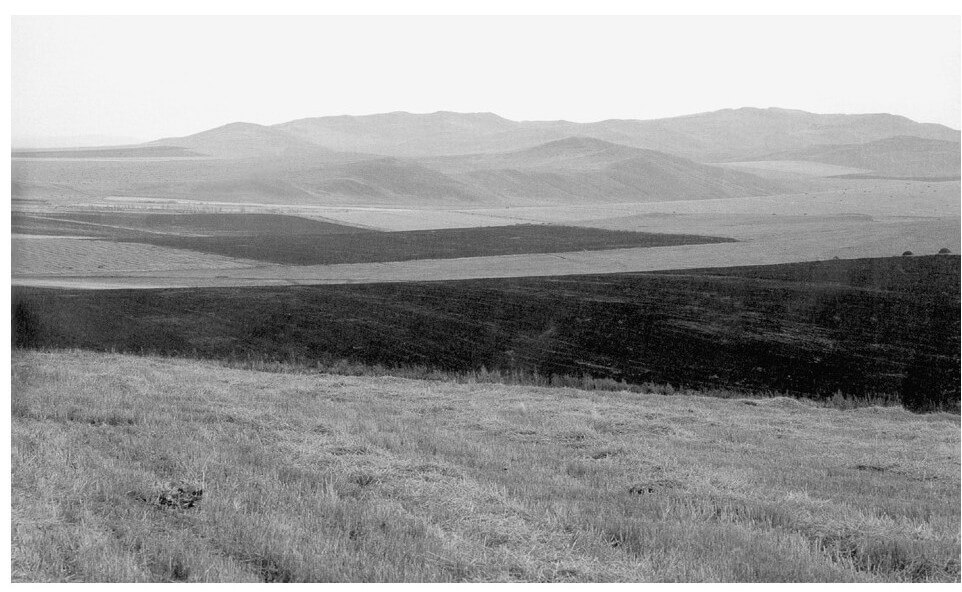
After learning of this, Esen immediately dispatched troops to launch a surprise attack on the Ming army. A few days later, the Ming forces arrived at Tumu Fortress, a location surrounded by mountains with rugged terrain that made marching extremely difficult. By then, the Mongol army was rapidly closing in, placing the situation in grave danger. General Kuang Ye proposed that the army retreat to Huailai for temporary shelter. However, Wang Zhen, fearing that the retreating army would trample the farmland of his hometown, flatly rejected Kuang Ye's suggestion.
That very night, the Ming army was surrounded by the Oirat forces. The Oirat troops seized the only water source at Tumu Fortress, leaving the Ming soldiers without a single drop of water for the next two days. Esen, seizing the opportune moment, sent envoys to feign peace negotiations with the Ming army while simultaneously making a show of withdrawing his troops.
Zhu Qizhen and Wang Zhen, trapped in a desperate situation and burning with anxiety, saw the Oirats retreating and hastily ordered Ming soldiers to fetch water to quench their thirst. The soldiers, tormented by hunger and thirst, lost all discipline in an instant, crowding the road and unable to move. At that moment, a large force of Oirat cavalry suddenly surged in from all directions, routing the hundreds of thousands of Ming troops in one blow. The Ming army suffered heavy casualties, nearly wiped out entirely. In the chaos, Zhu Qizhen initially tried to break out, but when he saw that escape was hopeless, he dismounted from his horse, sat down on the ground, and calmly awaited capture. Soon, he was taken prisoner by an Oirat soldier. Noticing his distinctive attire, the soldier deduced that his status must be noble and brought him to meet Yesen's brother, Saikan Wang.
When Zhu Qizhen saw Saikan Wang, he took the initiative to ask him, "Are you Esen, Bayan Temur, or Saikan Wang?" His condescending tone startled Saikan Wang, and later when Esen heard about this, he quickly sent envoys to verify his identity, only then realizing that he was none other than Zhu Qizhen, the Ming Yingzong Emperor.
Zhu Qizhen was captured, while Wang Zhen was killed. The one who killed Wang Zhen was not the Oirat army, but Fan Zhong, a general tasked with protecting Zhu Qizhen. Fan Zhong bitterly resented Wang Zhen for causing the deaths of hundreds of thousands of Ming soldiers and even leading Emperor Yingzong to become a prisoner of the Oirats. In his fury, Fan Zhong raised a heavy iron hammer and struck Wang Zhen violently on the head, killing him instantly.