
Liu Jin was a native of Xingping, Shaanxi. At the age of six, he was adopted by the eunuch Liu Shun and accordingly changed his surname to Liu. During the reign of Emperor Xiaozong, he was tasked with serving the crown prince Zhu Houzhao. Knowing that the prince would one day inherit the throne, he went to great lengths to ingratiate himself with the prince, hoping that after the prince ascended the throne, he would remember him as a meritorious servant and grant him power, influence, and wealth.
Because he was skilled at reading people and adept at adapting to circumstances, he earned the deep trust of the crown prince. In the eighteenth year of the Hongzhi reign, Crown Prince Zhu Houzhao ascended the throne, becoming Emperor Wuzong of the Ming Dynasty. Thereafter, Liu Jin received multiple promotions and eventually secured the position of chief eunuch of the Directorate of Ceremonial.
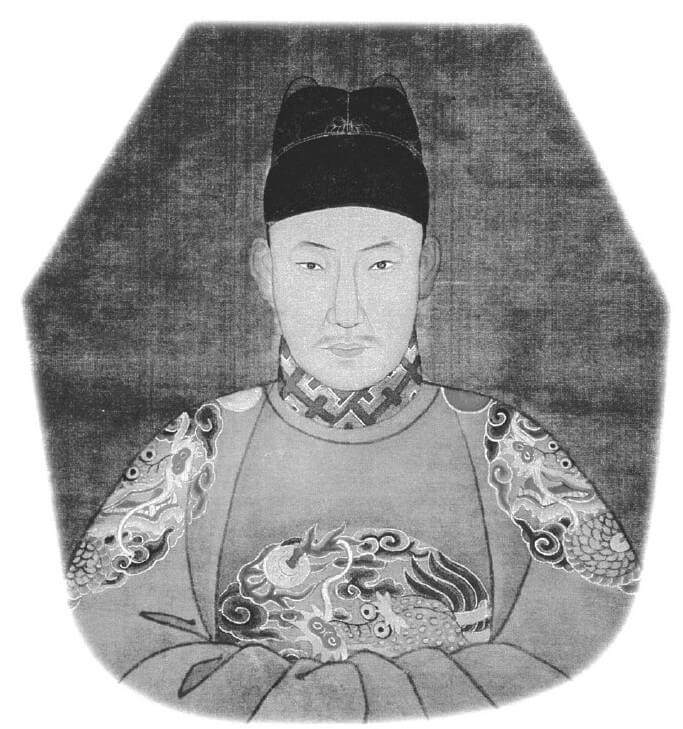
Emperor Wuzong was a reckless ruler who indulged in pleasure and debauchery, calling himself the "Mighty General Zhu Shou" and favoring eunuchs. Among them, Liu Jin, along with Ma Yongcheng, Gao Feng, Luo Xiang, Wei Bin, Qiu Ju, Gu Dayong, and Zhang Yong, were deeply trusted by the emperor and became known as the "Eight Tigers," with Liu Jin as their leader. These eunuchs constantly encouraged Wuzong to seek amusement while they secretly abused their power and committed all kinds of misdeeds behind his back.
Emperor Wuzong trusted Liu Jin the most, so he appointed him to command the elite guard forces in the capital. After gaining great power, Liu Jin began to seize control of the court while Emperor Wuzong indulged in luxury and pleasure. Not only did Liu Jin dominate the government, but he also took the opportunity to eliminate those who opposed him, causing many upright officials in the court to be persecuted. At the same time, he colluded with corrupt figures such as Left Censor-in-Chief Liu Yu and Minister of Personnel Jiao Fang, gradually expanding his own influence.
When the court officials saw that Emperor Wuzong was being led astray by the eunuchs and neglecting state affairs, they repeatedly admonished him. At first, the emperor paid no attention, but later, upon hearing that celestial omens had changed, he planned to demote Liu Jin to Nanjing. The ministers, however, believed Liu Jin was a root of disaster and that if he were not eliminated, trouble would arise sooner or later, so they prepared to jointly urge the emperor to have Liu Jin executed.
Jiao Fang, who was in cahoots with Liu Jin, immediately reported this to Liu Jin. Upon hearing the news, Liu Jin was greatly alarmed and hastily summoned the other seven eunuchs to go before Emperor Wuzong, weeping and pleading for mercy. The emperor, recalling that Liu Jin had once served him loyally, not only pardoned them but also placed them in charge of the Directorate of Ceremonial, the Eastern Depot, and the Western Depot respectively.
The Directorate of Ceremonial was an important inner palace office at the time, headed by a seal-holding eunuch and supported by eight or nine brush-holding eunuchs. During the Ming Dynasty, if an emperor was not diligent in state affairs, he would have the brush-holding eunuchs of the Directorate of Ceremonial review and comment on officials' memorials on his behalf, which gave eunuchs opportunities to act arbitrarily and abusively. Additionally, eunuchs of the Directorate of Ceremonial had the privilege of conveying the emperor's orders, which created chances for them to tamper with imperial decrees. Liu Jin, as the director of the Directorate of Ceremonial, fully possessed the conditions to be domineering and tyrannical. He first retaliated against those ministers who had once put him in dire straits, using methods such as fining them rice for frontier supplies and imposing physical punishments. Many ministers went bankrupt due to the exorbitant fines. As for physical punishments, he subjected them to flogging at court, causing many ministers to be beaten to death on the spot. Furthermore, Liu Jin also created a heavy cangue weighing one hundred and fifty jin, which crushed to death those ministers he persecuted within a few days.
Liu Jin also took advantage of pretexts to dismiss, flog, or falsely accuse any remonstrating officials who might threaten him, and ordered all such officials to report to court at the Yin hour (3 to 5 AM) and leave at the You hour (5 to 7 PM), with the aim of exhausting them so they would have no energy to impeach him.
When eliminating his rivals, Liu Jin acted with complete impunity. He once found an excuse to either transfer or demote to commoner status more than twenty officials from the Hanlin Academy who had only bowed to him without kowtowing. Gradually, he removed all the ministers who had ever offended him, and then began to do as he pleased. Knowing that Emperor Wuzong loved to play, he kept the emperor occupied with ball games, horse racing, and falconry, and deliberately waited until Wuzong was deeply engrossed in amusement before reporting state affairs. At such times, Wuzong, focused solely on having fun and unwilling to be disturbed, would impatiently tell Liu Jin to handle matters himself and dismiss him. Liu Jin outwardly pretended to be ineffective, but inwardly he was overjoyed. In this way, Liu Jin easily achieved his goal of monopolizing power, and people secretly called Wuzong the "Sitting Emperor" and Liu Jin the "Standing Emperor."
To strengthen his power, Liu Jin established the Inner Factory, a secret police force with authority surpassing that of the Eastern Factory, Western Factory, and the Embroidered Uniform Guard, to monitor officials and commoners. This concentration of power fueled his greed, and he began openly accepting bribes. Officials entering the capital for audiences or seeking promotions had to present gifts to him, or they risked losing their positions. If someone was promoted, they had to immediately pay a heavy "thank you" to Liu Jin; insufficient payment could lead to instant dismissal, but adding more silver could quickly restore the position, turning official posts into tools for Liu Jin to extort money. Additionally, Liu Jin sent trusted agents to local posts to collect wealth for him.
After Liu Jin accepted bribes from others, he naturally had to bend the law to accommodate them, even creating many wrongful convictions. However, for a period afterward, Liu Jin actually refused to take bribes, because a close confidant said that the money from bribe-givers was mostly stolen from government coffers or extorted from the people under Liu Jin's name, with only one-tenth going to him, yet the commoners would direct all their resentment toward Liu Jin, making it unwise to accept bribes. Liu Jin found this reasoning convincing and began rejecting bribes, even punishing bribe-givers like an upright official. But due to his inherently greedy nature, he could never truly break the habit of taking bribes.
Power and wealth gradually led Liu Jin astray, and he eventually harbored ambitions of usurping the throne. Moreover, his monopoly on power caused chaos in the imperial court; his acceptance of bribes forced local officials to intensify their exploitation of the people, thereby escalating local conflicts and bringing endless disasters to the state and its citizens. This ultimately sparked the Prince of Anhua's rebellion in the fifth year of the Zhengde era (1510).
In the fourth month of the fifth year of the Zhengde reign, Censor-in-Chief Yang Yiqing and eunuch Zhang Yong, acting on orders from Emperor Wuzong, suppressed the rebellion of the Prince of Anhua and, while reporting the battle situation to the emperor, listed seventeen major crimes committed by Liu Jin. It turned out that the other members of the "Eight Tigers" had long been angered by Liu Jin's refusal to share power—something Liu Jin had never anticipated. Emperor Wuzong naturally did not believe the accusations, but the next day he ordered a search of Liu Jin's residence, which uncovered not only millions of taels of gold and silver and countless treasures, but also imperial seals, jade belts, and two daggers hidden in a fan that Liu Jin often carried. Faced with such clear evidence, Emperor Wuzong had no choice but to believe that Liu Jin was plotting rebellion. Since rebellion was the gravest crime, the emperor ordered Liu Jin to be executed by slow slicing.
Lingchi, also known as death by a thousand cuts, was a form of execution where the victim's flesh was sliced off piece by piece, causing immense suffering before a slow death. This punishment was particularly refined during the Ming Dynasty, with most cases involving over a thousand cuts. Families who had been wronged by Liu Jin eagerly spent money to buy and eat his flesh, venting their deep-seated hatred. The once-arrogant Liu Jin thus met his evil end.