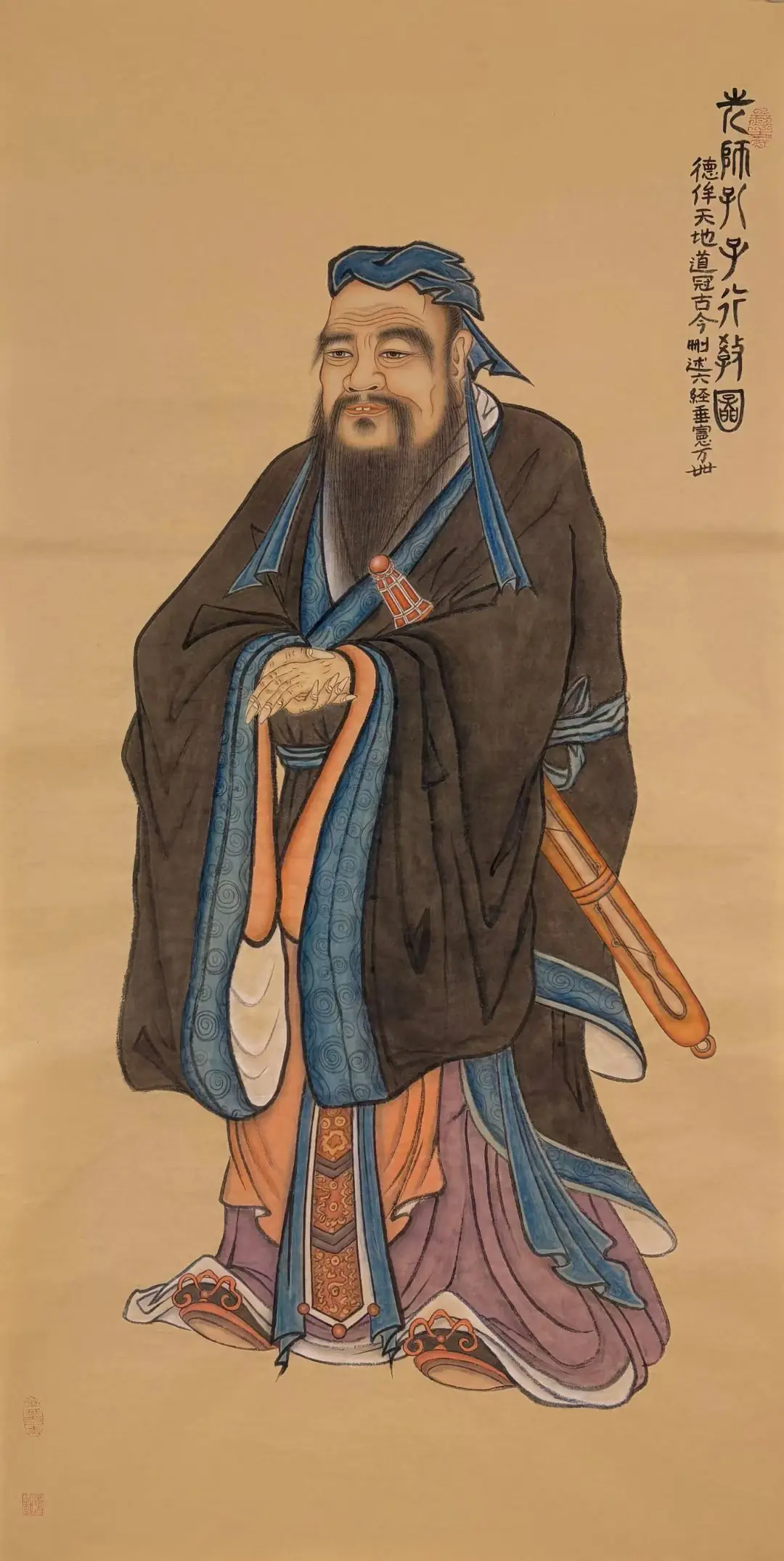
The Original Quote:
子曰:“禹,吾无间然矣。菲饮食,而致孝乎鬼神;恶衣服,而致美乎黻冕;卑宫室,而尽力乎沟洫。禹,吾无间然矣!”
Zǐ yuē: “Yǔ, wú wú jiàn rán yǐ. Fēi yǐnshí, ér zhì xiào hū guǐshén; è yīfu, ér zhì měi hū fú miǎn; bēi gōngshì, ér jìnlì hū gōuxù. Yǔ, wú wú jiàn rán yǐ!”
English Translation:
The Master said: “As for Yu, I can find no flaw in him. He himself ate meagerly, yet offered the utmost filial piety to the spirits and ancestors; he wore coarse garments, yet adorned his ceremonial robes and crown with splendor; he dwelt in a humble palace, yet devoted all his strength to draining the waterways. As for Yu, I can find no flaw in him!”
Key Concepts Explained:
- Ren (仁): The Confucian virtue of benevolence and humaneness, here embodied in Yu’s self-sacrifice for the common good, prioritizing the welfare of the people over personal comfort.
- Li (礼): Ritual propriety and reverence, shown in Yu’s meticulous attention to ceremonial dress and offerings, honoring the spiritual and social order with solemnity.
- Xiao (孝): Filial piety, extended beyond family to reverence for ancestors and spirits, reflecting a deep sense of duty and gratitude.
- De (德): Moral virtue or power, as Yu’s actions demonstrate a ruler whose personal integrity inspires harmony and prosperity without self-aggrandizement.
Cultural Context:
This passage from the Analects (Book 8, Chapter 21) praises Yu the Great, a legendary sage-king of ancient China (c. 21st century BCE), renowned for taming the Great Flood through irrigation and drainage. In Confucian thought, Yu epitomizes the ideal ruler who subordinates personal luxury to public duty and ritual reverence. His example reinforces the core Confucian principle that true leadership lies in selfless service (wu wei er zhi, “governing without excessive action”), aligning with the broader admiration for the golden age of Yao, Shun, and Yu—a period Confucius saw as a moral benchmark for governance. This teaching encourages modern audiences to reflect on the balance between individual modesty and communal responsibility, a timeless lesson in ethical leadership.