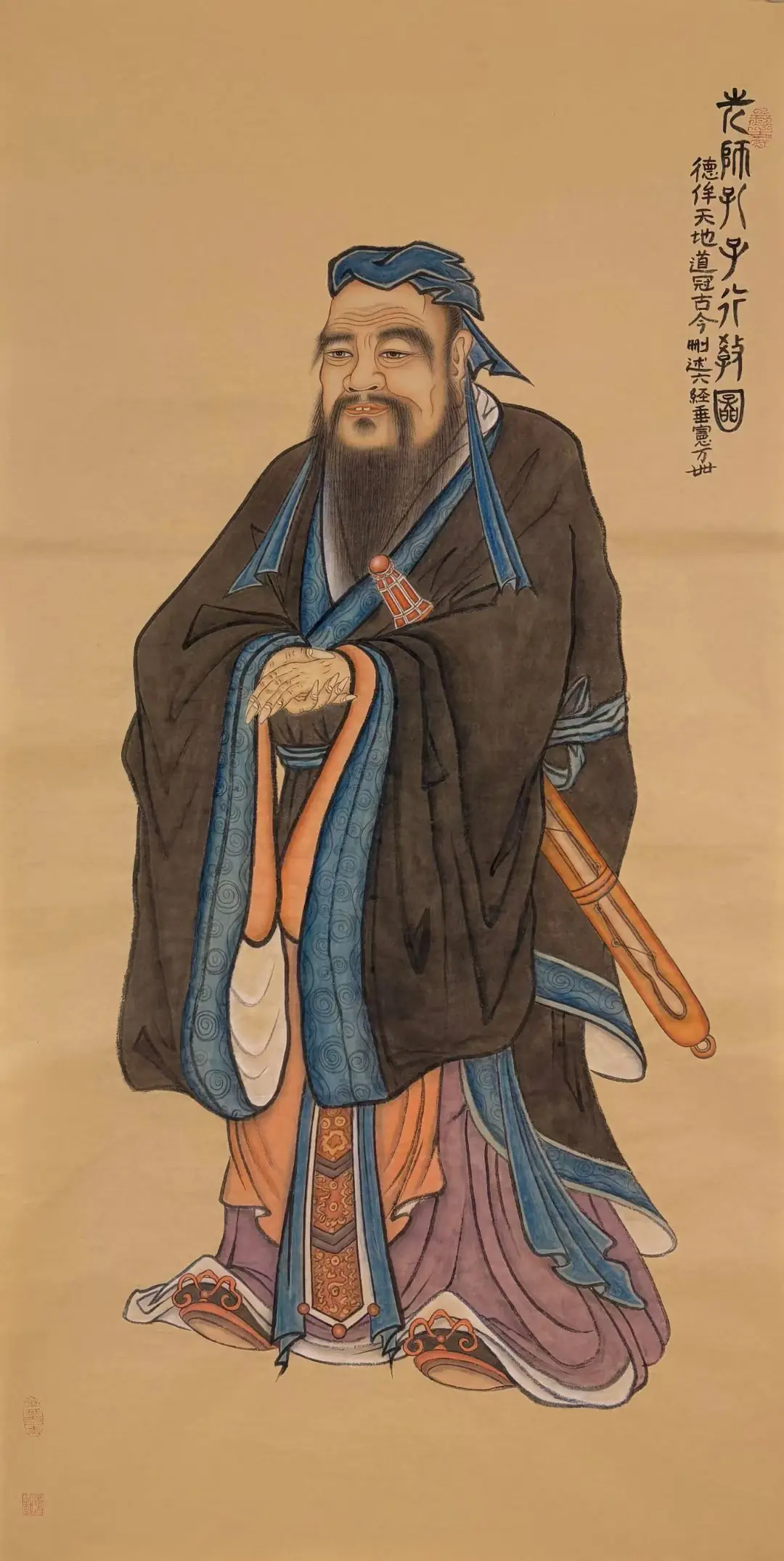
The Original Quote:
曾子曰:“可以托六尺之孤,可以寄百里之命,临大节而不可夺也。君子人与?君子人也。”
Zēngzǐ yuē: “Kěyǐ tuō liù chǐ zhī gū, kěyǐ jì bǎi lǐ zhī mìng, lín dà jié ér bù kě duó yě. Jūnzǐ rén yǔ? Jūnzǐ rén yě.”
English Translation:
Master Zeng said: “One to whom an orphaned child of tender years may be entrusted, and upon whom the fate of a hundred-li state may be conferred, and who, when facing a crucial moment of great principle, remains unshaken—is such a one a man of noble character? Indeed, he is a man of noble character.”
Key Concepts Explained:
- 君子 (Jūnzǐ): The “gentleman” or “profound person”—an ideal of moral nobility and cultivated virtue, not limited by birth but achieved through self-cultivation and adherence to principle.
- 命 (Mìng): Here meaning “mandate” or “charge”—the heavy responsibility of governance, but also carrying connotations of fate or decree, suggesting a sacred trust.
- 大节 (Dà jié): Literally “great joint” or “crucial juncture”—a moment of moral crisis demanding unwavering integrity, where one’s character is tested to its core.
- 托孤 (Tuō gū): The act of “entrusting an orphan”—a historical practice of entrusting a young ruler to a loyal minister, symbolizing ultimate trust and responsibility.
Cultural Context:
This passage from the Analects (Book 8, Chapter 6) reflects the Confucian ideal of the jūnzǐ as both a moral paragon and a capable statesman. In ancient China, “entrusting an orphan” (托孤) was a profound political act, as seen in the famous case of Liu Bei entrusting his son to Zhuge Liang during the Three Kingdoms period. Zengzi emphasizes that true nobility combines moral steadfastness—especially “facing a great juncture without being swayed” (临大节而不可夺)—with practical competence. This teaching resonated through history: figures like the Duke of Zhou and Huo Guang were celebrated for fulfilling such trusts, while usurpers like Wang Mang were condemned for betraying them. For modern readers, the lesson transcends politics—it calls for integrity in all responsibilities, urging us to hold fast to principle when personal interest tempts compromise.