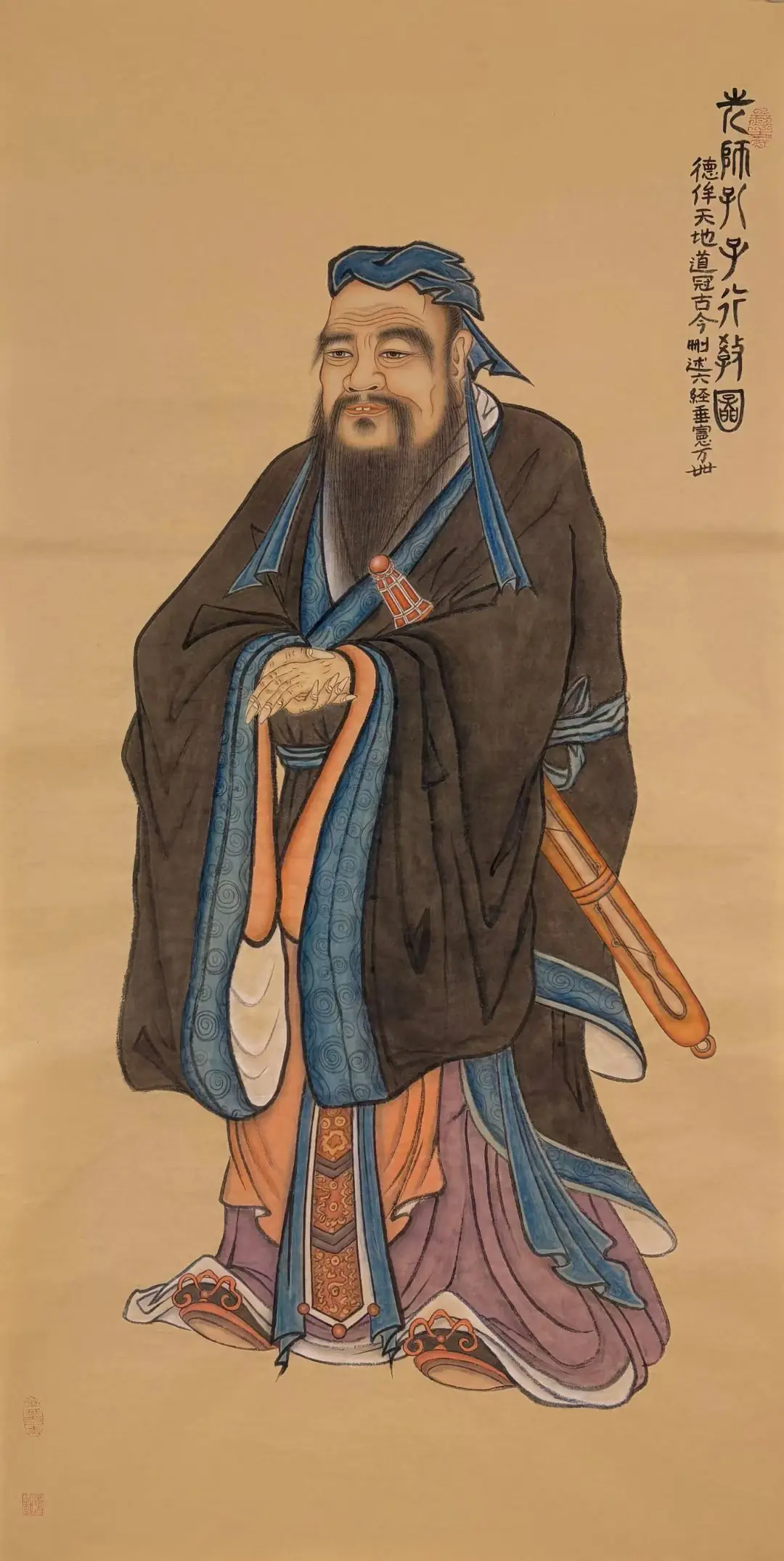
The Original Quote:
子贡问曰:“何如斯可谓之士矣?”子曰:“行己有耻,使于四方不辱君命,可谓士矣。”曰:“敢问其次。”曰:“宗族称孝焉,乡党称弟焉。”曰:“敢问其次。”曰:“言必信,行必果,踁踁然小人哉!抑亦可以为次矣。”曰:“今之从政者何如?”子曰:“噫!斗筲之人,何足算也!”
Zǐgòng wèn yuē: “Hé rú sī kě wèi zhī shì yǐ?” Zǐ yuē: “Xíng jǐ yǒu chǐ, shǐ yú sì fāng bù rǔ jūn mìng, kě wèi shì yǐ.” Yuē: “Gǎn wèn qí cì.” Yuē: “Zōngzú chēng xiào yān, xiāngdǎng chēng tì yān.” Yuē: “Gǎn wèn qí cì.” Yuē: “Yán bì xìn, xíng bì guǒ, kēngkēng rán xiǎorén zāi! Yì yì kě yǐ wéi cì yǐ.” Yuē: “Jīn zhī cóngzhèng zhě hé rú?” Zǐ yuē: “Yī! Dǒushāo zhī rén, hé zú suàn yě!”
English Translation:
Zigong asked, “What manner of man may be called a shi (士, exemplary scholar-official)?” The Master said, “He who in his conduct restrains himself with a sense of shame (耻, chǐ), and when sent on missions to the four corners of the realm does not disgrace his lord’s charge (命, mìng)—such a one may be called a shi.” Zigong said, “May I presume to ask for the next grade?” The Master said, “He whom his clan praises for filial piety (孝, xiào), and whom his village commends for fraternal respect (弟, tì).” Zigong said, “May I ask for the grade below that?” The Master said, “He whose words are always trustworthy (信, xìn) and whose deeds are always resolute—though he is but a petty man of stubborn rigidity, yet he may count as the next grade.” Zigong said, “What of those who now govern?” The Master sighed, “Alas! These men of narrow measure—how are they even worth counting!”
Key Concepts Explained:
- Shi (士): The ideal of a cultivated gentleman-scholar, serving as a moral and political exemplar in society.
- Chi (耻): A sense of shame or moral integrity—an inner compass that guides one to avoid dishonorable conduct.
- Ming (命): Mandate or charge, especially the ruler’s commission; implies both duty and destiny.
- Xiao (孝): Filial piety, the foundational virtue of respecting and caring for one’s parents and ancestors.
- Ti (弟): Fraternal respect and harmony among siblings and peers, extending to the community.
- Xin (信): Trustworthiness and fidelity to one’s word, a cornerstone of interpersonal ethics.
Cultural Context:
This passage from the Analects (Lunyu 13.20) reflects Confucius’s hierarchical vision of virtue in the turbulent Spring and Autumn period (770–476 BCE). The shi—originally a class of warrior-officials—became under Confucius a moral ideal of cultivated service. The three tiers progress from state-level duty (shame and loyalty), to community-level virtue (filial and fraternal bonds), to personal integrity (trust and resolve). The dismissal of contemporary rulers as “斗筲之人” (dǒushāo zhī rén, men of narrow capacity) critiques the political elite’s lack of moral substance. This text has profoundly shaped East Asian educational and leadership ideals, emphasizing that true worth lies not in office but in ethical cultivation—a lesson still resonant in modern leadership discourse.