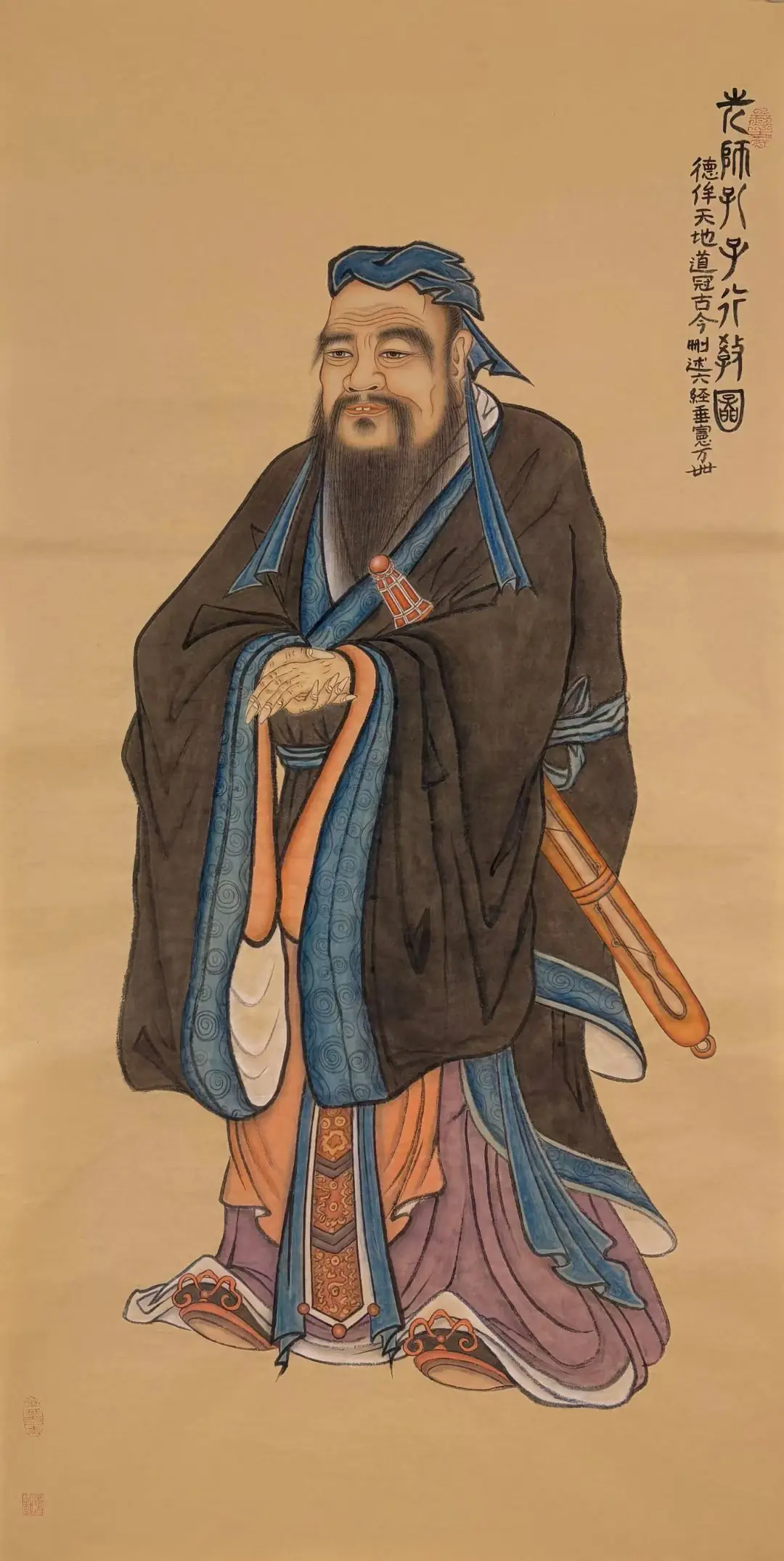
The Original Quote:
定公问:“一言而可以兴邦,有诸?”孔子对曰:“言不可以若是。其几也。人之言曰:‘为君难,为臣不易。’如知为君之难也,不几乎一言而兴邦乎?”曰:“一言而丧邦,有诸?”孔子对曰:“言不可以若是其几也。人之言曰:‘予无乐乎为君,唯其言而莫予违也。’如其善而莫之违也,不亦善乎?如不善而莫之违也,不几乎一言而丧邦乎?”
Dìnggōng wèn: “Yī yán ér kěyǐ xīng bāng, yǒu zhū?” Kǒngzǐ duì yuē: “Yán bù kěyǐ ruò shì. Qí jī yě. Rén zhī yán yuē: ‘Wéi jūn nán, wéi chén bù yì.’ Rú zhī wéi jūn zhī nán yě, bù jīhū yī yán ér xīng bāng hū?” Yuē: “Yī yán ér sàng bāng, yǒu zhū?” Kǒngzǐ duì yuē: “Yán bù kěyǐ ruò shì qí jī yě. Rén zhī yán yuē: ‘Yǔ wú lè hū wéi jūn, wéi qí yán ér mò yǔ wéi yě.’ Rú qí shàn ér mò zhī wéi yě, bù yì shàn hū? Rú bù shàn ér mò zhī wéi yě, bù jīhū yī yán ér sàng bāng hū?”
English Translation:
Duke Ding of Lu inquired: “Is there such a thing as a single phrase that can make a state prosper?” Confucius replied: “One cannot place such absolute power in words, yet there is a near truth to it. There is a saying: ‘To be a ruler is difficult; to be a minister is not easy.’ If one truly understands the hardship of ruling, does this not come close to a phrase that can make a state prosper?” The Duke then asked: “Is there such a thing as a single phrase that can bring a state to ruin?” Confucius answered: “Again, one cannot place such absolute power in words, yet there is a near truth. There is a saying: ‘I take no greater pleasure in being a ruler than that no one dares to oppose my commands.’ If those commands are good and none oppose them, is that not excellent? But if they are evil and none oppose them, does this not approach a single phrase that can ruin a state?”
Key Concepts Explained:
- Ren (仁): The virtue of benevolence and human-heartedness, which here implies a ruler’s empathetic awareness of the shared burdens of governance.
- Li (礼): Ritual propriety and social order, which requires both ruler and minister to fulfill their roles with humility and mutual respect.
- Junzi (君子): The exemplary person, whose self-cultivation and cautious speech serve as a moral foundation for the state.
- Ming (命): The mandate of heaven or destiny, reminding rulers that their authority is conditional upon virtue and the welfare of the people.
Cultural Context:
This passage from the Analects (Book 13, Chapter 15) reflects the Warring States period’s urgent political discourse, when China’s feudal states vied for survival. Confucius here critiques the autocratic impulse of rulers who delight in unchallenged power. By contrasting the humble acknowledgment of difficulty (as a path to prosperity) with the arrogance of absolute obedience (as a path to ruin), he articulates a core Confucian principle: leadership is a moral burden, not a privilege. The phrase “一言兴邦” (yī yán xīng bāng) later became a Chinese idiom, underscoring the weight of a sovereign’s words—a lesson that resonates across centuries in both Eastern and Western traditions of governance.