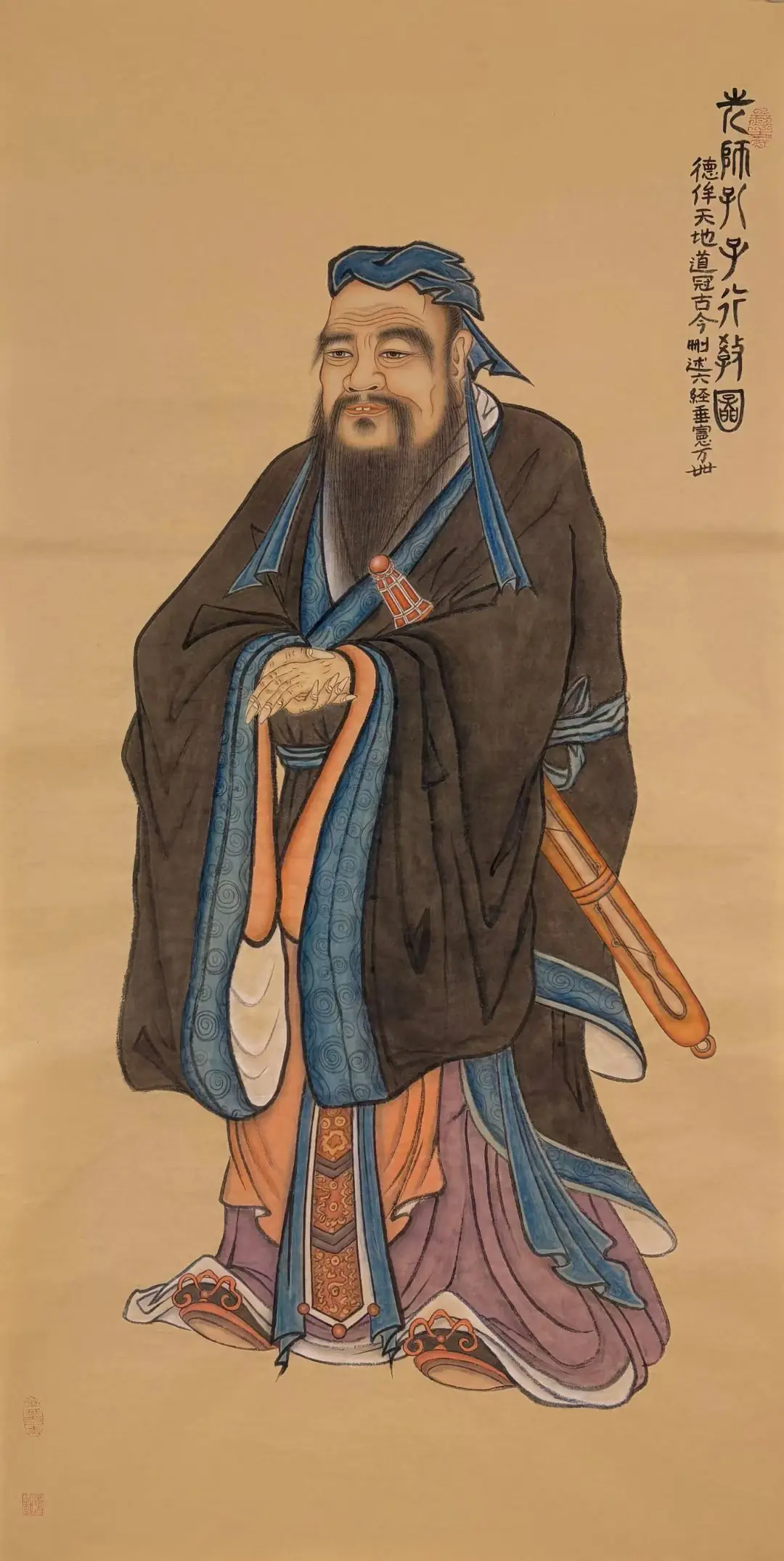
The Original Quote:
子路曰:“卫君待子而为政,子将奚先?”子曰:“必也正名乎!”子路曰:“有是哉,子之迂也!奚其正?”子曰:“野哉,由也!君子于其所不知,盖阙如也。名不正、则言不顺,言不顺则事不成,事不成则礼乐不兴,礼乐不兴则刑罚不中,刑罚不中则民无所措手足。故君子名之必可言也,言之必可行也。君子于其言,无所苟而已矣。”
Zǐlù yuē: "Wèi jūn dài zǐ ér wéi zhèng, zǐ jiāng xī xiān?" Zǐ yuē: "Bì yě zhèng míng hū!" Zǐlù yuē: "Yǒu shì zāi, zǐ zhī yū yě! Xī qí zhèng?" Zǐ yuē: "Yě zāi, Yóu yě! Jūnzǐ yú qí suǒ bù zhī, gài quē rú yě. Míng bù zhèng, zé yán bù shùn; yán bù shùn, zé shì bù chéng; shì bù chéng, zé lǐ yuè bù xīng; lǐ yuè bù xīng, zé xíngfá bù zhòng; xíngfá bù zhòng, zé mín wú suǒ cuò shǒu zú. Gù jūnzǐ míng zhī bì kě yán yě, yán zhī bì kě xíng yě. Jūnzǐ yú qí yán, wú suǒ gǒu ér yǐ yǐ."
English Translation:
Zilu asked, "If the Lord of Wei were to entrust you with governance of his state, what would you address first?" The Master replied, "Surely the rectification of names!" Zilu said, "Is that so? How迂腐 (pedantic) you are! Why rectify names?" The Master said, "How uncultivated you are, Zilu! A gentleman remains cautious regarding that which he does not know. When names are not rectified, speech does not accord with reason; when speech does not accord with reason, affairs cannot be accomplished; when affairs are not accomplished, rites and music (lǐ yuè, 礼乐) do not flourish; when rites and music do not flourish, punishments and penalties (xíngfá, 刑罚) are not just; when punishments and penalties are not just, the people have no place to set hand or foot. Thus the gentleman names things so that they may be spoken of, and speaks of them so that they may be enacted. The gentleman is never careless in his speech."
Key Concepts Explained:
- 正名 (Zhèng Míng): Rectification of names—the Confucian principle that words and titles must align with reality to ensure social and political order. It implies that every role, duty, or concept must be clearly defined and truthfully executed.
- 礼 (Lǐ): Rites or propriety—the system of moral norms, rituals, and social etiquette that governs conduct and maintains harmony. Lǐ is both a personal virtue and a societal framework.
- 乐 (Yuè): Music—in Confucian thought, music is integral to moral cultivation and social cohesion, reflecting and reinforcing harmony in human relations.
- 仁 (Rén): Benevolence or humaneness—the core Confucian virtue, embodying compassion and love for others, often seen as the foundation of all ethical actions.
- 君子 (Jūnzǐ): Gentleman or exemplary person—one who cultivates virtue, acts with integrity, and serves as a moral model for society.
Cultural Context:
This passage from *The Analects* (Lúnyǔ, 论语) captures Confucius’s emphasis on linguistic and moral precision as the bedrock of governance. Set in the Spring and Autumn period (770–476 BCE), a time of political fragmentation and social upheaval, Confucius advocated for a return to order through the rectification of names (zhèng míng). He argued that when rulers, officials, and citizens fail to fulfill their designated roles—when a "ruler" does not rule justly or a "father" does not act paternally—society descends into chaos. This principle influenced later Chinese governance, legal systems, and educational ideals, emphasizing that clarity in language and ethics precedes effective action. In modern contexts, zhèng míng serves as a metaphor for aligning goals with values, whether in leadership, business, or personal conduct.