Pinyin: Fengmi
Aliases
Shimi, Shimi, Mi, Baimi.
Source
Insect of the Apidae family, *Apis cerana* Fabricius.Apis ceranaFabricius or Italian honeybeeApis melliferaHoney prepared by Linnaeus.
Distribution
It is produced in most regions of the country.
Harvesting and Processing
Harvested from spring to autumn, then filtered.
Medicinal Properties
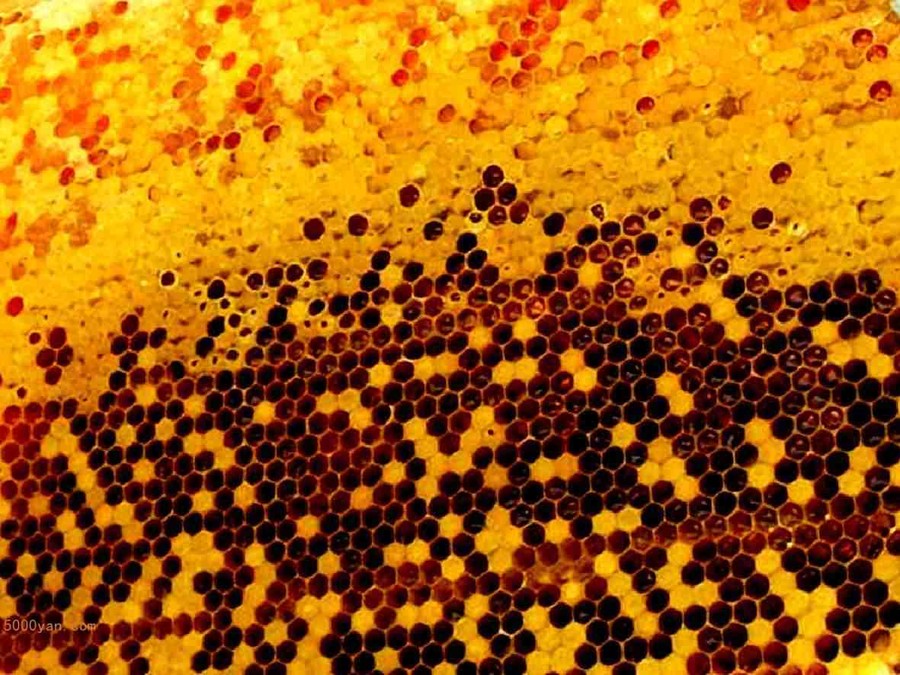
This product is a translucent, lustrous, viscous liquid, white to pale yellow or orange-yellow to yellow-brown. Upon prolonged storage or exposure to cold, white granular crystals gradually precipitate. The odor is aromatic and the taste is extremely sweet.
Chemical Constituents
This product mainly contains fructose and glucose.
Pharmacology
It has antibacterial effects; can nourish the myocardium and improve cardiac function; has regulatory effects on gastrointestinal function, can lower blood glucose in normal individuals and diabetic patients (though reports of elevation also exist); regulates immune function, has detoxifying and anti-tumor effects; provides tonic and restorative properties and promotes tissue regeneration, regulates nervous system function, improves patients' sleep, and enhances mental and physical activity capacity; can strengthen uterine smooth muscle contraction and has a lubricating expectorant effect.
Properties and Channel Entry
Sweet, neutral. Enters the Spleen, Lung, and Large Intestine channels.
Functions and Indications
Tonifies the Middle, moistens dryness, relieves pain, and resolves toxicity; externally used to generate tissue and close sores. Used for deficient epigastric and abdominal pain, dry cough due to Lung dryness, constipation due to intestinal dryness, and detoxifying Aconite-type drug toxicity; externally treats non-healing sores and ulcers, and burns and scalds from fire and water.
Dosage and Administration
Oral: 15-30 g, taken after mixing with hot water; or prepared into pills or pastes. External use: apply an appropriate amount to the affected area.
Prescriptions
1. For gastric and duodenal ulcers: Honey 50 g, raw Gancao (Licorice) 10 g, Chenpi (Tangerine Peel) 5 g. Add an appropriate amount of water, first decoct Gancao and Chenpi, remove the residue, then add honey. Take in 3 divided doses daily. (Modern Practical Chinese Medicine) 2. For chronic pharyngitis: 1 fresh papaya, peel off the outer skin. Cut into thin slices, soak in 500 g honey, seal in a bottle and store for 10 days. Chew and hold several slices in the mouth each time, 3 times daily. [Shaanxi Journal of Traditional Chinese Medicine Correspondence 1985, (4): 17] 3. For scalds and burns: a. For pain from hot oil burns: Apply white honey topically. (Mei's Collected Proven Prescriptions) b. For scalds and burns: Mix raw honey with powdered Cebaiye (Platycladus orientalis leaves) ash and apply, 3-5 times daily. (Shengji Zonglu) 4. For wind rash with unrelenting itching: White honey 1 he (approximately 20 ml), wine 2 he (approximately 40 ml). Warm the two ingredients together and take on an empty stomach. (Shenghui Fang) 5. For chapped hands and feet: Lard 30 g, decoct in water and allow to cool, then add honey 70 g and mix well. Store in a bottle for later use. First wash the affected area with hot water, then apply the ointment, 2 times daily. If infection is present, dust with Baiji (Bletilla striata) powder externally, while applying the honey-lard ointment. [New Chinese Medicine 1979, (6): 56] 6. For furuncles and malignant sores: Mix raw honey with last year's scallion to form a paste. First prick the sore, then apply the paste. After about the time it takes to walk 5 li (approximately 2.5 km), the boil will be expelled, then wash off with hot vinegar water. (Jiji Xianfang) 7. For male genital sores: a. Simmer honey with Gancao (Licorice) powder and apply topically. (Zhouhou Fang) b. Boil Huangbai (Phellodendron chinense) thoroughly and wash the area, then apply white honey topically. (Waitai, quoting Ge's Prescriptions) 8. For chickenpox with severe itching, accidentally scratched into sores: Apply an appropriate amount of white honey to the sores. The scabs will fall off naturally, leaving no scars and no foul odor. (Puji Fang, Baihua Gao)