Pinyin: Lougu
Aliases
Tianlou, Loushi, Xiangling, Tugou, Digou.
Source
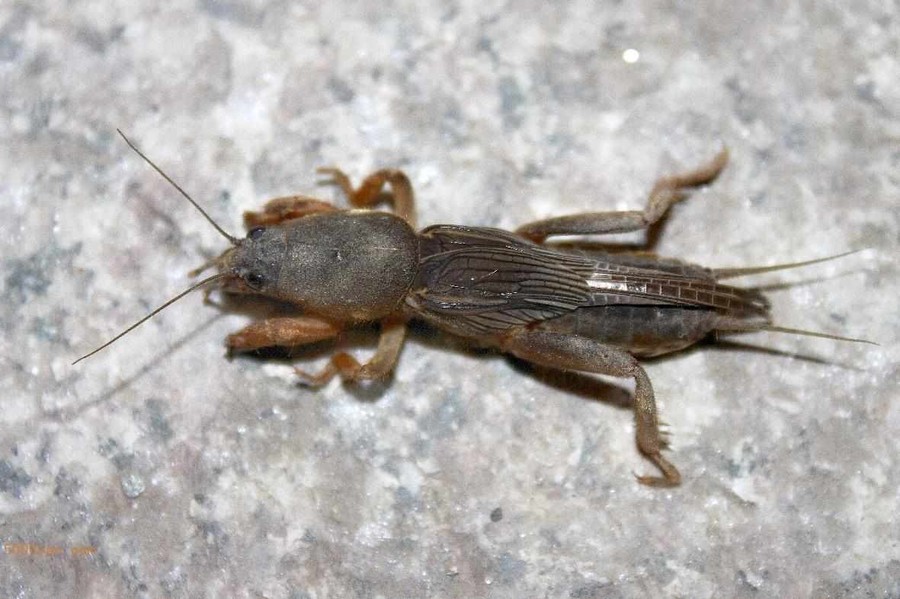
African mole cricket (Gryllotalpa africana) of the family Gryllotalpidae.GryllotalpaafricanaPalisotet Beauvois and Huabei LouguGryllotalpaunispinaDried insect body of Saussure.
Habitat and Distribution
Inhabits courtyards, gardens, and damp places, especially in areas heavily treated with organic fertilizers, where they are numerous and dense. Nocturnal, with a strong phototactic habit. Distributed throughout the country.
Harvesting and Processing
Caught in summer and autumn, captured at night using light traps or during soil turning. After capture, scald to death with boiling water, then sun-dry or oven-dry.
Medicinal Properties
1. African mole cricket: Body mostly broken and fragmented, intact specimens 2-3.3 cm long, 4-10 mm wide. Head tea-brown mixed with dark brown; compound eyes black and glossy; wings membranous and mostly broken; legs mostly detached, with 3-4 spines on the inner edge of the dorsal side of the hind tibia. Abdomen nearly fusiform, segmented, wrinkled, and light yellow. Texture soft and fragile. Characteristic odor.
2. Huabei Mogu (North China mole cricket): slightly larger body, 3.9-4.5 cm long, slightly lighter in body color, abdomen cylindrical, inner edge of dorsal side of hind tibia with 1 spine.
Chemical Constituents
This product primarily contains amino acids, amylase, taurine, and other constituents.
Pharmacology
Studies have found no significant diuretic effect.
Properties and Channel Entry
Salty, cold, slightly toxic. Enters the Bladder, Small Intestine, and Large Intestine channels.
Functions and Indications
Promotes diuresis and relieves stranguria, reduces edema and resolves toxicity. Mainly indicated for difficult urination, edema, stranguria caused by urinary stones, scrofula, and malignant sores.
Dosage and Administration
Oral administration: decoct in water, 3-4.5 g; grind into powder, 1-2 g. External use: apply an appropriate amount of ground powder mixed with a medium.
Precautions and Contraindications
Patients with weak constitution should use with caution; pregnant women are prohibited from taking.
Prescriptions
1. For dysuria (difficulty urinating) unresponsive to various medications: Mole cricket (live) 1 piece. Grind the single ingredient raw, add a small amount of musk, and take with freshly drawn water; immediate relief occurs. (From *Shengji Zonglu*, Mole Cricket and Musk Powder) 2. For urinary retention or risk of uremia: Dried mole cricket 20-30 pieces, remove wings and legs, grind into fine powder; cricket 20-30 pieces, remove wings and legs; raw licorice (Gancao) 20 g. Grind together into fine powder. Take 1 g per dose, 2-3 times daily, with warm water. (From *Modern Practical Chinese Medicine*) 3. For edema with fullness, wheezing, and inability to sleep: Mole cricket 5 pieces, dry in the sun, grind into powder. Before meals, take 1.5-3 g with warm water; effective when urination becomes free. (From *Shenghui Fang*) 4. For cirrhotic ascites: Mole cricket (remove head, legs, and wings) and cricket, 2 pairs each, astragalus (Huangqi) 9 g, ground beetle (Dibiechong) 4.5 g. Grind into fine powder, divide into 4 doses, take 2 doses daily. May be taken continuously. (From *Application of Insect Drugs*, cited from Zhang Cigong's formula) 5. For stone stranguria (urinary stones): Mole cricket 7 pieces, salt 60 g. Roast together on a new tile until dry, grind into powder. Take 3 g with warm wine. (From *Bencao Tujing*)