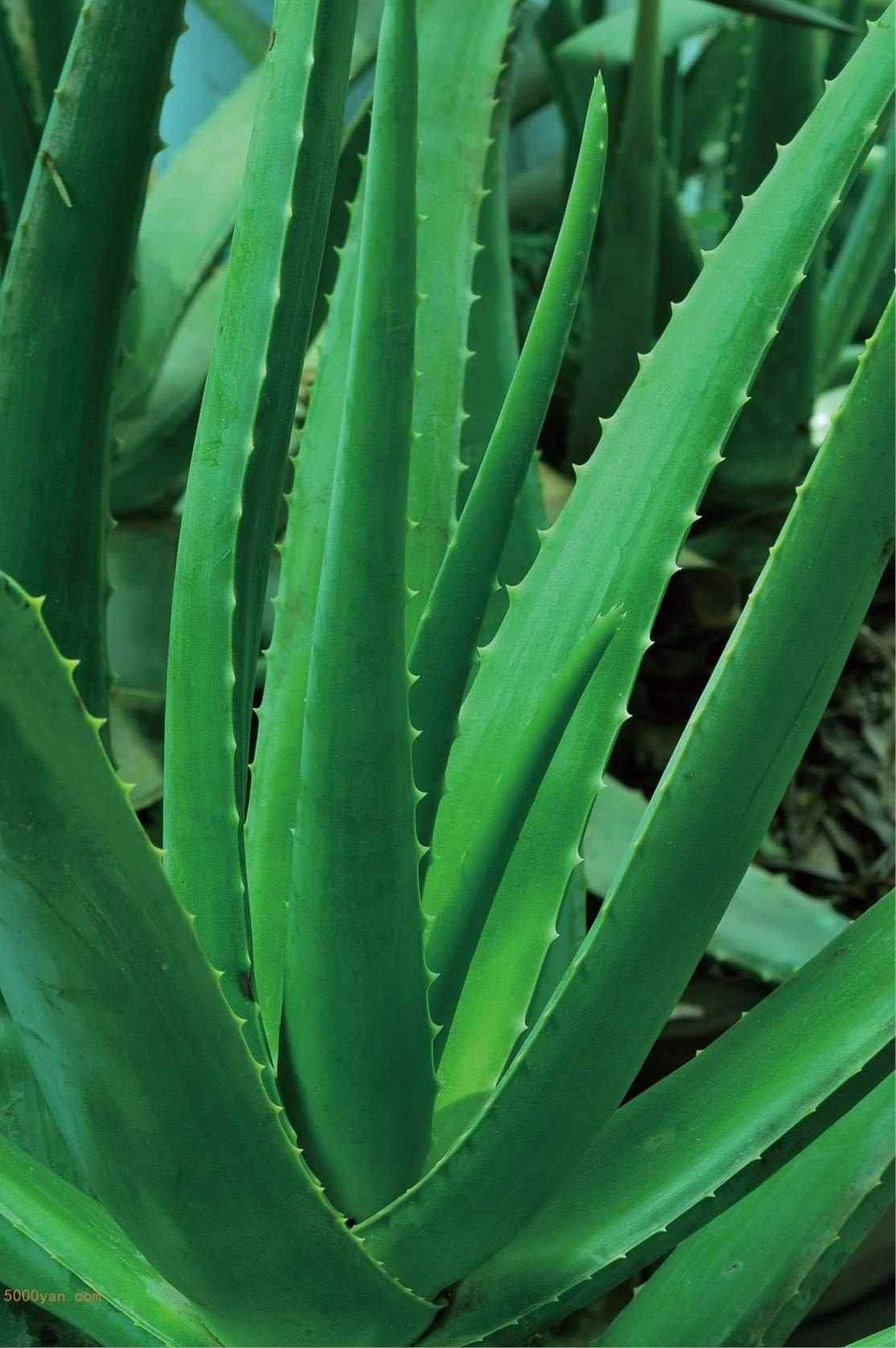
Pinyin: Luhui
Aliases
Lu Hui, Ne Hui, Nu Hui, Lao Wei.
Source
Liliaceae plant *Aloe vera* L.Aloe veraL. leaf juice concentrated and dried product. Commonly known as "Lao Luhui".
Botanical Description
Herbaceous perennial. Stem extremely short. Leaves clustered at the stem apex, erect or nearly erect, thick and succulent; leaf blades narrowly lanceolate, 15-36 cm long, 2-6 cm wide, apex long acuminate, base broad, glaucous green, margin with spinulose serrations. Flower scape solitary or slightly branched, 60-90 cm tall; raceme lax; flowers pendulous, about 2.5 cm long, yellow or with red spots; perianth tubular, 6-lobed, lobes slightly recurved; stamens 6, anthers versatile; pistil 1, 3-locular, each locule with numerous ovules. Capsule triangular, loculicidal. Flowering period: February to March.
Habitat and Distribution
Widely cultivated in the West Indies of South America, and also cultivated in China.
Harvesting and Processing
After 2-3 years of cultivation, the leaves can be harvested. Harvest the well-grown leaves from the middle and lower parts in batches. Place the fresh harvested leaves with the cut end facing downward in a container to collect the flowing juice, then dry it. Alternatively, wash the leaves clean, cut them transversely into slices, add an equal amount of water, decoct for 2-3 hours, filter, concentrate the filtrate into a thick paste, pour it into a mold, and dry it by baking or sun exposure to obtain Aloe paste.
Medicinal Properties
This product appears as irregular lumps, often broken into polygonal shapes of varying sizes. The surface is dark reddish-brown or deep brown, lacking luster. It is light in weight, hard in texture, difficult to break, with a rough or fibrous cross-section. It is highly hygroscopic. It has a characteristic odor and an extremely bitter taste.
Chemical Constituents
This product contains aloe-emodin glycoside, isoaloe-emodin glycoside, aloin, lauric acid, aloenin and other components.
Pharmacology
Has cathartic, antibacterial, and antitumor effects, can prolong the survival period of sarcoma-bearing mice; has hepatoprotective and anti-gastric ulcer effects, increases intestinal fluid leading to diarrhea; has therapeutic effects on tissue damage, provides skin protection; stimulates fibroblast growth; and affects immune system functions.
Properties and Channel Entry
Bitter, cold. Enters the Liver, Stomach, and Large Intestine channels.
Functions and Indications
Purges bowels to unblock stool, clears the Liver and drains Fire, kills parasites and treats malnutrition. Used for constipation due to Heat accumulation, convulsions and spasms in epilepsy, and infantile malnutrition; externally applied to treat tinea and skin sores.
Dosage and Administration
Oral: 2-5 g, preferably in pill or powder form, or ground into capsules; not to be used in decoctions. External: appropriate amount, ground into powder and applied to the affected area.
Precautions and Contraindications
Contraindicated in those with Spleen and Stomach deficiency-cold and in pregnant women.
Prescriptions
1. For tinea (ringworm): Aloe (Luhui) and Rhubarb (Dahuang) ground into powder and applied topically. (From Danxi's Methods for Treating the Heart) 2. For constipation: Aloe (Luhui, finely ground) 21 g, Cinnabar (Zhusha, ground to a fine powder) 15 g, mix with a small amount of good wine to form pills. Take 9 g per dose, swallowed with wine. (From Materia Medica Arranged According to Pattern) 3. For active chronic hepatitis and liver-origin low fever: Aloe (Luhui) and Picrorhiza (Huhuanglian) 1.5 g each, Phellodendron (Huangbai) 3 g. Form into pills with water. Take 3 g per dose, twice daily. (From Zhejiang Medicinal Flora) 4. For headache due to brain congestion: Aloe (Luhui, ground), Borneol (Longnao, ground), Melon Stalk (Guadi, pounded), Talcum (Huashi, ground). Mix the above four ingredients in equal parts into a powder. Use a pea-sized amount and blow it into the nose; it is remarkably effective. (From General Records of Holy Relief, Blowing Nasal Powder) 5. For pediatric malnutrition (gan) and to kill parasites: Aloe (Luhui), Quisqualis (Shijunzi), Aucklandia (Muxiang), and Carpesium (Heshi) 15 g each. Grind into a powder. Soak steamed bread in water, form pills the size of yellow rice grains. Take ten pills per dose, swallowed with rice water. (From Universal Prescriptions, Aloe Pill)